'This Is A Sacred Site': Tourists' Viral 'Anxiety' Dance At Kyoto Shrine Sparks Debate (WATCH)
Synopsis
A group of tourists has faced criticism after a video showed them performing the viral ‘Anxiety’ TikTok dance beneath the torii gates of Kyoto’s Fushimi Inari Taisha. X user Kunoichi criticised the behaviour at the sacred Shinto site, while American guitarist Marty Friedman also called it disrespectful.
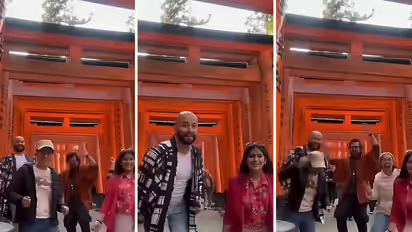
A group of tourists has drawn criticism after a video showed them performing the viral ‘Anxiety’ TikTok dance beneath the famous torii gates of Kyoto’s Fushimi Inari Taisha shrine in Japan. The tourists were filmed rocking from side to side, waving their arms and jumping as they copied moves from the popular social media dance. Other visitors could be seen in the background, with some appearing to join in.
The video was shared on X by user Kunoichi, who criticised the group for turning the centuries-old religious site into what appeared to be a dance floor and social-media backdrop. The incident also caught the attention of American guitarist Marty Friedman, who has lived in Japan for more than two decades and has a strong connection with the country.
Japan, Senbon Torii is not a nightclub dance floor!!💢
Fushimi Inari Taisha in Kyoto is not a backdrop for social media content. It is sacred ground that has been a place of worship for hundreds of years.
There seems to be no end to disruptive videos of people blocking the path…— KUNOICHI 🇯🇵🌸_可愛くノ一 (@hokkori_buzz) September 5, 2026
Tourists dance beneath iconic red torii gates
The video was recorded at Fushimi Inari Taisha, one of Kyoto’s best-known Shinto shrines.
The site is instantly recognisable for its thousands of vermilion torii gates, which form long pathways leading up Mount Inari. The gates have become one of the most famous images associated with Kyoto and are a major attraction for visitors from around the world.
In the video shared online, the tourists can be seen dancing beneath the rows of gates while other visitors walk through the area.
Their movements appear to follow the viral ‘Anxiety’ dance, which has circulated widely across TikTok and other social media platforms.
The group continued dancing, waving their arms and jumping around, apparently using the striking rows of torii gates as the setting for their video.
The footage quickly sparked criticism over whether such behaviour was appropriate at a religious site.
X user criticises tourists for dancing at shrine
Sharing the clip, X user Kunoichi objected to the tourists' behaviour and stressed that Fushimi Inari Taisha is a sacred place of worship.
The criticism centred on the contrast between the religious importance of the shrine and the tourists' decision to perform a social-media dance there.
The incident has also raised a familiar question surrounding tourism in Japan: where should visitors draw the line between taking photographs and videos at famous attractions and behaving in ways that may be considered disrespectful?
Fushimi Inari Taisha is a cultural landmark as well as a popular tourist destination. However, it remains an active Shinto religious site.
Marty Friedman calls out the behaviour
American guitarist Marty Friedman also reacted to the video. Friedman is particularly familiar with Japanese culture. The former Megadeth lead guitarist moved to Japan in 2003 because of his love for Japanese music and his ambition to perform it at the highest level.
He has since developed a long career in Japan and become closely associated with J-pop and Japanese popular culture.
Friedman has performed with Japanese musicians, released albums influenced by J-pop and made regular appearances on Japanese television.
Reacting to the tourists’ behaviour, Friedman urged foreigners visiting Japan to stop such conduct. He pointed out that Japan had traditionally been known for welcoming foreigners but warned that continued disrespectful behaviour could affect that attitude.
He also criticised the tourists for creating what he described as a shameful impression of their country.
His reaction added a prominent Japanese-culture voice to the criticism already surrounding the video.
Dear tourists: PLEASE STOP DOING THIS. Japan is known for gracefully welcoming foreigners, but those days will end if you continue this disrespect. You are leaving an extremely shameful impression of your entire country. Who raised you to act this way? Just stop. Thank you. https://t.co/zV7OBXlI50
— Marty Friedman (@marty_friedman) September 6, 2026
Why is Fushimi Inari Taisha important?
Fushimi Inari Taisha is dedicated to Inari, the Shinto deity associated with rice, agriculture and prosperity.
The shrine is particularly famous for its thousands of vermilion torii gates. These gates create long, striking pathways through the wooded slopes of Mount Inari. The rows of gates have made Fushimi Inari one of Kyoto’s most recognisable landmarks and one of the city's most visited religious sites.
Fushimi Inari Taisha is a place of worship, meaning visitors are entering a functioning religious environment rather than simply a tourist attraction.
That distinction has become central to the criticism of the dance video.