Ireland Begins Excavation at Tuam Site Where 796 Children Were Buried By Nuns in Secret Grave
Synopsis
Decades after the deaths of hundreds of babies at a religious institution in Tuam, Ireland begins the painstaking excavation of a mass grave long shrouded in silence.
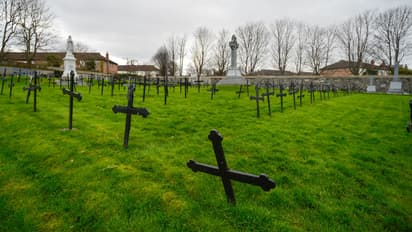
Ireland has begun the delicate process of exhuming the remains of hundreds of children buried in an unmarked mass grave at the former site of the St Mary’s Mother and Baby Home in Tuam, County Galway. The excavation attempts to confront one of the country’s most disturbing scandals, one that left 796 infants and young children buried without dignity or records, many of them in a septic system.
On Monday, a mechanical digger broke ground at the 5,000-square-metre site where the Bon Secours Sisters ran the state-sanctioned home from 1925 until 1961. The institution housed unmarried mothers and their children, many of whom died under conditions of neglect, stigma, and deprivation.
Their story remained buried literally and figuratively until local historian Catherine Corless uncovered the truth more than a decade ago. Her research, which revealed 796 death certificates but no corresponding burial records, shocked the nation. What followed was a judicial inquiry, a state apology, and a government pledge to investigate and exhume the site.
Excavation Begins After Years of Pressure

Now, work is underway at the former grounds of the home, which now sit quietly within a residential housing estate. The excavation is being led by the Office of the Director of Authorised Intervention in Tuam (Odait), under the direction of Daniel MacSweeney, a former International Committee of the Red Cross.
An international team of 18 forensic specialists including archaeologists, anthropologists, and scientists from Ireland, the UK, the US, Australia, Colombia, and Spain, has been tasked with carrying out the two-year operation. Their mission is not only to recover remains but, where possible, identify them and return them to families for dignified reburial.
However, the effort faces several hurdles. The ground is waterlogged, the remains are likely to be mingled, and the presence of nearby famine-era graves could further complicate recovery. Nonetheless, for many families, the excavation is a long-awaited act of justice and acknowledgement.
The Tuam mother and baby home was one of many such institutions in Ireland, operated by religious orders with the backing of the state. It became a symbol of a system in which unmarried women were blackmailed, coerced, and often abused, while their children were stigmatized and neglected.
The Bon Secours order ran the home until its closure in 1961. After the building was torn down, a housing estate was built on the site, seemingly burying the past for good. But Catherine Corless’ investigation forced Ireland to reckon with a history many had tried to forget.
In the years since Corless’ discovery, Ireland has made efforts to acknowledge the injustice of survivors and victims' families. State apologies have been issued, support schemes discussed, and public records made available.