Iran Urges ‘Human Chains’ At Power Plants As Trump Threatens ‘One Night’ Strike
Synopsis
Tensions between the US and Iran have escalated as a US deadline over the Strait of Hormuz nears. Iran has called for citizens to form “human chains” around power plants in a symbolic and defensive response to US threats.
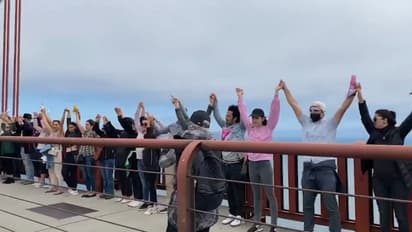
Tensions between the United States and Iran have escalated sharply as Tehran has called on its citizens to form “human chains” around key power plants, just hours before a critical deadline set by US President Donald Trump over the Strait of Hormuz. The move is being seen as both a symbolic show of unity and a defensive response to growing fears of imminent military strikes.
Iranian authorities urged especially young people to gather at major energy infrastructure sites, stating, “We hope that with the participation of young people across the country, this human chain will be formed around the power plants.” The initiative aims to signal public commitment to protecting vital national assets amid rising threats.
The call comes as Trump intensified his rhetoric, warning that Iran could face devastating consequences if it fails to comply with US demands to reopen the strategically crucial Strait of Hormuz. He reiterated a stark threat, saying, “The entire country can be taken out in one night, and that night might be tomorrow night.”
Trump has gone further by explicitly targeting civilian infrastructure, stating that “every bridge in Iran will be decimated” and that power plants would be left “burning, exploding and never to be used again” if Tehran does not meet the deadline. These remarks have drawn widespread concern internationally, with critics warning that such actions could violate international law by targeting non-military sites.
Also Read: Iran in Crisis? Shock Intel Leak Claims Mojtaba Khamenei ‘Unconscious’ in Qom
Iran, however, has rejected a US-backed ceasefire proposal, insisting on a more permanent resolution to the conflict rather than a temporary truce. The standoff reflects deeper disagreements over regional security, sanctions, and sovereignty, with Tehran signalling it will not bow to pressure.
The Strait of Hormuz remains at the centre of the crisis. As one of the world’s most critical oil transit routes, any disruption has immediate global consequences. Nearly a fifth of the world’s oil supply passes through the narrow waterway, and the ongoing conflict has already pushed crude prices sharply higher, intensifying economic uncertainty worldwide.
Meanwhile, the situation on the ground continues to deteriorate, with rising fears of a broader regional conflict involving multiple countries. Military exchanges, infrastructure damage, and mounting casualties have added urgency to diplomatic efforts, though no breakthrough has been achieved so far.
Iran’s call for human chains highlights the growing involvement of civilians in what is increasingly becoming a high-stakes geopolitical confrontation. As the deadline approaches, the world watches closely, with the next moves by both Washington and Tehran likely to determine whether the crisis escalates into a full-scale conflict or moves toward a fragile de-escalation.
Also Read: Doubts cast on US military success against Iran amid Hormuz crisis