India-Brazil ties are different, not a coloniser-like bond: Lula
Synopsis
Brazilian President Lula lauds the India-Brazil strategic partnership as a bond of equals, shunning the 'authoritarianism' of richer nations. He sets an ambitious $30 billion trade target and signs an MoU for pharmaceutical cooperation.
A Partnership of Equals
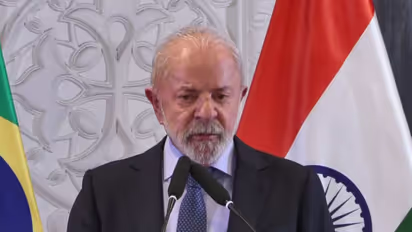
Brazilian President Luiz Inacio Lula da Silva has lauded the strategic partnership between Brazil and India, describing it as a relationship between peers that shuns the "authoritarianism" often found in negotiations with wealthier nations. Speaking at the India-Brazil Economic Forum, the President emphasised the deep-rooted similarities between the two countries and their shared vision for growth.
Highlighting the unique nature of this bilateral bond, President Lula remarked, "What is really more important is that when we're talking about a negotiation with a country like India, we are not dealing with a coloniser." He further observed that, unlike dealings with rich countries that often fail to account for the happiness of individual nations, "with India, it's different." This balanced power dynamic, where "no one is above the other country," stems from a mutual understanding of shared needs and attitudes.
Ambitious Economic Goals
President Lula noted that despite differences in religion and language, there is a profound similarity in the challenges both nations face. He asserted that this shared perspective makes it "much easier for us to work and to establish an action plan" and build partnerships between entrepreneurs from both sides. This ease of collaboration has already resulted in a significant economic trajectory. Since the President's first visit, trade has surged from USD 2.4 billion to USD 10.5 billion. While Prime Minister Narendra Modi previously established a target of USD 20 billion by 2030, President Lula expressed even greater ambition, stating, "We'll reach 30 billion dollars of trade because the economic potential of the two countries is very strong."
Strengthening Healthcare Cooperation
A key driver of this growth is the healthcare and pharmaceutical sector. Underlining this priority, India and Brazil exchanged a Memorandum of Understanding (MoU) to strengthen bilateral cooperation in the regulation of pharmaceutical and medical products. Exchanged between India's Central Drugs Standard Control Organisation (CDSCO) and the Brazilian Health Regulatory Agency (ANVISA), the agreement marks a vital step toward deeper regulatory collaboration.
Regulatory Alignment in Pharmaceuticals
The MoU establishes a structured framework for the exchange of information on medical products, including pharmaceutical ingredients, biological products, and medical devices. By promoting convergence in regulatory practices, the partnership aims to enhance the oversight of medical products and ensure the availability of safe, quality-assured medicines for both populations. This regulatory alignment complements broader cooperation in the health sector and underscores the growing synergy between the two leading Global South partners.
Solidifying Strategic Ties
President Lula noted that the seven agreements signed during this trip are "something that is very important" for the development of Brazil's industrial sector.
The President's current visit, his fifth to India, follows his participation in the India AI Impact Summit earlier this week. This period of intense diplomatic activity comes just seven months after PM Modi's state visit to Brasilia in July 2025, further solidifying the evolving strategic and economic ties between the two nations.
(Except for the headline, this story has not been edited by Asianet Newsable English staff and is published from a syndicated feed.)