India Reaffirms Support for Rohingya Return After Landmark ICJ Verdict
Synopsis
India has reiterated support for the safe return of Rohingya refugees after the ICJ ruled that Myanmar committed genocide, highlighting its ongoing humanitarian aid and development assistance to the displaced community.
India Reaffirms Support for Rohingya Return After Landmark ICJ Verdict
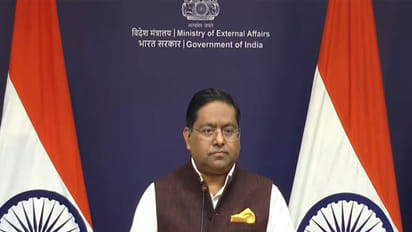
New Delhi [India], November 20 (ANI): India on Friday reiterated its support for the safe, speedy and sustainable return of displaced Rohingya people from Myanmar's Rakhine State as it took note of the International Court of Justice (ICJ) verdict holding Myanmar responsible for committing genocide against the Rohingya community. Addressing a press briefing here, Ministry of External Affairs (MEA) spokesperson Randhir Jaiswal said that India had consistently supported efforts towards the return of displaced Rohingya people and had extended humanitarian assistance through relief supplies under Operation Insaniyat and development programmes.
"We have taken note of the verdict. India has consistently supported safe, speedy, and sustainable return of the displaced Rohingya people from the Rakhine State. To this end, India had earlier, as you would be aware, we had supported Rohingya camps in Bangladesh with relief supplies in five tranches under Operation Insaniyat. We have also supported the Rakhine State Development Programme in Myanmar for this purpose," Jaiswal said. This comes after the International Court of Justice (ICJ), the United Nations' top court, on Thursday found that Myanmar committed genocide against the Rohingya group in northern Rakhine State during the military's 2017 "clearance operations". In its judgment on the merits in the case brought by The Gambia against Myanmar, with 11 states intervening, the Court held Myanmar responsible for violating its obligations under the UN Genocide Convention. The ICJ also found that Myanmar violated its obligations to prevent genocide by individuals acting alongside its security forces, punish genocide and other acts prohibited under the Convention, and enact the necessary legislation to give effect to its obligations. However, the Court found that Myanmar had not directly and publicly incited private individuals to commit genocide against the Rohingya. The Court further held that Myanmar had violated its obligation under the ICJ's January 23, 2020, order to prevent the destruction and ensure the preservation of evidence related to allegations of genocide. As a consequence, the ICJ ordered Myanmar to cease any ongoing violations and take immediate and effective steps to investigate persons reasonably suspected of committing acts contrary to the Convention and prosecute and punish them, if warranted. The Court also directed Myanmar to provide assurances and guarantees of non-repetition and adopt measures of restitution for the Rohingya, including allowing their safe, voluntary and dignified return to their places of residence and reunification of families displaced within Myanmar or abroad. Additionally, Myanmar was ordered to compensate the Rohingya group and its members for the damage caused. The ICJ stated that the amount and modalities of compensation or other reparations would be determined in a subsequent phase of the proceedings. Myanmar has been directed to submit a report to the Court within two years detailing the restitution measures adopted and the amount and modalities of compensation. Reacting to the verdict, Amnesty International Secretary General Agnes Callamard described it as a historic recognition of the atrocities committed against the Rohingya. The case was instituted by The Gambia against Myanmar in 2019, alleging violations of the 1948 Genocide Convention in connection with the military operations against the Rohingya in Rakhine State in 2017. The ICJ decided in July 2022 that it had jurisdiction to hear the case. The 2017 military campaign followed attacks by Rohingya militants on police stations in August that year. Myanmar security forces subsequently launched operations during which thousands of Rohingya were unlawfully killed, women and girls were subjected to rape and other sexual violence, men and boys were tortured in detention, and hundreds of villages were burnt down. The violence forced more than 800,000 Rohingya to flee to neighbouring Bangladesh. Amnesty International estimates that around 1.3 million Rohingya refugees now live in Bangladesh. (ANI)