India Free to Buy Oil From Any Country, Russia Says After Trump Claims Halt on Russian Crude
Synopsis
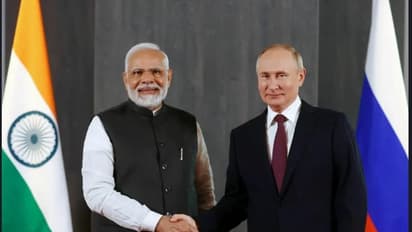
The Kremlin and global observers have clarified that India remains free to buy crude oil from any supplier, countering former President Trump's claims. Trump had asserted that India agreed to stop purchasing Russian oil under a new US trade deal.
In the wake of recent statements by former US President Donald Trump about India’s oil procurement decisions, the Kremlin and other global observers have underscored that India remains free to buy crude oil from any supplier, and there is no confirmed policy shift to halt purchases of Russian oil.
This clarification comes amid growing global scrutiny of energy ties between New Delhi and Moscow, especially following assertions tied to a newly announced India-US trade deal.
India Russia Oil Trade Controversy
The controversy began when Trump claimed that Indian Prime Minister Narendra Modi had agreed to stop buying Russian oil and would instead pivot to purchases from the United States and potentially Venezuela under terms of a new trade agreement shared by the two nations.
However, official responses from both India and Russia have cast doubt on this claim. Kremlin spokesperson Dmitry Peskov responded to the assertions by emphasizing that India has historically diversified its crude oil suppliers and continues to do so out of sovereign choice and economic logic. He stated there is “nothing new” about India’s diversified oil sourcing and that Russia has not received any formal notification from New Delhi about discontinuing Russian oil imports.
The Kremlin’s remarks are significant because they directly counter a narrative that the bilateral energy relationship between India and Russia is changing dramatically. Peskov reiterated that Russian crude is just one of multiple sources of energy for India, and New Delhi’s purchases from other countries predate recent political rhetoric. The Kremlin’s stance was echoed across multiple international news outlets reporting the clarifications.
India’s Stance
On the diplomatic front, the Indian government has not directly confirmed Trump’s claim either. While the White House described the trade deal in terms that included stopping Russian oil purchases, New Delhi’s own statements and responses have been more circumspect, with no official announcement committing to an end to Russian import reliance. In fact, India’s energy ministry and trade representatives have emphasized energy security and diversification rather than abrupt shifts in supplier strategy.
This diplomatic nuance reflects a broader geopolitical balancing act. India, the world’s third-largest crude oil importer, sources crude from many regions, including the Middle East, Africa, and increasingly discounted Russian Urals grades.
According to market data, Russian oil accounted for significant volumes of Indian imports in recent years, especially following the Ukraine conflict reshaping global oil flows. Although imports have eased somewhat from their peak, Russia remains a major supplier, contradicting the idea that India will imminently stop all Russian crude purchases.
Energy analysts also note practical considerations. Indian refineries are engineered to process heavier, sour grades of crude—characteristic of Russian exports—making substitution with lighter American shale oil both cost-inefficient and logistically challenging without substantial blending and infrastructure adjustments. Such structural realities support the Kremlin’s assertion that any shift away from Russian supplies would be gradual rather than sudden.
Beyond logistics and refinery economics, India’s decision framework involves strategic autonomy—an emphasis India regularly places on crafting independent foreign and economic policies. New Delhi’s energy diversification strategy, pursued over decades, has involved tapping multiple suppliers while safeguarding affordable supplies for India’s growing economy. This context further underscores why India’s energy policy cannot be easily reduced to commitments made during external political negotiations.
In summary, while Trump’s statements raised global attention by asserting that India had agreed to stop buying Russian oil, subsequent responses from official Russian and Indian sources have made it clear that there is no official shift in policy, and India retains full sovereignty over its oil sourcing decisions.
The Kremlin’s remarks serve both as a clarification and a reminder that New Delhi’s energy diversification strategy predates the recent bilateral engagements with the United States and will continue to be shaped by economic, logistical, and geopolitical considerations.