HRW urges Pakistan to quash academic Junaid Hafeez's conviction
Synopsis
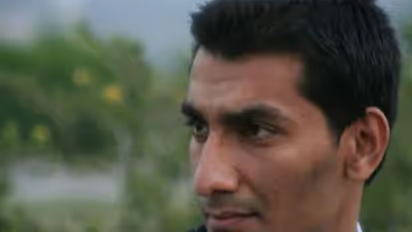
Human Rights Watch (HRW) is urging Pakistan to quash the blasphemy conviction of academic Junaid Hafeez. Held for 13 years and sentenced to death, his case highlights the unjust nature of the country's blasphemy laws, says HRW.
Human Rights Watch (HRW) has called on Pakistani authorities to quash the decades-long blasphemy conviction of academic Junaid Hafeez, who has been held in prison for 13 years under the country's strict blasphemy laws, highlighting serious concerns about due process and human rights violations.
Junaid Hafeez's 13-Year Ordeal
According to a release by the HRW, Hafeez, then in his 20s, was arrested on March 13, 2013, in Pakistan's Punjab province for allegedly posting blasphemous comments on Facebook. In December 2019, a court in Multan sentenced him to death after a trial repeatedly delayed over several years and conducted inside a high-security prison due to fears of mob violence. His appeal is still pending, and he has been in solitary confinement since June 2014.
"Junaid Hafeez's case is emblematic of the unjust and abusive nature of Pakistan's blasphemy laws," said Elaine Pearson, Asia Director at Human Rights Watch. "The authorities should quash Hafeez's conviction and safely release him and others held under the blasphemy laws."
Concerns Over Blasphemy Laws and Due Process
Under Pakistan's penal code, section 295-C and related provisions carry a de facto mandatory death sentence. Although no executions have been reported, several people remain on death row, and dozens serve life sentences. Hundreds have faced charges under the law over the past three decades, the HRW stated.
Human Rights Watch highlighted that long delays in trials, prolonged solitary confinement, and lack of access to legal representation constitute cruel and inhuman treatment. In 2014, Hafeez's defence lawyer, Rashid Rehman, was fatally shot by unidentified gunmen after facing threats for representing Hafeez.
The organisation said Pakistan's blasphemy laws are often misused to target religious minorities, settle personal disputes, extort, or punish social media activity. Authorities rarely hold perpetrators of mob violence accountable, while those accused under the law face prolonged pretrial detention, unfair trials, and harsh prison terms.
A Call for Substantive Reform
In October 2025, the Pakistani government announced plans to introduce procedural safeguards to the blasphemy laws. Human Rights Watch said implementing these safeguards and safely releasing detainees like Hafeez would signal a serious intent to reform.
"In recent months, the government has made progress in addressing some of the injustices of the country's blasphemy laws," Pearson added. "Hafeez's case is an opportunity to demonstrate real intent and seriousness toward reform." (ANI)