Florida Governor Ron DeSantis Backs Effort to Eradicate Invasive Snakes
Synopsis
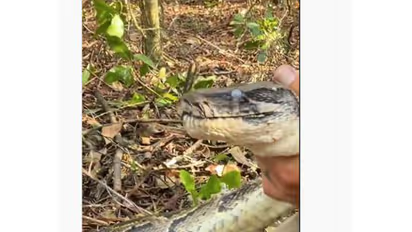
Florida Governor Ron DeSantis backs efforts to remove invasive Burmese pythons from the Everglades as native wildlife populations, including otters, show promising recovery signs due to consistent trapping and habitat protection initiatives.
Florida Governor Supports Python Eradication
Ron DeSantis, the governor of Florida, recently posted on X in support of eliminating invasive Burmese pythons from the wilds of the state’s south. “Nice — get them pythons out of the glades!” the governor posted on X on October 30 in response to a post by the handle ‘Python Cowboy’, the ‘Owner/Operator of Martin County Trapping & Wildlife Rescue in swampy South Florida!’ according to the X description. Python Cowboy had tweeted that, “Years of removing invasive pythons from the Everglades are paying off—native wildlife is finally bouncing back. Wait until you see who took over an old python den!”
Wildlife Recovery in the Everglades
The video posted with the tweet showed an otter running along a water body. “It has been really good to see the wildlife start to bounce back in the areas we are focussing. For us, there is no greater reward. But we have worked very hard to get to this point. And we want to keep it like this and continue on the same trajectory. If we don’t keep working hard, we can undo all the hard work we have done by allowing big pythons to get back in these areas and eat all the wildlife we have reclaimed this for. Even better than seeing marsh rabbits, raccoons, and other mammals start to bounce back, seeing otters back in the ecosystem, is such a good sign that we are on the right track," the voiceover on the video said.
The Return of Native Species
"Otters are very sensitive to the ecosystem and a keystone species and it is good to see them making their way back to the areas we are focussing because for years and years before that, we didn’t see any at all. Getting the otter population to this point has been a long time coming. We have actually been working on it this past five years or so. We didn’t start seeing the results of our hard work till just a couple of years ago when Otto found an otter down inside of a whole, where just a couple of years prior, we dug out a python nest,” it added.
Impact of Invasive Pythons
According to the government portal, ‘South Florida Water Management District’, Burmese pythons were first sighted in the Florida Everglades in the 1970s. “Their introduction to Florida is a result of the pet trade. Once sought-after commodities, pythons have been sold by breeders as pets or showpieces to exotic animal collectors for decades. They made their way into Florida's Everglades by accidental or intentional releases by pet owners. Since making their way into the bountiful grounds of the Everglades, these giant constrictors have thrived, assuming a top position on the food web.”
The portal continued: “Once confined to Everglades National Park and Miami-Dade County, pythons now span across much of South Florida. Pythons exist from Monroe to Palm Beach counties, and from western Broward County to Collier County. The cryptic nature of this species makes their spread difficult to track and hampers the ability of scientists to accurately estimate their population size.”
Study Findings on Ecosystem Threat
It cited a 2015 study by the United States Geological Survey, Florida Fish and Wildlife Conservation Commission and the University of Florida that researched invasive pythons’ impact on indigenous food sources. “Researchers released 95 adult marsh rabbits in areas of the Everglades known to harbor pythons. Within 11 months of the release, the study showed that pythons accounted for 77 percent of rabbit deaths, reducing prey for native predators.”
(Except for the headline, this story has not been edited by Asianetnews Editorial staff and is published from a syndicated feed.)