Explained: One Month of Iran War — Who’s Winning, What’s Trump’s Endgame?
Synopsis
A month into conflict between the US/Israel and Iran, no clear winner has emerged. Initial US/Israeli strikes damaged Iran's infrastructure but failed to secure a decisive victory. Iran has retaliated with asymmetric tactics, notably disrupting global oil supplies by targeting the Strait of Hormuz.
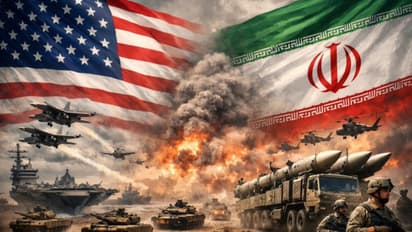
One month into the ongoing conflict involving the United States, Israel and Iran, the war has evolved into a complex and uncertain geopolitical standoff with no clear winner. What initially appeared to be a swift military campaign has now turned into a prolonged conflict, raising critical questions about strategy, outcomes, and the eventual endgame.
The war began on February 28, 2026, when US and Israeli forces launched large-scale strikes targeting Iran’s military and nuclear infrastructure. The objective was to weaken Tehran’s capabilities and force strategic concessions. While early attacks caused significant damage, including to leadership and defence systems, they failed to deliver a decisive outcome.
No Clear Winner, Only Rising Costs
After a month of fighting, analysts suggest that neither side can claim outright victory. The United States and Israel have achieved tactical successes by degrading parts of Iran’s military infrastructure. However, these gains have not translated into strategic dominance.
Iran, on the other hand, has demonstrated resilience by shifting to asymmetric warfare tactics. It has used missile strikes, drones, and regional networks to counter its adversaries, avoiding direct large-scale confrontation. More importantly, Tehran has leveraged its geographic advantage by disrupting shipping through the Strait of Hormuz—one of the world’s most critical oil transit routes.
This disruption has had global consequences. Oil prices have surged, markets have become volatile, and fears of a prolonged energy crisis have intensified. The closure and instability in Hormuz have effectively allowed Iran to exert pressure not just militarily but economically, impacting countries far beyond the conflict zone.
Also Read: Global Markets Rally As Oil Drops On Signs Of Iran-US Peace Talks
Oil Shock and Global Impact
The economic fallout has been one of the defining features of the war so far. With nearly a fifth of global energy supplies passing through the Strait of Hormuz, disruptions have sent shockwaves through global markets.
Oil prices have climbed sharply, fuelling inflation concerns and increasing the cost of living worldwide. The war has also disrupted shipping routes, aviation, and trade flows, making it one of the most significant global energy disruptions since the 1970s.
For the US, the economic impact has become a growing political challenge. Rising fuel prices and uncertainty are weighing on domestic sentiment, complicating the administration’s position at home.
Trump’s Dilemma: Escalate or Exit
US President Donald Trump now faces a difficult choice—intensify military action or seek a diplomatic exit. Reports suggest that the administration is exploring ceasefire options, even as it continues to maintain pressure on Iran.
Trump has extended deadlines for reopening the Strait of Hormuz and indicated that “talks are going very well,” signalling a possible shift towards negotiations. However, experts warn that ceasefires cannot be imposed unilaterally, especially when the opposing side holds significant leverage.
The challenge lies in defining victory. While initial goals included weakening Iran’s military and securing the region, those objectives have become harder to achieve as the conflict drags on. Mixed messaging—from threats of escalation to hints of diplomacy—has added to the uncertainty.
What Lies Ahead
As the war enters its second month, the focus is shifting from battlefield gains to long-term outcomes. Iran appears determined to prolong the conflict to increase pressure, while the US and its allies are balancing military objectives with economic and political realities.
The possibility of a ceasefire remains uncertain, with both sides holding firm positions. Meanwhile, global stakeholders are closely watching developments, given the far-reaching implications for energy security and regional stability.
Ultimately, the first month of the Iran war underscores a key reality: modern conflicts are not just fought on battlefields but also through economic leverage, strategic positioning, and global influence. With no clear winner yet, the endgame remains as uncertain as ever.
Also Read: West Asia conflict: India engages with Iran, US to de-escalate crisis