Explained: Can Reza Pahlavi Return as Iran’s King Amid Nationwide Protests?
Synopsis
Amidst intense protests in Iran against the ruling regime, Reza Pahlavi, the exiled son of the last Shah, has re-emerged as a prominent opposition figure. Some demonstrators chant for his return, using monarchist slogans as a symbol of dissent.
Iran is undergoing one of its most intense waves of unrest in years, with protests spreading nationwide over economic hardship, political suppression, and discontent with Supreme Leader Ayatollah Ali Khamenei’s rule.
In this turbulent context, the question of whether Reza Pahlavi -- the exiled son of the last Shah of Iran could return as king or as a political leader has re-emerged, even though he himself says he seeks democratic transition rather than an autocratic monarchy.
The current protests, described as the largest since the movement around Mahsa Amini’s death, have drawn unusual slogans and symbols, including anti-government chants that invoke “Long live the King” and calls for Pahlavi’s return. “This is the final battle. Pahlavi will return!” was among chants heard in Tehran and other cities before Iranian authorities shut down internet and phone services to disrupt organizing.
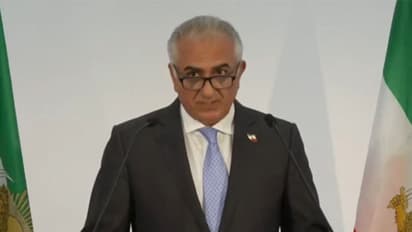
Reza Pahlavi - Exiled son of the last Shah of Iran
Pahlavi, who has lived in the United States since the 1979 Islamic Revolution toppled his father’s monarchy, has been actively urging Iranians to take to the streets. In a statement, he called on protesters to unite their demands and warned Tehran that global eyes were upon them. “Great nation of Iran, the eyes of the world are upon you. Take to the streets and, as a united front, shout your demands,” he wrote on social media.
This resurgence of his name and the monarchy in slogans reflects a deeper emotional and symbolic thread in the protest movement not necessarily a concrete blueprint for restoring monarchy but a form of expressing rejection of the theocratic regime. Many chants also target the current leadership directly, with protesters shouting “Death to Khamenei” alongside references to Pahlavi and the old imperial era.
However, the actual depth and nature of Pahlavi’s support especially within Iran remains ambiguous. Political analysts point out that while online claims from diaspora groups sometimes suggest high popularity, such figures may be exaggerated. In commentary on social media, sources have cited claims ranging from “over 80% support” — often attributed to diaspora voices — to far more modest figures. Independent studies and expert opinion suggest that Pahlavi’s genuine support within Iran could be closer to roughly one-third of the population, a substantial but far from overwhelming base.
Indeed, Pahlavi himself has stated repeatedly that he does not want to return as a traditional monarch or reclaim a crown by force. Instead, he frames his role as advocating for regime change and a democratic transition, urging Iranian security forces to side with their compatriots rather than defend the status quo. In calls directed at the armed forces and law enforcement, Pahlavi has said that Iranians and their protectors should refuse to “sacrifice yourselves for a decaying regime” and instead build a new political future together.
His strategic emphasis has been on mobilizing peaceful resistance rather than reviving monarchy per se. The imagery and chants referring to monarchy may reflect nostalgia or a desire for change rather than a specific push for a restored crown system. Some observers note that even among those who chant for the Shah’s return, it is unclear if this is literal monarchist aspiration or symbolic expression of dissent against the clerical regime.
Another complexity lies in the generational and ideological divide in Iranian society. Older Iranians who recall the pre-1979 era might have more positive associations with the Shah’s rule, while younger generations — born after the revolution — are more likely to prioritize secular governance or democratic reforms, not necessarily the return of a monarchy. Surveys conducted by independent groups point out that many Iranians want a secular republic rather than a monarchy, and that enthusiasm for Pahlavi often exists as a protest symbol rather than solid political backing.
The question of whether Pahlavi can return to Tehran as a political figure or monarch faces structural barriers as well. The Islamic Republic has stifled organized opposition within the country for decades, and Pahlavi has spent over 40 years in exile without substantial in-country political infrastructure. His ability to influence events on the ground depends largely on protest momentum, defections within security forces, and an eventual collapse or negotiated exit of the clerical leadership — scenarios that are far from guaranteed.
International diplomacy also affects his prospects. While Pahlavi has called on foreign leaders — including the U.S. president — to support Iranian protesters, powerful nations have been cautious. For instance, US President Donald Trump recently ruled out meeting Pahlavi, emphasizing that it would not be appropriate, even while voicing support for peaceful demonstrators. Critics of foreign involvement argue that external backing could be counterproductive or could empower regime propaganda that paints Pahlavi as a foreign pawn.
The broader geopolitical context — including internet blackouts, Iranian threats of harsh crackdowns, and the government’s accusations of foreign collusion — means the stakes are high for both regime defenders and opposition voices. Even with renewed chants for Pahlavi’s return, many Iranians may be more interested in wide-ranging reforms or a democratic republic rather than a restoration of the monarchy.
In summary, Reza Pahlavi’s resurgence in discourse is real but complex. While he is one of the most recognizable opposition figures and has inspired many protesters, the idea of reinstating him as king — or even a leading transitional authority — remains contested, uncertain, and dependent on evolving dynamics inside Iran. His support is visible and vocal among some demonstrators and the diaspora, but whether this translates to majority backing or a viable political path within the country is, at best, unclear and at worst, a symbolic echo of past eras rather than a blueprint for future governance.