Middle East War Impact: Oil Rises, Stocks Slip, Global Economy Feels Pressure
Synopsis
Global markets turned cautious as oil prices rose above $100 and stocks fell amid doubts over US-Iran peace talks. Iran denied negotiations, raising concerns about the ongoing war. Energy prices surged, affecting economies worldwide. Countries like the Philippines and Sri Lanka took emergency steps, while airlines cancelled flights.
Global financial markets showed fresh signs of worry on Tuesday as oil prices jumped and stock markets fell. Investors became cautious after doubts grew over whether the United States and Iran are close to any peace agreement. Markets had shown strong gains a day earlier after Donald Trump said there were “very good” talks with Iran and delayed planned strikes on energy sites. However, those hopes faded quickly when Iran denied that any negotiations were taking place.
Oil prices rise sharply
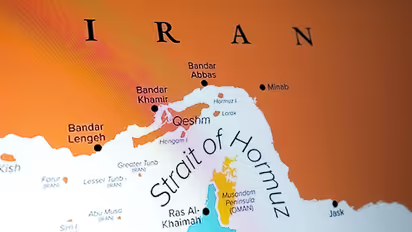
Oil prices moved up strongly again after falling the previous day. Brent crude climbed back above $100 per barrel, while US West Texas Intermediate also saw a sharp rise. Experts said the ongoing conflict and uncertainty are keeping traders nervous. The Strait of Hormuz, a key route for oil shipments, remains closed, adding more pressure on global supply.
Kathleen Brooks, a market analyst, said the war is still not over and markets need clearer signs of peace before confidence returns.
Stocks fall in US and Europe
Stock markets in Europe and the United States dropped after the earlier rally lost strength. Major indexes in New York opened lower, while European markets also traded in the red during the day.
The Dow Jones fell by 0.9 percent, the S&P 500 dropped by 0.5 percent, and the Nasdaq also slipped by 0.5 percent. In Europe, London’s FTSE 100, Paris CAC 40, and Germany’s DAX all recorded losses.
In contrast, Asian markets ended higher earlier in the day, catching up with Monday’s gains.
Doubts over Trump’s claims
The situation became more uncertain after Iran rejected claims of progress in talks. Iranian officials said no negotiations were taking place and accused the US of trying to influence oil and financial markets.
Soon after Trump’s statement about delaying strikes, reports emerged that gas facilities and a pipeline were hit in fresh attacks, adding to confusion and fear in the markets.
Analysts said investors are now questioning whether the earlier optimism was based on real progress or just temporary signals.
Unusual trading activity raises questions
Reports from major financial outlets said that a large number of oil contracts were traded just minutes before Trump announced the halt in strikes. This unusual activity has raised concerns among analysts, who are questioning whether some traders had early information and acted on it.
Those who bet on falling prices just before the announcement would have made profits when the market reacted quickly.
Eurozone shows signs of slowdown
The economic impact of the war is becoming clearer, especially in Europe. A key business survey showed that activity in the eurozone slowed in March. The HCOB Flash Purchasing Managers’ Index dropped to 50.5 from 51.9 in February. While a figure above 50 still shows growth, the sharp fall suggests weaker momentum.
Experts warned that rising energy prices and supply chain problems are hurting economic growth. This situation is often described as “stagflation”, where prices rise but growth slows.
Energy crisis spreads globally
The effects of the conflict are being felt in many countries. The Philippines declared a national energy emergency due to fears about fuel supply and rising costs. The government has allowed advance payments to secure fuel and plans to increase coal power production to keep electricity prices under control.
In Sri Lanka, authorities have taken steps to reduce energy use. Street lights, neon signs, and billboards have been switched off, and people have been asked to cut down on electricity use. Fuel prices have already gone up sharply in the country.
Fuel prices jump in Bangladesh
Bangladesh has also been hit by rising energy costs. The country increased jet fuel prices by 79 percent in response to the situation.
Since the start of the conflict, aviation fuel prices there have gone up by more than 100 percent. This is expected to affect airline operations and ticket prices.
Air travel disrupted worldwide
The aviation sector is facing serious challenges due to the war. Several airlines have extended flight suspensions across the Middle East because of safety concerns. Lufthansa has cancelled all flights in the region until the end of April. Air France-KLM and Cathay Pacific have also extended suspensions on key routes.
These cancellations are affecting travel plans and adding pressure on airline companies. Shares of major airlines have already fallen as a result.
Fuel shortage hits airlines in Asia
Vietnam’s national airline has decided to reduce domestic flights due to fuel shortages. The aviation authority said nearly two dozen flights per week will be cancelled from next month.
Airlines are also considering adding extra charges on tickets to cover rising fuel costs.
Technology services affected
The conflict has also disrupted digital services. Amazon Web Services reported problems in Bahrain after drone attacks in the region.
Several online government services were not working, showing how the impact of the war is spreading beyond just energy and transport.
Currencies and market indicators
Currency markets also showed movement as investors reacted to the situation. The US dollar gained against the Japanese yen, while the euro and pound weakened against the dollar.
These changes reflect a shift towards safer assets during uncertain times.
Overall, the situation remains uncertain as markets react to mixed signals. While there were early hopes of a peace deal, recent developments have made investors more cautious. Experts say that clear and steady progress in talks is needed to calm markets. Until then, oil prices may stay high, and global markets could remain unstable.
(With inputs from agencies)