Why China Cannot Tolerate Even Small Peaceful Gatherings in Shanghai
Synopsis
China: Shanghai’s gleaming streets hide a city where even peaceful gatherings face swift police action, digital censorship, and legal ambiguity. Behind the modern façade, control, pre-emption, and fear of escalation shape urban life.
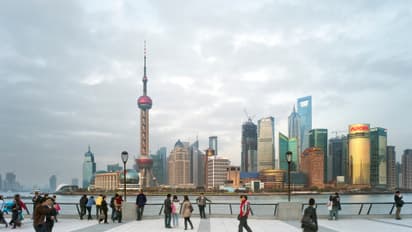
China's Shanghai presents itself as a modern, confident metropolis: a city of glass towers, orderly streets and carefully curated civic life. Yet behind this polished façade lies a state acutely aware that even the smallest, peaceful gathering can challenge the story it wants the world to see. This tension has played out repeatedly in recent years, most visibly during the 2022 demonstrations on Wulumuqi Road, where residents held blank sheets of paper to signal a frustration that could not be voiced openly.
The response then was swift. Police vans appeared within minutes, individuals were questioned on the spot, and online traces of the event disappeared almost as soon as they were posted. The episode underscored a broader truth: the system governing China’s cities is built on an intolerance for unregulated public expression, no matter how small or non-confrontational.
A Political Culture Shaped by Control
Public assembly in China is not just a question of law and order. It sits at the core of the Communist Party’s political operating system. Any group forming outside Party structures — whether a student cluster, a neighbourhood meeting or a quiet vigil — is viewed with suspicion. Officials calibrate their footing on the assumption that even a minor spark can spread quickly in densely populated urban centres.
Shanghai, as a national and global symbol, receives even tighter oversight. Authorities believe that a single image of a gathering in the city’s central districts could travel far, encourage imitation in other cities or raise doubts about local governance. As a result, policing here is pre-emptive rather than reactive. Officers move early, disperse calmly and keep the entire process out of sight of cameras.
Legal Tools That Leave Little Room for Dissent
While China’s Constitution mentions freedoms of speech and assembly, these rights are constrained by a dense cluster of regulations. Vague offences such as “picking quarrels and provoking trouble” or “disturbing social order” allow police to detain individuals who gather without prior approval. In practice, this flexibility ensures that almost any unsanctioned gathering can be construed as unlawful.
These laws are applied unevenly. In some cities, small disputes between residents and officials are resolved informally. But in Shanghai — home to multinational firms, foreign consulates and global banks — public optics matter. Detentions may be brief, but they serve a purpose: discouraging further mobilisation and sending a signal that even minor assembly is unacceptable.
A Digital Barrier Against Organisation
China’s online environment further limits the possibility of public assembly. Real-name verification, keyword filtering and platform-level monitoring make it difficult for citizens to coordinate even benign gatherings. When discussions begin trending around sensitive topics, platforms act quickly to remove posts, block terms or limit reposting.
This combination of surveillance and censorship acts as a pressure valve. By continuously filtering political conversation, the state aims to prevent grievances from coalescing into visible dissent. Shanghai’s experience during the 2022 unrest demonstrated how swiftly digital traces can vanish once authorities intervene, leaving little space for documentation or public debate.
Fear of Escalation Rather Than Fear of Protest
The state’s intolerance of small gatherings does not stem from the gatherings themselves but from what they may represent. History weighs heavily on China’s political mindset. From worker movements in the 1990s to spontaneous environmental protests in southern cities, local demonstrations have occasionally spread faster than officials anticipated. Shanghai, with its high level of connectivity and media attention, is a city where such escalation must be prevented at the earliest stage.
This approach has produced a peculiar urban landscape. Residents enjoy efficient transport, safety and modern amenities, but also navigate invisible boundaries around expression. Street performances, spontaneous vigils or civic meetings require cautious signalling, as even a benign gesture can attract the attention of local police.
A City Governed by Caution
China’s governance model depends on predictability. Small gatherings disrupt that predictability, creating openings for questions and conversations that lie outside official narratives. Shanghai’s intolerance of public assembly therefore reflects a larger national logic: stability is maintained not only by managing discontent but by preventing it from appearing at all.
For now, the city remains outwardly calm. But beneath that calm is a finely tuned system built on pre-emption, digital control and legal ambiguity — a system that sees even the quietest gathering as a potential tremor in a political landscape where uncertainty is never welcome.