Blood Rain in War Zones? Myth or Natural Phenomenon | Science Decodes
Synopsis
Blood rain refers to rainfall that appears red or reddish-brown in colour. As explained by the UK Meteorology Office, “blood rain” occurs when “red coloured dust or particles get mixed into rain.”
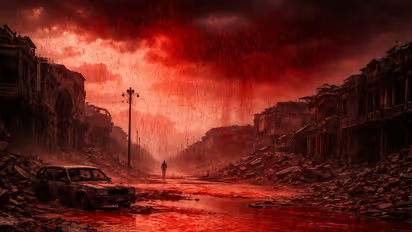
“Blood rain” has long stirred panic, especially in regions scarred by war. When skies turn red and rain appears to fall in shades of red, it fuels chilling myths, warnings, and wild speculation. But beneath visuals lies a far more grounded truth - science, not superstition.
This phenomenon, observed across centuries and continents, is neither rare nor supernatural. Scientists say the explanation is surprisingly simple.
What is “blood rain”?
Blood rain refers to rainfall that appears red or reddish-brown in colour. As explained by the UK Meteorology Office, “blood rain” occurs when “red coloured dust or particles get mixed into rain.” The intensity of the colour can vary - from faint orange hues to deep red - depending on the concentration of particles. Importantly, the rain contains no blood, only water mixed with microscopic solids.

How dust and iron particles turn rain red
Research published in the International Journal of Astrobiology points to atmospheric dust as the primary reason. When powerful winds, storms, or even explosions disturb the ground, fine particles are thrust high into the atmosphere.
These particles then act as nuclei around which water droplets form. As rain falls, it carries these particles back to the surface. If the dust contains iron, it imparts a reddish hue due to iron oxide, the same compound responsible for rust. In some cases, airborne spores from algae can also tint the rain red.
Why war zones report it more often
The link between blood rain and conflict zones is largely environmental. War intensifies conditions that favour this phenomenon. Explosions, heavy military movement, and widespread land disruption generate vast amounts of dust and debris.
Bomb blasts may result in the elevation of particles into the atmosphere
Dry and damaged land may result in the formation of particles
Smoke and ash may combine with clouds
When rain eventually falls, it washes these particles down, creating the illusion that the red rain is directly tied to violent events but in reality, it follows the same scientific process seen in natural conditions.
Accounts of blood rain date back thousands of years, often interpreted as ominous signs or divine warnings. Today, science has demystified these fears.
According to the BBC, dust storms from regions like the Sahara can travel vast distances, merging with rain clouds and producing red rainfall far from their origin. In places like Morocco, microorganisms have also been identified as contributors.
Is it dangerous?
Despite its alarming appearance, blood rain is largely harmless. It may stain surfaces or vehicles but poses no serious health risk. Scientists describe it as “a natural atmospheric process involving dust incorporated into water droplets.”