Bangladesh Armed Forces Day Celebrated with Tribute in New Delhi
Synopsis
Bangladesh Acting High Commissioner Preeti Rahman celebrated the 55th Armed Forces Day in New Delhi, praising India's 1971 support and highlighting deepening bilateral defence ties, joint peacekeeping efforts, and shared strategic interests.
Bangladesh Armed Forces Day Celebrated with Tribute in New Delhi
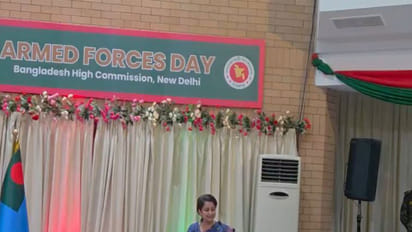
Bangladesh’s Acting High Commissioner to India, Preeti Rahman, on Saturday said India’s contribution and sacrifices during Bangladesh’s 1971 Liberation War remain an important and deeply respected part of the shared history between the two neighbouring countries. Addressing a reception marking the 55th Armed Forces Day of Bangladesh in New Delhi, Rahman expressed gratitude for India’s support during Bangladesh’s struggle for independence and highlighted the historical bonds between the two countries.
“We value and deeply appreciate the contribution and sacrifices of the people and the military personnel of India during our Liberation War. It remains an important and profoundly respected part of our shared history,” she said. Emphasising the significance of bilateral ties, Rahman said the shared history, vibrant people-to-people contacts and mutual interests in peace and prosperity in South Asia continue to bind India and Bangladesh. “Our two armed forces cooperate closely and have an important role to play in addressing shared challenges, including disaster response, maritime security and regional stability,” she said.
Paying tribute to the martyrs and freedom fighters of the 1971 Liberation War, the Bangladesh Acting High Commissioner said their extraordinary courage and supreme sacrifices paved the way for the emergence of Bangladesh as an independent nation. She also recalled the contribution of foreign governments and friends of Bangladesh who stood by the country during its difficult period in 1971. Speaking about the development of Bangladesh’s armed forces, Rahman said the present government, led by Prime Minister Tarique Rahman, is committed to carrying forward their modernisation and development, with a focus on addressing emerging technological and strategic challenges. She also highlighted Bangladesh’s contribution to United Nations peacekeeping operations, noting that its armed forces have been participating in such missions for nearly four decades and have helped the country gain international recognition as a leading contributor to global peace and security. Rahman further acknowledged India’s National Defence College for its support, noting that four officers of the Bangladesh Armed Forces had recently completed their year-long programme at the institution. She expressed hope that the successful exchange programme between the two countries would continue to expand.
Lieutenant General Yashpal Singh Ahlawat, Director General of Military Intelligence (DGMI), attended the event as the Chief Guest and congratulated the people of Bangladesh and its armed forces on the occasion. In his address, Ahlawat described India and Bangladesh as natural partners with deep-rooted historical, social and cultural linkages. “Defence cooperation remains an important pillar of our engagement. The synergy between our two armed forces is driven by trust, understanding and mutual respect,” he said. He highlighted the expanding military engagement between the two countries, including training programmes, multi-domain cooperation, cultural exchanges, border engagements and visits at various levels. Ahlawat also commended the Bangladesh Armed Forces for their contributions to national development, humanitarian assistance, disaster response and international peacekeeping efforts. He expressed confidence that continued military engagements would further strengthen bilateral relations and contribute to regional peace and prosperity. The 55th Armed Forces Day marks a significant milestone in Bangladesh’s military history, commemorating the role played by its armed forces during the 1971 Liberation War.