Horror repeats itself: dead fish float on Hebbal Lake
Synopsis
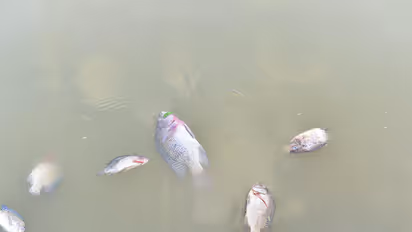
Sewage, silt and garbage flood into its lakes every time it rains in Bengaluru. The result of that is massive destruction of aquatic habitat and deaths of thousands of fish. Earlier, it was the Ulsoor and Devarbeesanahalli lakes where the fish-kill grabbed national headlines. This time, it is Hebbal Lake in North Bengaluru where thousands of fish have floated on the surface of the water, dead.
Morning walkers around the tank bund and the park noticed the dead fish. Some were floating and a few were swimming on the surface showing the signs of suffocation, clearly indicating depleted dissolved oxygen levels.
"I was told about the mass fish-kill on Sunday. On Monday morning, when I went, I witnessed the sad scene. I have also collected the dead fish and water samples to know the exact cause of death of the fish and will be taking the help from experts from IISC in this regard. A preliminary investigation says that the deaths are due to sewage inflow into the lakes,". said Vijay Nishanth of Urban Conservationists.

Agreeing with Nishanth, Ram Prasad, convener, Friends of Lakes, explained that the sewage enters into lakes from upstreams such as Bommasandra, Vidyaranyapura, Kodigehalli and Dollars Colony. The sewage treatment plant (STP) at Hebbal also fails to stop this, and that is one of the reasons why the fish die.
The residents feel that an STP at Bommasandra lake that also joins Hebbal requires another STP. Bharath Electronic Limited (BEL) has come forward to take up the setting up of the STP, but the revenue department tahsildar has to take up the initiative to allot a place for the STP."
BEL has already cleared ₹13 crore for the project and is hoping that the revenue department will clear necessary files soon. “Once the STP is set, we will maintain it for 10 years," said a source from BEL.
Also read: Dead fish fill Ulsoor lake amid blame game
BWSSB claimed that no sewage was going into the lake. Tahsildar Balappa H was also not available for comment.
Ajay Mishra, CEO, Lake Development Authority acknowledged the fish deaths and said, "Surface water and silt entered into the lakes from two inlets following rains. This resulted in low oxygen levels.
“The process has been initiated to clear the dead fish and BWSSB, which is doing sewage diversion work, has been asked to finish the work fast as the rains may flood the lake with silt again," he said.