TSLA, SPCX Slide Premarket: Musk’s Merger Talk Reportedly Creates ‘Mess’ — Rivian Exec Urges Tesla To ‘Stop Doing These Calls’
Synopsis
Morningstar raised Tesla’s fair value estimate to $475 from $450, citing stronger FSD adoption and lower spending assumptions.
- Musk’s endorsement of the merger reportedly raised shareholder concerns that could delay preliminary talks by several weeks.
- Former Rivian executive Phil Beisel urged Tesla to stop earnings calls, while Musk promised a more entertaining presentation next time.
- Optimus could take at least a year to reach 20,000 units weekly.
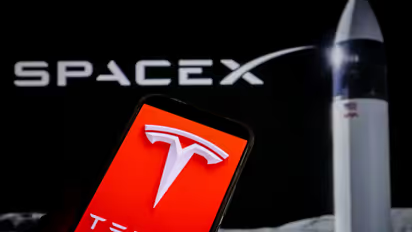
Tesla (TSLA) and SpaceX (SPCX) shares slid in premarket trading on Thursday after CEO Elon Musk’s merger endorsement reportedly complicated deal talks and former Rivian executive Phil Beisel criticized Tesla’s earnings call despite praising its business.
TSLA stock traded about 5% lower, while SPCX stock slipped 3% in early trading.
Musk’s Merger Remarks Raise Fresh Deal Concerns
Musk’s comments about a potential $3.5 trillion merger could invite shareholder scrutiny and delay talks by several weeks, Reuters reported. A person with direct knowledge apparently called the disclosure a “mess,” citing concerns about protecting Tesla shareholders’ interests.
SpaceX apparently approached Tesla in recent weeks, and the companies are considering a SpaceX acquisition of Tesla or a merger under a new holding company, with an all-stock deal among the options. Talks remain preliminary, with independent committees evaluating a potential transaction and excluding Musk from discussions because of his conflicting interests.
On Tesla’s earnings call, Musk offered little more: “With regard to a potential merger with SpaceX, I think I said everything that should be said yesterday, tap dancing through a minefield there,” he said.
Tesla’s Earnings Call Draws Fire
Beisel, a former Rivian and Apple executive, said that Tesla obscured improving vehicle demand and progress in Robotaxi and Optimus. “Tesla had a great quarter and a bad earnings call,” he said on X. “What should have been one of the easiest stories in the world to tell ended up sounding like a box of complexity.”
His recommendation: “I think Tesla should stop doing these calls. They don't have to. Put out the deck and stop.” Beisel praised SpaceX’s clearer communication and suggested a merger could help, with a broader role for President Gwynne Shotwell.
“I think this gets fixed when Tesla and SpaceX merge,” he said. “She has the right mix of IQ and EQ and is the perfect match for Elon.” Musk himself acknowledged the criticism after an X user graded SpaceX’s earnings production ‘A+’ and Tesla’s ‘F-’, saying, “Fair enough, we will make it more entertaining next time.”
Morningstar Looks Past Tesla’s Production Constraints
Morningstar raised Tesla’s fair value estimate to $475 from $450, implying a 23% upside from current levels. “Our increased valuation comes from higher full self-driving adoption assumptions and a lower near- and medium-term capital expenditures forecast,” it said.
The firm attributed the selloff to production constraints that could slow near-term vehicle and battery growth. It expects capacity expansion to support deliveries but considers Tesla’s late-2027 Optimus sales timeline potentially optimistic, forecasting initial commercial sales by the decade’s end.
Analysts Split Over FSD Demand And Musk’s Delivery Promises
More than 75% of Tesla’s North American deliveries included a paid subscription sign-up for its Full Self-Driving driver-assistance software. Automotive gross margin excluding credits rose to 18.1% from 16.3%. “75% FSD take up despite first month free is nuts. Unheard of. Stock reaction is missing the mark,” New Street Research’s Pierre Ferragu said, citing recurring revenue and Cybercab growth.
GLJ Research’s Gordon Johnson instead challenged Musk’s five-million-vehicle annual target for 2030 against his earlier 20-million goal. “So… you’re excited that he’s cut 2030 from 20M to 5M? And missed every target?” he said.
Robots And Chips Keep Tesla’s Spending In Focus
Musk said Optimus could take at least a year, possibly longer, to reach production of 20,000 units a week. Deepwater Asset Management’s Gene Munster interpreted that as a possible year-end 2027 run rate, implying roughly one million units in 2028.
“The Optimus conversation is still considered optionality for most investors. That call option that has massive value,” Munster said.
Tesla lowered its 2026 capex forecast to about $20 billion from more than $25 billion, while expecting spending to rise in subsequent years. It generated more than $1.5 billion in third-quarter free cash flow and ended the period with over $45 billion in cash and investments.
The companies also have a major shared funding question: Musk said Terafab could cost more than $100 billion over the long term, with the division of costs between Tesla and SpaceX still undecided.
How Do Retail Traders Feel About TSLA And SPCX?
On Stocktwits, retail sentiment for TSLA was ‘extremely bullish’ amid ‘extremely high’ message volume, while SPCX sentiment was ‘bullish’ amid ‘high’ message volume.
While TSLA stock has declined 14% year-to-date, SPCX has fallen 1% over the same period.
For updates and corrections, email newsroom[at]stocktwits[dot]com.<
Stay updated with all the latest Business NewsShare Market NewsIPOsGold PriceDA Hike8th Pay CommissionAsianet News Official App