MU Stock Slides For Fourth Day: Taiwan Union Reportedly Secures Strike Authorization Over Bonus Dispute
Synopsis
According to a Reuters report, a total of 1,994 union members backed strike authorization, but no walkout has been announced.
- The union says Micron’s NT$1 million cash bonus for Taiwan employees does not meet its demand for a permanent profit-sharing system.
- The union is still hoping Micron will put forward a concrete profit-sharing plan.
- Mediation with the Taoyuan union ended without agreement in September, while talks with a separate Taichung union are continuing.
Micron Technology (MU) shares fell in early morning trade on Wednesday, on track to extend their three-day slide, after a Taiwan union reportedly won authorization to strike over the company’s bonus scheme dispute.
According to a Reuters report, 1,994 members of the union representing workers at Micron’s Taoyuan operations in northern Taiwan voted in favor of a strike, accounting for 99% of those who cast ballots.
However, the authorization does not mean workers have begun a walkout. The union said the timing and details of any strike remain under discussion.
According to the report, the union is still hoping Micron will put forward a concrete profit-sharing plan. It has also asked members to take October 19 off to attend a rally in Taipei, which it said would not constitute a strike.
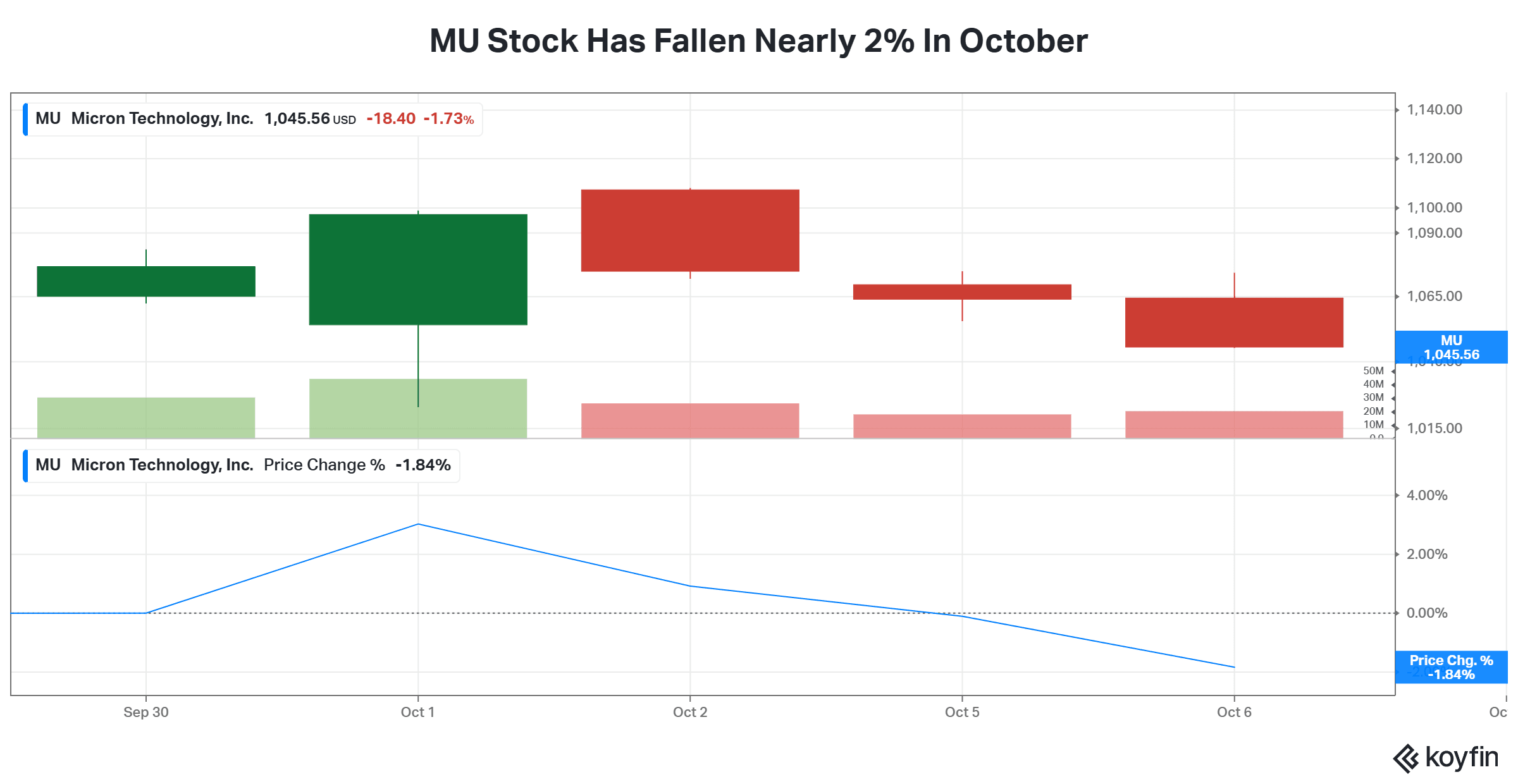
MU stock dropped nearly 3% in pre-market trade and was among the top trending tickers on Stocktwits at the time of writing. Retail sentiment around the company continued to trend in ‘extremely bullish’ territory over the past day.

The drop came despite DA Davidson raising the price target on Micron to $3,000 from $2,100. The firm kept a ‘Buy’ rating on the shares.
In a note to investors cited by TheFly, DA Davidson felt that investors are "early in their journey of understanding" Micron's value and that "that journey will lead them to assigning a far higher multiple."
The firm said Micron is on a growth trajectory for the next 3-5 years, "which is what the market has not yet acknowledged.”
Micron’s Taiwan Bonus Dispute Escalates
The dispute centers on Micron’s employee rewards announced in September. The company said it would provide fiscal 2026 rewards to more than 60,000 employees worldwide, including a NT$1 million ($31,386) cash bonus for employees in Taiwan.
The Taoyuan union said the payout did not meet its demand for a permanent profit-sharing system. It also objected to the announcement being made while labor mediation was underway, without an agreement with the union.
Mediation between Micron and the Taoyuan union ended without a deal in September. A separate union representing workers at the company’s Taichung operations is still negotiating with management. Together, the two unions represent more than 80% of Micron’s roughly 15,000 employees in Taiwan.
Micron said it takes employee concerns seriously and will continue discussions with its workers. Another session with the Taichung union is planned for later this month. Taiwan’s labor ministry has also urged the company to make concrete proposals to address the dispute.
Potential Strike Puts AI Memory Supply In Focus
Taiwan is a major production hub for Micron’s dynamic random-access memory (DRAM) and high-bandwidth memory (HBM). Both are important components in data centers, with HBM playing a central role in systems used to run artificial intelligence workloads.
The possibility of a strike adds a labor-related risk to an already tight memory-chip market. Any disruption to production could raise concerns about supply, although the scale of the potential impact would depend on the timing, duration and scope of any industrial action.
Micron’s Taiwan operations are particularly important to its position in the HBM market, where it competes with South Korea’s Samsung Electronics and SK Hynix (SKHY).
AI Memory Supply Also Faces Patent Risks
The labor dispute comes one day after Netlist (NTLS) said Micron had agreed to pay $30 million per quarter for five years for a license to its patent portfolio, including technology related to "high bandwidth memory."
Netlist previously won a $445 million patent-infringement verdict against Micron in 2024. In September, it also filed a new complaint seeking to block imports of certain Micron chips used in AI products from Google (GOOGL), Nvidia (NVDA) and Broadcom (AVGO).
Netlist CEO C.K. Hong said the agreement "further validates the value of our AI memory technologies."
Micron’s Record Results Raise The Stakes
The labor dispute comes after Micron reported record fourth-quarter (Q4) results last week. The company posted revenue of $54.23 billion and adjusted earnings of $33.42 per share. It also forecast first-quarter fiscal 2027 revenue of $61.5 billion.
“Not only do we have more customers and customers wanting to do long-term supply agreements with us,” Mehrotra said in an interview with CNBC. “In fact, we cannot fulfill the demand of our customers.” The company is investing to meet growing demand from AI infrastructure providers, making production continuity an important consideration for investors.
On Stocktwits, retail traders seemed optimistic that Micron would find a way to compromise with the workers.
View this Stocktwits post
View this Stocktwits post
MU stock has gained over 265% year-to-date and more than 440% in the last 12 months.
Read also: Nvidia Gets Another AI Demand Signal As Foxconn Sales Hit Record High – Apple Faces Holiday Test
For updates and corrections, email newsroom[at]stocktwits[dot]com.<
Stay updated with all the latest Business NewsShare Market NewsIPOsGold PriceDA Hike8th Pay CommissionAsianet News Official App