‘The Big Short’ Investor Michael Burry Says 'Inhuman Institutions' Are Fueling Sharper Market Panic, Faster Rebounds

Synopsis
In a new Substack note, Burry stated that market declines are now more severe but recover faster, creating volatility patterns that differ from historical behavior.
- Michael Burry pointed to volatility-targeting funds and large multi-manager hedge funds as key drivers of rapid market moves.
- He estimated the S&P 500’s cyclically adjusted price-to-earnings ratio (CAPE) is near record levels, exceeding the peak recorded during the dot-com bubble.
- Burry added he is positioning against popular momentum trades while favoring undervalued and out-of-favor stocks.
Michael Burry, ‘The Big Short’ investor known for his early bet against the 2008 housing bubble, said on Monday that today's stock market behaves less like a collection of human investors and more like the product of "inhuman institutions."
In a new post on his Substack, Burry stated that modern markets experience sharper volatility spikes, faster recoveries, and stronger reactions to relatively small losses than historical patterns would suggest. "In case one is wondering, no, there is no human investor that works like that," Burry wrote. "It takes a village of inhuman institutions to create a market like this."
He pointed out that markets today panic roughly four times harder on a bad day than they did between 1985 and 2000, yet that fear also fades about twice as fast, often within a month.
Burry added that investors also appear more rattled by smaller drops than by bigger ones, and are more likely to buy the dip during intraday trading.
Burry Says Market Valuations Have Reached Historic Levels
Burry estimated the S&P 500’s cyclically adjusted price-to-earnings ratio (CAPE), a long-term valuation measure popularized by economist Robert Shiller, at between 44.8 and 45.7 times earnings. According to him, that level would exceed the previous peak recorded during the dot-com bubble in 1999.
He also noted that over the past 15 years, the S&P 500 has spent very little time significantly below its previous highs compared with historical periods. He said that the sustained strength was statistically unusual, suggesting that the market’s resilience has been driven by factors beyond traditional investor behavior.

Why Machines, Not People, Are Driving Market Swings
Burry pinned much of the market’s changing behavior on volatility-targeting funds and large multi-manager hedge fund platforms.
Volatility-targeting strategies, used by risk-parity funds, commodity trading advisers (CTAs), and insurers, adjust market exposure based on volatility levels. When markets are calm, these funds can increase exposure through leverage. When volatility rises, they may be forced to reduce positions regardless of underlying fundamentals.
Burry also highlighted what he called “the platforms,” referring to large multi-manager hedge funds that allocate capital across hundreds of independent trading teams, often known as "pods."
He estimated that roughly $400 billion to $500 billion of leveraged capital is deployed across about 1,800 pods, creating several trillion dollars of market exposure. According to Burry, these firms account for more than 30% of trading volume. He added that since many pods hold similar positions, losses in one trade could trigger a broader unwinding process.
Burry Bets Against Popular Momentum Trades
Given what he sees as a market increasingly shaped by crowded positions and leverage, Burry said he is positioning against some of the market’s most popular trades. "I take the opposite side of the pod shops' favorite trade," he wrote. "I am long undervalued, out-of-favor securities. I am short highly valued momentum favorites."
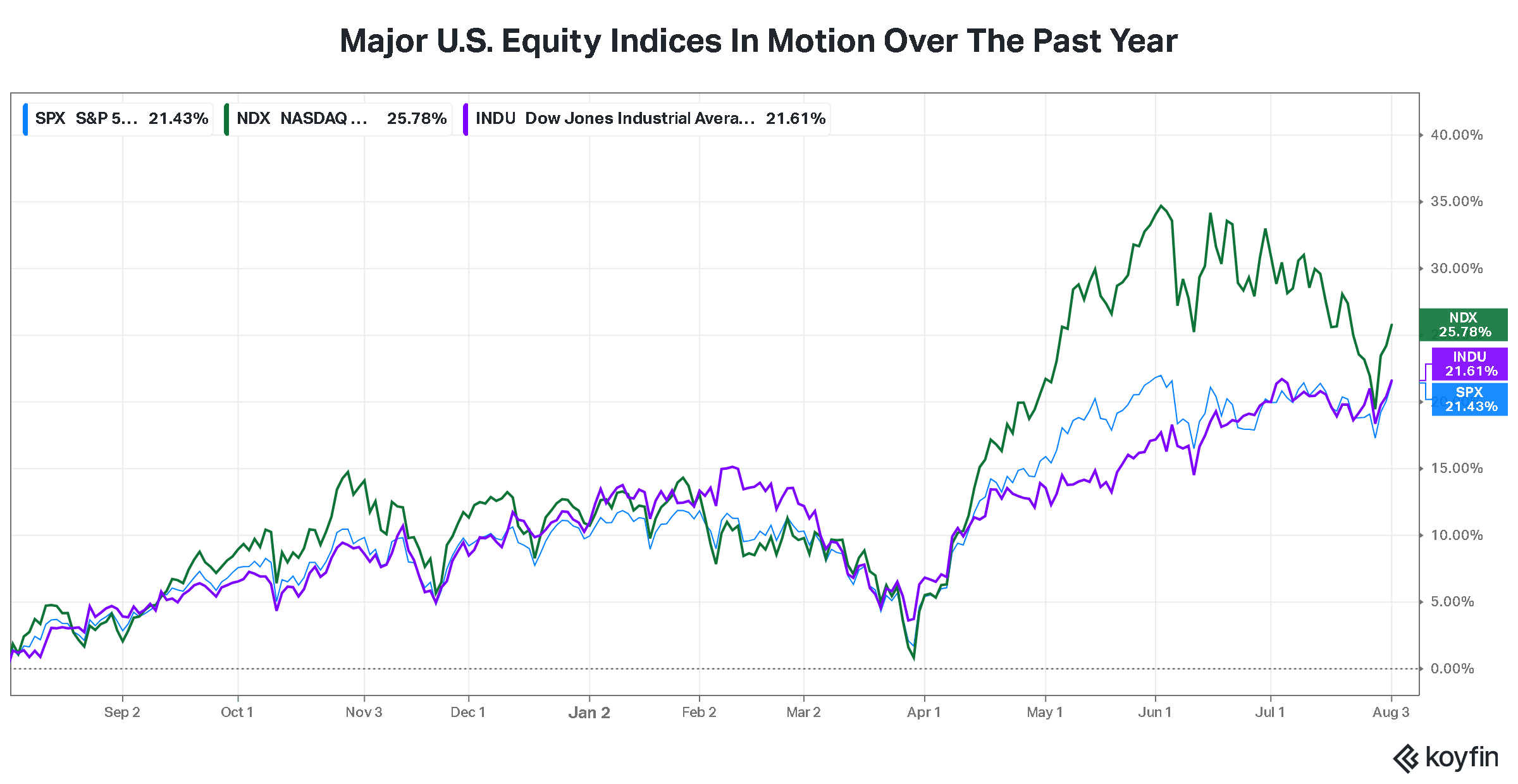
U.S. equities gained in morning trade on Monday after last week’s volatility. The SPDR S&P 500 ETF (SPY) was up 1.06%, the SPDR Dow Jones Industrial Average ETF (DIA) gained 1.13%, and the Nasdaq-100 tracking Invesco QQQ Trust (QQQ) moved 1.30% higher. Retail sentiment around QQQ on Stocktwits remained in ‘bearish’ territory over the past day.
Read also: BMNR Stock Falls Despite Bitmine Retiring Over 16M Shares In 3 Weeks – Tom Lee Highlights Ethereum’s Edge Over Nasdaq 100
Stay updated with all the latest Business NewsShare Market NewsIPOsGold PriceDA Hike8th Pay CommissionAsianet News Official App