Karnataka: Human-wildlife conflict rises 183% in five years; elephants, big cats trigger fear near villages
Synopsis
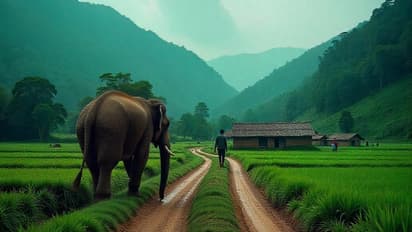
Karnataka has seen a 183% rise in human-wildlife conflict over five years, mainly due to elephants, tigers, and leopards. Habitat loss, invasive species, and infrastructure are driving fear near villages and farms, says a new study.
Bengaluru: Karnataka is witnessing an alarming rise in human-wildlife conflicts, with incidents increasing by a staggering 183% over the past five years. A new study reveals that elephants, tigers, and leopards are the main contributors to this surge, particularly in the ecologically sensitive southern Western Ghats region.
Over 34,000 incidents mapped across Karnataka
A comprehensive study titled "Geospatial Identification of Human-Wildlife Conflict Hotspots in the Southern Western Ghats", published in the journal of the Indian Society of Remote Sensing, analysed 34,000+ incidents reported between 2019 and 2023. The research was carried out by environmental experts from institutions based in Karnataka and Telangana, who used geospatial mapping to identify conflict hotspots and clusters across the state.
Monsoon season sees the highest conflict rate
Contrary to the common belief that wildlife moves into human zones during the summer in search of food and water, the study shows monsoon months (July–September) account for the highest share of conflicts (30.9%), followed closely by October to December (29.4%).
Elephants, tigers and leopards behind 98% of conflict cases
Among the 17 wildlife species involved in reported conflicts, elephants, tigers, and leopards were responsible for nearly 98% of the cases. Other animals involved included wild boars, spotted deer, gaurs, sloth bears, and peacocks.
Most incidents near farmlands and plantations
According to the study, 97.8% of crop damage was caused by elephants, while gaurs accounted for 1.4%. Most incidents occurred near agricultural lands, orchards, and plantations, especially within 100 to 500 metres of human settlements. Tigers and leopards were frequently seen closer to human habitations, sometimes within 100 metres.
Invasive plant species contributing to habitat stress
One of the key findings of the study links the rise in conflict to the spread of invasive plant species, such as Lantana camara and Senna spectabilis.
“These invasive species obstruct the natural movement of animals and degrade their native food sources,” said GM Pavithra, one of the researchers.
Legacy practices such as monoculture plantations have significantly contributed to habitat degradation, further displacing wildlife and pushing them closer to human zones.
Elevation and infrastructure play critical roles
The study found that elephant conflicts were more frequent at higher elevations (750–1,000 metres), while carnivore encounters occurred more often at lower altitudes (500–750 metres) near the forest edges. The researchers also highlighted the impact of roads and infrastructure, which fragment animal corridors and increase access to croplands, intensifying human-wildlife encounters.
Rs 27 crore disbursed in compensation
The Karnataka government has reportedly disbursed nearly Rs 27 crore as compensation to affected individuals between 2019 and 2023, reflecting the economic burden of escalating wildlife conflict.
Call for strategic, science-driven interventions
The authors of the study call for urgent and science-backed interventions to mitigate the rising conflict. These include better habitat management, restoration of wildlife corridors, stricter regulation of infrastructure development near forests, and effective removal of invasive species.
Stay updated with the Breaking News Today and Latest News from across India and around the world. Get real-time updates, in-depth analysis, and comprehensive coverage of India News, World News, Indian Defence News, Kerala News, and Karnataka News. From politics to current affairs, follow every major story as it unfolds. Download the Asianet News Official App from the Android Play Store and iPhone App Store for accurate and timely news updates anytime, anywhere.