Bengaluru Plans To Produce Biogas From 3,000 Metric Tonnes Of Wet Waste: Maheshwar Rao
Synopsis
Bengaluru plans to produce biogas from up to 3,000 metric tonnes of wet waste daily as part of its waste management strategy. New plants, upgrades, and decentralised biomethanation units aim to convert organic waste into clean energy.
In a major step towards sustainable waste management, Bengaluru is planning to significantly expand its biogas production capacity by processing thousands of tonnes of wet waste every day. The initiative aims to convert organic waste into clean energy while reducing the burden on landfills.
Authorities have already begun work on several projects across the city and are preparing to increase the processing capacity from about 2,000 metric tonnes of wet waste to nearly 3,000 metric tonnes in the coming years.
The plan was announced by GBA Chief Commissioner Maheshwar Rao, who said the initiative is part of the city’s broader strategy to strengthen solid waste management and promote renewable energy.
New Biogas Plants Planned Across the City
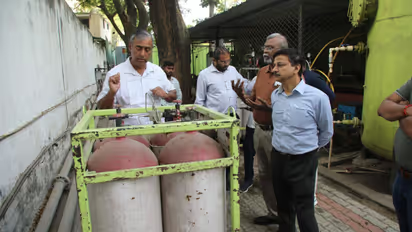
Maheshwar Rao shared these details after visiting the Kasa-Rasa biogas plant in Koramangala on Saturday. He revealed that work has already started on a 300-tonne biogas plant in Koramangala in partnership with GAIL India.
In the Kannahalli area, authorities have approved an agreement with the Sataram organisation to build a facility capable of processing 1,000 tonnes of wet waste.
A company has also been selected to operate a 50-tonne plant in Herohalli. This plant is already producing around 1,500 kg of gas daily from the wet waste it processes.
Rao explained that the gas produced from these plants is being sold as Bio-CNG. He added that the authorities are exploring plans to supply this gas directly to homes in the future.
“We are also planning to lay pipelines to supply this gas to households,” Rao said.
Land Requirements For Biogas Plants
According to the Chief Commissioner, each biogas plant requires about two to three acres of land. Authorities are therefore working to identify suitable locations across all corporation zones.
“We are also focusing on upgrading existing plants to produce biogas and supply it to nearby hotels,” Rao added.
Six Existing Plants Being Upgraded
Karigowda, CEO of Bengaluru Solid Waste Management Limited, provided additional details about the city’s existing facilities.
He said that 12 biogas plants were built earlier, but only six are currently operational. These six plants process around 30 tonnes of waste to generate biogas.
Efforts are now underway to renovate and restart the remaining six plants.
Each operational plant produces about 200 kg of gas, which is largely used internally. The surplus gas is utilised to generate electricity for lighting nearby parks and public spaces.
Karigowda also highlighted the success of the 8.5-tonne plant in Koramangala, which supplies about 120 kg of biogas daily to a nearby hotel.
“At ₹70 per kg, this generates a daily income of around ₹8,400,” he said.
Four Decentralised Biomethanation Plants Under Construction
Maheshwar Rao also announced plans to establish four decentralised biomethanation plants across the city to further strengthen waste processing capacity.
Two of these plants are expected to become operational soon, while construction work on the remaining two is currently underway.
Part Of Bengaluru’s Long-Term Waste Management Plan
The Chief Commissioner emphasised that the plan to process up to 3,000 tonnes of wet waste for biogas production is part of the city’s broader solid waste management strategy and upcoming tender process.
By converting organic waste into energy, the city aims to reduce landfill waste, generate renewable fuel, and create a more sustainable urban environment.
Stay updated with the Breaking News Today and Latest News from across India and around the world. Get real-time updates, in-depth analysis, and comprehensive coverage of India News, World News, Indian Defence News, Kerala News, and Karnataka News. From politics to current affairs, follow every major story as it unfolds. Download the Asianet News Official App from the Android Play Store and iPhone App Store for accurate and timely news updates anytime, anywhere.