Bengaluru Farmer: How Baby Bottle Gourds For Qatar Bring Rs 15 Lakh A Month
Synopsis
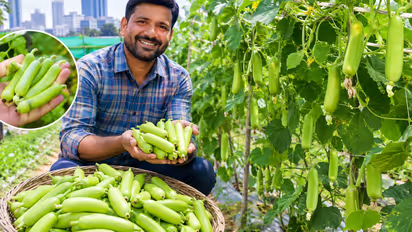
A Bengaluru farmer is earning up to Rs 15 lakh in monthly gross revenue by growing baby bottle gourds for overseas markets. Karigowda harvests the gourds at around 500 grams and sells them to middlemen who export them to Qatar.
A Bengaluru farmer is showing how adopting an unconventional farming model and tapping into overseas demand can help boost agricultural income. Karigowda, who grows bottle gourds on his 3.5-acre farm in Karlapura Palya in Bengaluru Urban district, harvests the vegetables when they are still small, weighing around 500 grams each. Middlemen purchase the baby bottle gourds directly from his farm and export them to Qatar, giving him access to a specialised market beyond local buyers.
Baby Bottle Gourds Fetch Rs 50 Per Kg
Karigowda harvests around one tonne of baby bottle gourds a day during the season from September to December. He sells the produce for around Rs 50 per kg, which translates to about Rs 50,000 in daily sales when the full one-tonne yield is achieved. Based on this, he estimates his monthly revenue at around Rs 14 lakh to Rs 15 lakh, while total sales could reach approximately Rs 45 lakh over the 90-day harvest period.
However, Karigowda clarifies that these figures represent gross revenue and not net profit. Expenses such as farm labour, seeds, fertilisers, drip irrigation, packaging and transportation have to be deducted to calculate the actual profit.
Middlemen Export Produce To Qatar
Karigowda does not export the produce directly. Instead, middlemen purchase the baby bottle gourds from his farm, arrange the packaging and send them to Qatar. He chose to cultivate the crop after learning about the demand for small-sized bottle gourds in overseas markets. By targeting this specialised demand, he has found an alternative to depending solely on local buyers.
Swikr 045 F1 Variety Used
Karigowda grows a specific bottle gourd variety called ‘Swikr 045 F1’. He sows the seeds during June and July and begins the first harvest around 70 days later. The harvesting season generally runs from September to December, during which he aims to meet the demand for small-sized bottle gourds.
Farmer Turns To New-Age Farming
Karigowda comes from a traditional farming family, with both his grandfather and father engaged in agriculture. After completing his graduation, he chose to continue farming. His family had traditionally grown crops such as maize, tomatoes and brinjals, but fluctuating market prices often made it difficult to earn a stable income.
He later began experimenting with new crops and modern farming practices, including green manure and drip irrigation. He realised that cultivating produce with strong demand in overseas markets could provide better income opportunities.
Diversifying Crops To Reduce Risk
Karigowda does not depend entirely on baby bottle gourds and also grows brinjals and tomatoes on his farm. He sells his brinjals at the Hosur market in Tamil Nadu, where he receives around Rs 45 per kg. By growing multiple crops and catering to both local and overseas markets, he aims to reduce the risks associated with depending on a single crop.
Karigowda's approach highlights how farmers can explore specialised markets, adopt modern farming methods and diversify their crops to create new income opportunities.
Stay updated with the Breaking News Today and Latest News from across India and around the world. Get real-time updates, in-depth analysis, and comprehensive coverage of India News, World News, Indian Defence News, Kerala News, and Karnataka News. From politics to current affairs, follow every major story as it unfolds. Download the Asianet News Official App from the Android Play Store and iPhone App Store for accurate and timely news updates anytime, anywhere.