Supercomputer Creates Highly Realistic Virtual Brain with Millions of Neurons
Synopsis
Using Japan’s Fugaku supercomputer, scientists created the most realistic virtual mouse cortex yet. With millions of neurons and billions of synapses, it allows researchers to observe how brain diseases like Alzheimer’s and epilepsy begin and spread.
Scientists have achieved a groundbreaking milestone: a digital reconstruction of the entire mouse cortex so detailed and lifelike that it behaves almost like a real brain. Using Japan’s Fugaku supercomputer, researchers combined massive biological datasets with ultra-high-performance computing to simulate millions of neurons and billions of synapses in extraordinary detail.
A New Window Into the Living Brain
The virtual cortex captures not just structure but behavior—how neurons fire, communicate, and shift their electrical activity. This gives scientists an unprecedented chance to watch neurological diseases such as Alzheimer’s, epilepsy, or cognitive disorders unfold step-by-step inside a safe digital environment.
With nearly 10 million neurons, 26 billion synapses, and 86 interconnected regions, the model allows researchers to examine brain function in ways never before possible, without relying solely on real tissue experiments.
Fugaku: The Supercomputer Behind the Breakthrough
Japan’s Fugaku supercomputer—one of the world’s fastest—performed the quadrillions of calculations needed to run the simulation. Researchers from the Allen Institute collaborated with teams in Japan, combining deep biological datasets with computational power capable of recreating sub-cellular processes like ion flows and membrane voltage changes.
The work will be presented at SC25, the world’s leading supercomputing conference.
Studying Disease, Cognition, and Neural Dynamics
This digital brain opens new possibilities for investigating:
- how Alzheimer’s-related damage travels through circuits
- how seizures spread during epilepsy
- how brain rhythms influence attention
- how networks coordinate to produce thoughts and behavior
Instead of single-experiment studies, scientists can now test many hypotheses rapidly and safely inside a virtual model.
From Data to a Digital Mind
Using the Allen Institute’s Brain Modeling Toolkit, researchers transformed biological measurements into functioning neurons. A tool called Neulite converted equations into virtual cells capable of spiking and signaling like living neurons.
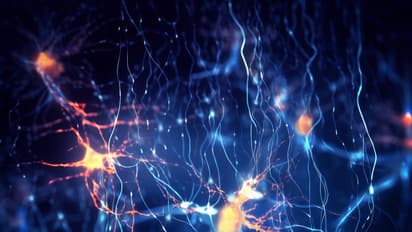
Watching the simulation is strikingly similar to observing real brain activity—clusters of neurons flash with electrical impulses as signals ripple across regions.
Toward Whole-Brain and Future Human Models
Researchers say this work proves that extremely large, biologically realistic brain models are achievable. It’s the first step toward full-brain simulations—and eventually, digital models of the human brain built with scientific precision.
“Constructing the whole mouse brain is now within reach,” the team said. “We’re entering an era where understanding the brain also means being able to build one.”