Did You Know? Blue LED Light Removes Stubborn Stains Without Fabric Damage
Synopsis
Scientists report that powerful blue LED light can remove yellow stains from sweat, oils, and foods like tomato and orange juice without harming delicate fabrics. The method outperforms hydrogen peroxide and UV light, a safer, sustainable option.
Stubborn yellow stains from sweat and food might one day be erased without bleach or harsh chemicals, thanks to an innovative stain-removal technique using high-intensity blue LED light.
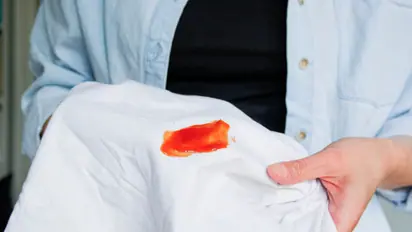
Researchers reporting in ACS Sustainable Chemistry & Engineering have demonstrated that exposing fabrics to blue light, along with ordinary oxygen from the air, can break down yellow pigments left behind by sweat, oils, and foods like tomatoes and oranges. Unlike hydrogen peroxide or UV light treatments, the method works without damaging delicate materials such as silk.
Breaking Down Stubborn Pigments
Sweat stains and food discoloration often come from compounds such as squalene and oleic acid in skin oils, as well as pigments like beta carotene (in carrots and oranges) and lycopene (in tomatoes). These molecules are notoriously difficult to remove and often survive standard washing.
To test their method, the researchers first exposed vials containing beta carotene, lycopene, and squalene to blue LED light for several hours. The substances lost their color as oxygen molecules in the air helped break them into colorless compounds.
Outshining Bleach and UV
The team then applied squalene onto cotton swatches, heated them to simulate aging, and treated them with three methods: hydrogen peroxide, UV light, and blue LED light. The blue light performed best, removing yellow discoloration more effectively than the other treatments. UV exposure, in contrast, actually created some new yellow compounds.
Importantly, the blue LED technique also worked on more delicate fabrics such as silk and polyester, reducing stains without weakening or discoloring the fibers. It also showed success against orange juice, tomato juice, and aged oils.
Sustainable and Fabric-Friendly
“Our method uses visible blue light and oxygen as the oxidizing agent, avoiding the need for harsh chemicals,” says corresponding author Tomohiro Sugahara. “This makes it far more sustainable compared with conventional bleaching.”
While the early results are promising, the researchers note that more testing is needed to assess long-term fabric safety and colorfastness. They hope to develop a blue light system that could eventually be used both in homes and in the textile industry.
The work was carried out by scientists from Asahi Kasei Corporation, a Japanese company that develops fibers, chemicals, and electronic materials.