Year Ahead 2026: From AI171 Crash Findings to Safer Operations – What Lies Ahead for Indian Aviation?
Synopsis
As India enters 2026, the aviation sector looks to recover from a turbulent year marked by the AI171 crash, flight disruptions and regulatory action, with hopes pinned on safer operations, clearer norms and long-term reforms.
After a year marked by fatal accidents, large-scale flight disruptions and heightened regulatory scrutiny, India’s aviation sector enters 2026 hoping for stability, accountability and long-term reforms. Industry stakeholders, passengers and policymakers alike are looking ahead to safer operations, smoother travel and greater clarity on unresolved crises.
A Year of Tragedy and Disruptions
The year 2025 proved to be one of the most challenging periods for Indian aviation. A series of accidents and operational failures resulted in the loss of 260 lives and severely disrupted travel plans for thousands of passengers. The situation worsened towards the end of the year with mass flight cancellations by IndiGo and recurring air traffic control constraints.
As the New Year begins, expectations are centred on stronger safety oversight, more reliable helicopter operations in sensitive regions such as the Kedarnath valley, and greater stability in airfares.
Awaited AI171 Crash Report Remains Central
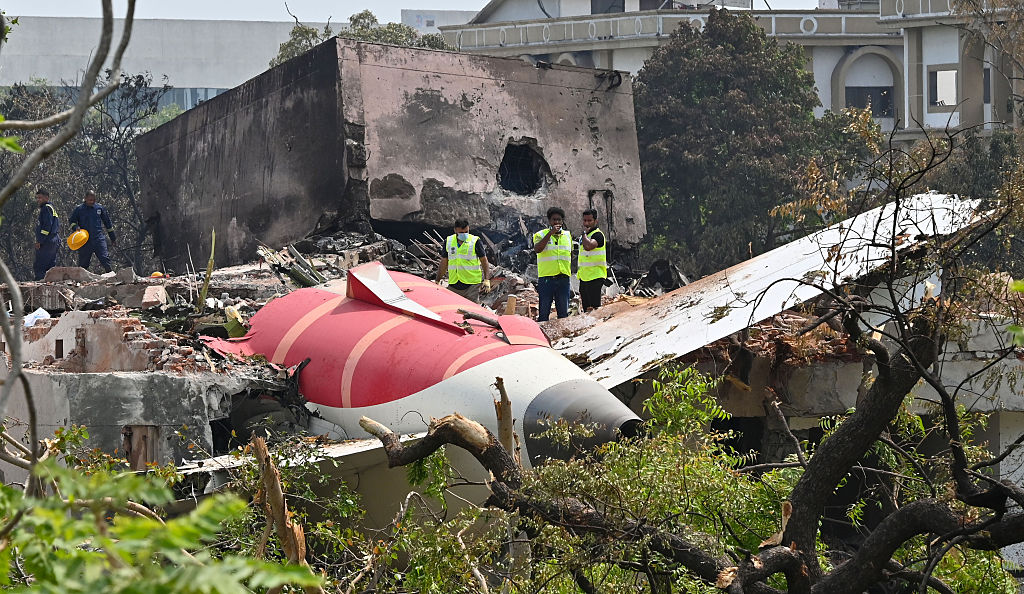
One of the most closely watched developments in 2026 will be the final investigation report into the Air India AI171 crash. The London-bound Boeing 787-8 aircraft crashed shortly after take-off from Ahmedabad on June 12, killing 241 passengers and crew members and 19 people on the ground. One passenger survived the accident.
The Aircraft Accident Investigation Bureau released a preliminary report in July, stating that fuel supply to both engines was cut off within a second of each other, leading to cockpit confusion moments after take-off. Audio recordings indicated disagreement between the pilots over the fuel cut-off, fuelling widespread speculation.
Civil Aviation Minister K Rammohan Naidu has repeatedly stated that the probe is being conducted transparently and in accordance with global norms, dismissing concerns about interference. The final report is expected to provide clarity on whether pilot action, technical malfunction or other factors caused the tragedy.
Helicopter Safety and Rising Accident Concerns
Aviation safety remained under scrutiny throughout the year, with eight air accidents reported by the end of July, resulting in 274 deaths. These included the AI171 crash, three trainee aircraft accidents and four helicopter crashes.
Repeated chopper accidents in hilly terrain, particularly around Kedarnath, renewed concerns about risk management in high-altitude operations. Authorities are now exploring tighter operational controls, improved weather monitoring and enhanced pilot training to reduce risks in such regions.
IndiGo Disruptions Expose Structural Weaknesses
IndiGo faced one of its toughest years despite expanding its international footprint. Operational disruptions caused by inadequate planning during the rollout of revised Flight Duty Time Limitations led to thousands of flight cancellations, triggering widespread passenger inconvenience.
The Directorate General of Civil Aviation reduced the airline’s winter schedule by 10 per cent and issued show-cause notices to senior executives. A high-level probe followed, highlighting broader concerns about crew shortages, fatigue management and operational resilience.
The crisis also drew renewed attention to India’s domestic aviation market structure, where IndiGo and the Air India Group together control over 90 per cent of capacity. Regulators are examining allegations of unfair business practices amid concerns over limited competition.

Air India Turnaround Faces Headwinds
Air India’s ambitious revival under the Tata Group encountered obstacles due to global supply chain disruptions and aircraft delivery delays. However, the airline is set to induct its first Boeing 737 and Boeing 787-9 aircraft in the coming months, signalling gradual progress in its fleet modernisation plans.
The airline also faced higher operating costs following Pakistan’s airspace closure, which forced longer routes for several European and North American destinations.
Airspace Closures and Technology Gaps
Flight operations were further strained during Operation Sindoor in May, when airspace restrictions linked to the India–Pakistan conflict disrupted schedules across carriers. In November, Delhi airport experienced major air traffic control system failures, delaying more than 800 flights and highlighting the urgent need for technological upgrades.
Additional disruptions occurred after precautionary software updates were carried out on more than 300 A320 family aircraft to address a potential flight control issue.
Regulatory Action and Industry Pressures
Throughout 2025, airlines including Air India, IndiGo, Akasa Air and Air India Express faced penalties and regulatory action for safety and compliance lapses. Despite strong passenger demand, financial and operational pressures persisted, with regional carrier FlyBig suspending operations in October.
Concerns also grew over incidents of GPS spoofing and signal interference reported at several major airports, including Delhi, Mumbai, Chennai and Bengaluru.
Meanwhile, airport tariff regulation saw changes, with the Airports Economic Regulatory Authority introducing a multi-tiered user charge framework to streamline airport fee structures.
Leadership Changes in Aviation Governance
The year also saw leadership transitions at key institutions. Samir Kumar Sinha took charge as Civil Aviation Secretary, while Faiz Ahmed Kidwai assumed office as Director General of Civil Aviation, raising expectations of stronger regulatory oversight.
What Lies Ahead for Indian Aviation in 2026?
Several developments are expected to shape the sector in the coming year:
• The final AI171 crash report is expected to bring closure to lingering questions and influence future safety protocols.
• Pilot fatigue management, manpower shortages and smoother implementation of revised FDTL norms will remain priority issues.
• New airlines are likely to enter the market, while existing carriers plan network expansion.
• Continued global supply chain challenges may push airlines to focus on aircraft retrofitting and maintenance.
• Induction of wide-body aircraft, long-range A321 XLR planes and the opening of new airports at Navi Mumbai and Noida are expected to support growth.
Cautious Optimism for the Future
Despite its challenges, India remains one of the world’s fastest-growing aviation markets. As the International Air Transport Association has noted, while the country has historically been a difficult environment for airline profitability, it possesses all the fundamentals needed to become a strong and sustainable aviation market.
In 2026, the focus will be on converting growth into resilience, strengthening safety systems, and restoring passenger confidence after a year that tested the sector like few others.
Stay updated with the Breaking News Today and Latest News from across India and around the world. Get real-time updates, in-depth analysis, and comprehensive coverage of India News, World News, Indian Defence News, Kerala News, and Karnataka News. From politics to current affairs, follow every major story as it unfolds. IMD cities weather forecastsRain Cyclone Asianet News Official App