West Bengal To Be Renamed Paschim Banga? Check Proposed Name And How India's State Renaming Process Works
Synopsis
CM Suvendu Adhikari stated that a proposal to rename the state 'Paschim Banga' will be presented during the next Assembly session.
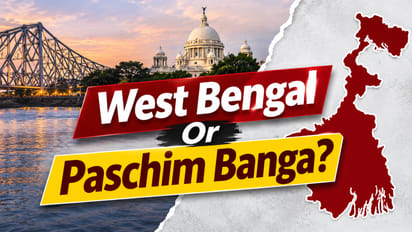
Twenty-five years after Calcutta was renamed Kolkata in 2001, West Bengal is about to change its name again. Chief Minister Suvendu Adhikari said on Monday that a proposal to rename the state 'Paschim Banga' will be filed in the upcoming Assembly session.
"The proposal to rename West Bengal 'Paschim Banga' will be tabled in the House on December 9," Adhikari stated during a meeting. The West Bengal Assembly's winter session is set for December 4-14.
Calcutta was renamed Kolkata to reflect its original Bengali pronunciation (Kōlkātā), rather than its Anglicised colonial form.
But what is the procedure for renaming a state in India, and who has the ability to do so?
Article 3 of the Constitution governs the process of renaming a state, granting Parliament the authority to change a state's name by legislative action.
Step-by-step approach for state name change
1. Proposal or resolution: The procedure usually starts with the involved state Assembly approving a resolution requesting a name change and sending it to the Center, namely the Ministry of Home Affairs (MHA). However, Parliament has the authority to originate a bill. The MHA may obtain No Objection Certificates (NOCs) from many agencies, including the Survey of India, the Registrar General of India, the Department of Posts, and the Ministry of Railroads.
2. Presidential recommendation: A measure to change the name of a state can only be filed in either House of Parliament if the President recommends it.
3. Referral to the state legislature: The President submits the measure to the relevant state legislature for feedback within a defined time frame. The state legislature's opinion is advisory, not binding on Parliament.
4. Parliamentary passage: After the prescribed period expires or the state legislature provides its views, the measure can be considered and passed by both Houses of Parliament with a simple majority. It is considered routine legislation and does not require a constitutional modification under Article 368.
5. Presidential assent and schedule update: Once enacted by both Houses, the law is transmitted to the President for assent. Once adopted, the bill changes the state's name in the First Schedule and, when relevant, the Fourth Schedule of the Constitution.
India has renamed various states to suit their linguistic and cultural identity. Uttaranchal was renamed Uttarakhand in 2007, while Orissa became Odisha in 2011. Kerala changed its name to Keralam in August of this year. Similarly, Pondicherry was renamed Puducherry in 2006. These revisions demonstrate the flexibility of the constitutional system under Article 3.
In addition, Bombay was renamed to Mumbai, Madras to Chennai, and Calcutta to Kolkata.
What West Bengal aims to achieve with the name change
According to Suvendu Adhikari, the state was founded on June 20, 1947, and the name 'Paschim Banga' should represent this history. BJP officials in West Bengal have also emphasised the Partition of Bengal, in which part of the territory became East Bengal, now Bangladesh, as well as the role of Syama Prasad Mookerjee and others in promoting the creation of a homeland for Bengali Hindus to change the name.
State BJP leaders, including party president Samik Bhattacharya, have said the proposed name will tie the state to its heritage while ensuring the use of its Bengali name.
Previous attempts to rename West Bengal featured many suggestions and disputes. In 2018, the Mamata Banerjee-led Trinamool Congress administration approved a resolution adopting the name 'Bangla'. The state has also mentioned its alphabetical position in official listings as one of the grounds for the move. However, the Centre did not authorise the adjustment.
Stay updated with the Breaking News Today and Latest News from across India and around the world. Get real-time updates, in-depth analysis, and comprehensive coverage of India News, World News, Indian Defence News, Kerala News, and Karnataka News. From politics to current affairs, follow every major story as it unfolds. IMD cities weather forecastsRain Cyclone Asianet News Official App