Uzbek boy, 14, becomes India's youngest mechanical heart recipient
Synopsis
A 14-year-old Uzbek boy with severe heart failure became India's youngest recipient of a mechanical heart (LVAD). The pioneering surgery in Gurugram saved him after his condition became life-threatening while on the transplant waiting list.
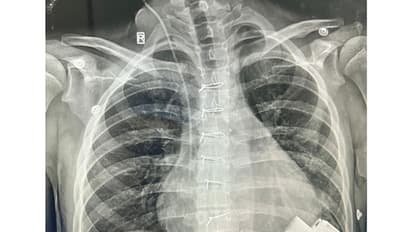
A 14-year-old child from Uzbekistan, Dilshod, had been living with dilated cardiomyopathy for almost ten years. This is a condition in which the heart muscle becomes very weak, making it difficult for the heart to pump blood to the various parts of the body and ultimately causes 'Life-Threatening Heart Failure'. This 14-year-old boy is now the first child to be discharged in northern India after receiving a Mechanical Heart - a Left Ventricular Assist Device (LVAD). He is now also the youngest recipient of an LVAD device in India. This pioneering surgery was performed at the Department of Pediatric Cardiac Surgery at a Private Hospital in Gurugram.
Worsening Condition Leads to Urgent Action
Over the past year, his illness had gotten worse, with advanced heart failure that severely limited his ability to do simple day-to-day activities- even getting out of bed and walking a little would make him short of breath. Every couple of weeks, he would need hospitalisation in the ICU to control his heart failure, and since 'No Treatment' was available for this end-stage heart condition in his home country, doctors suggested that they should either seek treatment at an advanced centre in India or prepare for an unfortunate eventuality. His parents brought him to Artemis Hospital in Gurgaon, about two months back, where he was put on the waiting list for a Pediatric Heart Transplant. His condition was getting worse by each day that passed and over the past 2 months he has been admitted FOUR times because of Heart Failure, to the Pediatric Cardiac ICU at Artemis Hospital and once this was with 'Cardiogenic Shock' where his organs (Liver, Kidneys) started to shut down and fail because the heart could not pump enough blood to these organs. At this point it was clear that he would probably not survive the waiting time needed for a donor heart to be available for transplant and so after discussion with the family doctors at the Department of Pediatric Cardiac Surgery, Artemis Hospital decided to do something that has not been done for a child of this age, in India- Implant an 'Artificial Heart Pump- LVAD; to save his life.
The Life-Saving Implantation
After a complex and difficult surgery that involved connecting a Mechanical Heart Pump to the main pumping chamber of the heart and then connecting the other end (outflow) to the Aorta - the artery that takes blood to various organs of the body. The whole pump is so small that it sits inside the chest and connects to a computerised controller and battery through a small wire that comes out of the skin. As the device was started, it pumped blood from the left ventricle to the body and within a few days in the Pediatric Cardiac ICU, his organ functions started recovering.
An Extraordinary Recovery
After surgery, he has made an extraordinary recovery, from being limited to bed most of the times, he is now walking, going up and down the stairs, has been discharged from the hospital and soon is expecedt to return to his country, go to school, play but with a controller and a battery to remind him of how strong he and his family has been through this dangerous illness.
A Milestone Achieved Through Teamwork
Commenting on the procedure, the surgeon, Dr Aseem R Srivastava, Chief Paediatric Cardiac Surgery, said, "This surgery was one of the most challenging procedures we have undertaken, and while it is a significant surgical milestone for us, it is by no means an individual achievement. This outcome was made possible only because of extraordinary teamwork across the hospital. I sincerely thank our remarkable team members from Paediatric Cardiac ICU, Pediatric Cardiology, Pediatric Cardiac Anaesthesia, Perfusionists, Nurses, Physiotherapists, Biomedical engineers, and the hospital administration. Their round-the-clock commitment and coordination ensured that this child was given a second chance at life."
Overcoming Challenges in Pediatric Care
Experts say that putting in a paediatric LVAD is especially difficult because of issues like the child's small size, long-term heart disease, and the need for a lot of care after the surgery. This case shows how timely clinical decisions, coordination between different medical fields and advanced medical care can make a huge difference in the lives of children with life-threatening heart failure. (ANI)
Stay updated with the Breaking News Today and Latest News from across India and around the world. Get real-time updates, in-depth analysis, and comprehensive coverage of India News, World News, Indian Defence News, Kerala News, and Karnataka News. From politics to current affairs, follow every major story as it unfolds. IMD cities weather forecastsRain Cyclone Asianet News Official App