Union Minister Bhupender Yadav Defends Special Electoral Roll Revision
Synopsis
Union Minister Bhupender Yadav defends the Special Intensive Revision of voter rolls, rejecting claims of manipulation and asserting that the process strictly follows legal protocols and Election Commission guidelines for electoral integrity.
Defending the Electoral Roll Revision Process
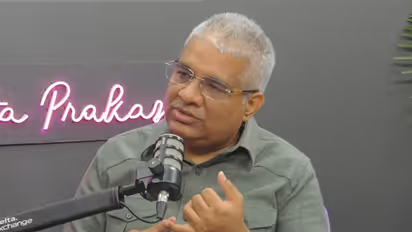
Defending the Special Intensive Revision (SIR) of electoral rolls, Union Cabinet Minister Bhupender Yadav said that an Electoral Registration Officer (ERO) cannot delete anyone’s name from the voter list without giving them an opportunity to respond. He accused the Congress of questioning constitutional institutions after electoral defeats and said the revision process follows the law and the rules laid down by the Election Commission of India (ECI). "The ERO cannot delete anyone's name without giving them an opportunity," Union Minister Yadav said.
In an interview with ANI, speaking about the controversy surrounding the SIR and allegations of voter list manipulation raised by the Opposition, Yadav said the exercise was not new and had been conducted eight times previously in India. "First of all, I would like to make it clear to you that the SIR is not happening for the first time in India. I have repeated this in my previous interviews that since 1950 and till now, there have been eight SIRs; the ninth is happening now. When the eighth SIR happened, it was the government of India, but it was completed in the Congress regime, and it is happening for the ninth time," he said.
Criticism of Opposition and Political Conduct
Yadav said the SIR was not being conducted for the first time in India and that the current exercise was the ninth of its kind since 1950. While criticising the Congress, he said that the party only attacks institutions, including the Supreme Court and the Election Commission of India. "Unfortunately, the politics of the Opposition is problem-free politics. Problem-free because the Congress party has fallen after its defeat. Today, the main issue of Indian politics is governance. Congress does not debate in Parliament; it raises questions about Parliament. If Congress does not agree with any decision of the Supreme Court, its leaders criticise it. And the process of the Election Commission, in which they themselves are a part of, they are questioning it. But their conduct should be seen," he added.
Verification Procedures and Technological Integration
Explaining the role of political party representatives and government officials in the verification process, he said Booth Level Agents (BLAs) and Booth Level Officers (BLOs) are involved in collecting and checking the relevant forms. "When it came to Bihar, there are two representatives at the bottom of the polling booth. The first representative is of the political party, which is called the BLA. The second representative is of the government, which is called the BLO," he said.
Yadav said the BLO distributes forms to households and that the process can now be completed digitally, with the officials uploading it on the Election Commission's ECINet platform. "Now that technology has come, then BLA and BLO can upload it on ECINet. After that, the BLA of the political party is given a notice. They can check it. If any name is missing, they can include it. If it is not possible to do it, then through Aadhaar technology, you can do it through ECINet," he said.
He added that draft electoral rolls are also shared digitally and that people whose names are missing can submit Form 6 along with a declaration. Explaining the process, the Union Minister said the Representation of the People Act and the election rules provide for two types of revisions. "So, even when there were eight SIRs earlier, SIRs were carried out in the same way. Secondly, we should understand one thing clearly: the Representation of the People Act and the election rules under the Election Commission provide for two types of revisions. First, summary revision and second, fresh revision," Yadav said.
"The summary revision takes place because when elections take place, some people die, there is migration, and there is duplication. Because of this, the electoral rolls undergo continuous revision in the short term. There is a cycle of SIR in the long term. In the cycle of SIR, there is a kind of fresh revision, which has happened eight times before," he added.
Document Requirements and Legal Context
Responding to concerns over the documents required during the exercise, Yadav said, "It is true that in the Election Commission, two things are required. First of all, the person whose name is mentioned in the document should be a citizen of India. And secondly, their age should be 18 years," he said.
"Now, there is a claim by the Congress that you are asking for documents. So, when you go to get a passport, don't you need documents to make a passport? You have to provide your identity proof, whether it is Aadhaar, voter ID, PAN card or driving licence. You have to provide proof of your date of birth. You have to provide a municipal birth certificate or a Class 10 marksheet. You have to provide your address proof whenever you get your passport made. You will have to give your photographs," Yadav added.
He questioned the argument against document verification, pointing out that while a relatively small proportion of India's population holds passports, the country has millions of voters. "Even when you go to make a PAN card, 10 per cent or 8 per cent of people have a passport in India. But there are so many voters. There are millions of voters. Then what happens is that anyone can come and register their vote in India? This means that anyone can come and register. And it has happened eight times before. The first eight times were during Congress," he said.
Yadav also referred to the legal proceedings in the Bihar SIR case, saying that four documents were sought during the 2004 exercise, while 11 were requested in the current process. He added that the Supreme Court had further increased the number of documents. (ANI)
(Except for the headline, this story has not been edited by Asianetnews Editorial staff and is published from a syndicated feed.)Stay updated with the Breaking News Today and Latest News from across India and around the world. Get real-time updates, in-depth analysis, and comprehensive coverage of India News, World News, Indian Defence News, Kerala News, and Karnataka News. From politics to current affairs, follow every major story as it unfolds. IMD cities weather forecastsRain Cyclone Asianet News Official App