Bhupender Yadav Labels Attempts to Storm Public Offices As Anarchy
Synopsis
Union Minister Bhupender Yadav criticizes attempts to storm public offices, labeling them as anarchy. He asserts that democracy requires adherence to legal procedures and proof rather than relying on perception and disruptive protest tactics.
Minister Yadav Defines Limits of Democratic Protest
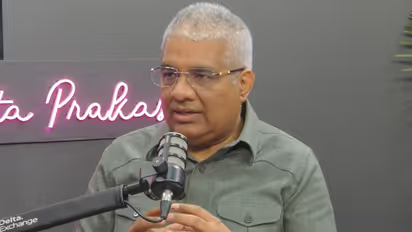
Union Minister for Environment, Forest and Climate Change Bhupender Yadav has drawn a firm line between legitimate democratic protest and unlawful disruption, declaring that attempting to storm sensitive public premises or constitutional offices cannot be framed as democratic opposition, but rather "unrivalled anarchy." In an interview with ANI, Yadav defended law enforcement measures and Supreme Court-mandated guidelines regarding designated demonstration sites, asserting that while Article 19 of the Constitution guarantees freedom of speech and peaceful assembly, it does not offer a license to bypass the rule of law.
Yadav's remarks come amidst heightened political friction following recent high-profile protests in New Delhi surrounding the Election Commission's Special Intensive Revision (SIR) of electoral rolls, demonstrations led by the Cockroach Janta Party (CJP), and Congress Leader of the Opposition Rahul Gandhi's allegations against constitutional bodies.
Procedures vs Perception in Democracy
Addressing recent attempts by demonstrators to enter government establishments, including Akashvani Bhawan and Election Commission premises, Yadav emphasised that grievances must be pursued through designated legal and parliamentary avenues. "You cannot enter places like Akashvani or storm public premises without permission and claim it as a democratic right. That is not opposition; that is unrivalled anarchy. Democracy provides proper routes—whether through the floor of Parliament, formal representations to the Election Commission, or filing petitions before the Supreme Court. One cannot simply bypass legal procedures and create disruptions for the sake of perception. What is the compulsion of questioning constitutional institutions without any proper application or proof? Till today, where is the ground-level proof? Where were the formal complaints lodged? Democracy runs on procedures and proof, not merely on perception or press conferences," he said.
Upholding the Rule of Law
Dismissing allegations that the central government is suppressing peaceful dissent, the Union Minister cited established judicial precedents governing public demonstrations. "Who has stopped demonstrations? People have staged dharnas for months. But if norms set by the Supreme Court are broken, the law will take its course. If individuals breach their bonds or legal conditions, the judiciary acts accordingly. That is not the government stifling free expression; it is the rule of law," said Yadav.
Rebuffing opposition comparisons between current law enforcement actions and the 1975 Emergency, Yadav noted that the ruling leadership fought directly against Emergency-era censorship. "Our leaders fought against the Emergency; we did not impose it. During the Emergency, fundamental rights were snatched, the press was gagged, and opposition leaders were jailed without recourse. Today, every institution functions independently and within the constitutional framework. Winning elections is not a matter of arrogance; it is the blessing and mandate of the people. In a vibrant democracy, humility is essential. We have unwavering faith in our democratic traditions and constitutional mechanisms," said the Union Minister.
Views on Political Face-offs
Weighing in on the ongoing political face-off, former Tamil Nadu BJP President K Annamalai defended Rahul Gandhi's right to question the Special Intensive Revision (SIR) process, but warned against weakening constitutional bodies in the process. Addressing the police handling and legal proceedings involving CJP leaders, Annamalai remarked, "Rahul Gandhi has every right to question the SIR process, but institutional damage should not be caused. Keeping leaders in prison can make them even more popular," Annamalai observed, questioning whether police procedural delays during bail hearings were counterproductive and risked increasing resentment among youth toward the Union Government.
Responding to Annamalai's comments and debates over protest funding, Minister Bhupender Yadav stated, "Invite Annamalai on your podcast and ask why he believes the protests are not funded by outside forces. Every person has the freedom to express their opinion under Article 19, but facts and circumstances must substantiate claims. If someone has facts, they should be questioned directly." (ANI)
Stay updated with the Breaking News Today and Latest News from across India and around the world. Get real-time updates, in-depth analysis, and comprehensive coverage of India News, World News, Indian Defence News, Kerala News, and Karnataka News. From politics to current affairs, follow every major story as it unfolds. IMD cities weather forecastsRain Cyclone Asianet News Official App