Umar Khalid Moves Supreme Court After Delhi High Court Denies Bail in 2020 Riots Case
Synopsis
Umar Khalid argued his WhatsApp group presence wasn't criminal and the police's "secret" meeting wasn't clandestine. Police allege the accused conspired to incite riots and damage India's image. The case stems from the deadly 2020 Delhi riots.
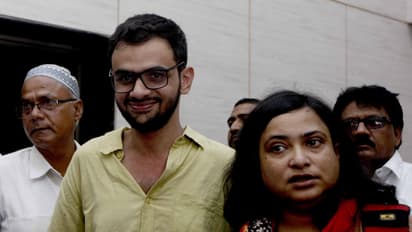
Delhi: Umar Khalid has approached the Supreme Court after the Delhi High Court on Tuesday, September 2, refused to grant him bail in the 2020 Delhi riots “larger conspiracy” case. Along with Khalid, the court had also rejected the bail pleas of Sharjeel Imam and seven other accused, including Athar Khan, Khalid Saifi, Mohd. Saleem Khan, Shifa-ur-Rehman, Meeran Haider, Gulfisha Fatima, and Shadab Ahmed. A separate application by Tasleem Ahmed was also dismissed.
In his defence, Khalid argued that his presence in WhatsApp groups cannot be treated as criminality, pointing out that no money or objectionable items were recovered from him. He further stated that the February 23–24, 2020 meeting, described by the police as “secret,” was not clandestine at all. Imam similarly denied being part of any conspiracy, with his lawyer stressing that the prosecution’s allegations against him ended with a January 2020 speech in Bihar. The Delhi Police, represented by Solicitor General Tushar Mehta and Special Public Prosecutor Amit Prasad, opposed the bail requests, claiming the accused conspired to incite riots and arson to damage India’s international image. The case, investigated by the Special Cell, invokes provisions of the Indian Penal Code as well as the Unlawful Activities (Prevention) Act (UAPA). With the High Court’s refusal, Khalid’s legal battle has now shifted to the Supreme Court, where his plea is pending consideration.
What is the Case About?
The 2020 Northeast Delhi riots were one of the deadliest episodes of communal violence in the national capital in recent years. The unrest broke out in late February 2020, coinciding with protests against the Citizenship Amendment Act (CAA), and quickly escalated into violent clashes between different communities. Over the course of three days, large parts of Northeast Delhi witnessed arson, stone-pelting, looting, and brutal attacks, leaving 53 people dead and more than 700 others injured. The violence caused massive damage to property, including homes, shops, religious places, and vehicles, with entire localities bearing the scars of destruction. Many families were displaced, and survivors continue to deal with both the physical and psychological trauma.
Investigations into the riots led to the registration of hundreds of cases, with the Delhi Police Special Cell later invoking provisions of the Unlawful Activities (Prevention) Act (UAPA) against several activists, students, and political figures, alleging a larger conspiracy behind the unrest. Critics, however, argued that the probe was biased and targeted dissenters of the government’s policies.
Timeline of Events
- January 28, 2020: Sharjeel Imam arrested for alleged seditious speech during anti-CAA protests.
- February 2020: Police file a case against Umar Khalid for allegedly inciting the Delhi riots through his speeches.
- September 14, 2020: Umar Khalid arrested and charged under UAPA in connection with the riots.
- September 2020: Sharjeel Imam granted bail in the Jamia Millia speech case but remains in jail due to the UAPA case.
- 2020-2022: Trial court repeatedly rejects bail pleas of Umar Khalid and Sharjeel Imam.
- October 18, 2022: Delhi High Court rejects Umar Khalid's bail plea.
- December 2022: Umar Khalid granted one-week interim bail for his sister's wedding.
- May 28, 2024: Trial court again rejects Umar's bail application.
- May 29, 2024: High Court grants bail to Sharjeel Imam in a sedition case, but he remains in jail due to UAPA charges in the 2020 North Delhi riots case.
- December 6, 2024: Umar Khalid files a fourth bail application in the High Court.
- December 18, 2024: Umar granted one-week interim bail to attend his cousin's wedding.
- September 2, 2025: Delhi High Court delivers verdict on bail applications.
Stay updated with the Breaking News Today and Latest News from across India and around the world. Get real-time updates, in-depth analysis, and comprehensive coverage of India News, World News, Indian Defence News, Kerala News, and Karnataka News. From politics to current affairs, follow every major story as it unfolds. IMD cities weather forecastsRain Cyclone Asianet News Official App