Total Lunar Eclipse: Blood Moon Lights Up India From Bengaluru to Delhi
Synopsis
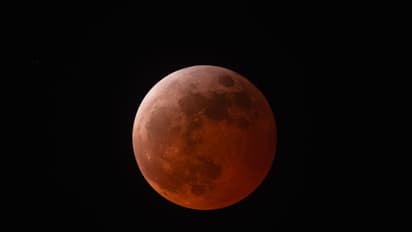
The red hue of the blood moon results from Rayleigh scattering, where Earth's atmosphere filters sunlight, bending red wavelengths towards the moon. The next total lunar eclipse visible in India will occur on December 31, 2028.
Bengaluru: Thousands gathered in different parts of the country to witness the total lunar eclipse, which began at around 9 PM. The Earth’s shadow started falling on the moon, with the lighter outer shadow, or penumbra, becoming visible first. Soon after, the darker inner shadow, the umbra, began to cover the moon, marking the true start of the eclipse. Soon, the darker inner shadow, the umbra, covered the moon, marking the true start of the eclipse. The total lunar eclipse began around 11 PM, and would reach its peak at 11:41 PM after the entire lunar disk becomes fully covered. The “Blood Moon” will remain visible until 2:25 AM. Observers in India will have to wait until December 31, 2028, for the next total lunar eclipse.
How Does Blood Moon Happen?
The moon’s red glow, known as the Blood Moon effect, occurs due to Rayleigh scattering. As sunlight passes through the Earth’s atmosphere, shorter blue wavelengths scatter away, while longer red wavelengths bend toward the moon, bathing it in a deep red hue. In essence, during a total lunar eclipse, the Earth’s atmosphere transforms the moon into a spectacular Blood Moon. High-resolution cameras and telescopes were set up by a few to see this rare event.
Stay updated with the Breaking News Today and Latest News from across India and around the world. Get real-time updates, in-depth analysis, and comprehensive coverage of India News, World News, Indian Defence News, Kerala News, and Karnataka News. From politics to current affairs, follow every major story as it unfolds. IMD cities weather forecastsRain Cyclone Asianet News Official App