From Shimla Agreement to Operation Sindoor: India's shift from strategic patience to protective assertiveness
Synopsis
India sheds decades of strategic patience to adopt a doctrine of protective assertiveness against Pakistan's provocations, marking a decisive shift in its security and diplomatic posture.
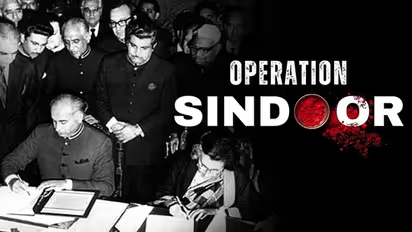
For decades, India's approach towards Pakistan, particularly in the realm of bilateral relations and conflict resolution, has largely been governed by strategic patience. Anchored in the Shimla Agreement of 1972, India has consistently upheld bilateralism as the guiding principle, even in the face of repeated provocations.
However, recent developments, especially Operation Sindoor and the Indus Waters Treaty (IWT) being put in abeyance, signal a pivotal recalibration in India's strategic doctrine: a transition from passive endurance to protective assertiveness.
This evolution is not abrupt, but rather a response to Pakistan's persistent undermining of bilateral commitments, particularly its continued support for cross-border terrorism and its efforts to internationalise bilateral disputes. As Pakistan continues to flout the foundational norms of the Shimla Agreement, India's strategic patience is giving way to a more resolute posture: one that reasserts its red lines with clarity and conviction.
Shimla Agreement and the Foundation of Strategic Patience
The Shimla Agreement, signed in the aftermath of the 1971 Indo-Pak war, institutionalised a key principle: all disputes between India and Pakistan shall be settled bilaterally. For India, this wasn't just a tactical arrangement. It was a moral and diplomatic commitment to regional peace.
Over the years, India adhered to this principle even when Pakistan violated its spirit through actions such as:
- Sponsorship of terrorism in Kashmir, most notably the Kargil incursion in 1999, just months after the Lahore Declaration.
- Persistent efforts to internationalise the Kashmir issue, whether at the UN or through the Organisation of Islamic Cooperation (OIC).
- Frequent ceasefire violations and infiltration attempts across the Line of Control (LoC).
Despite these provocations, India exercised restraint, often limiting its response to diplomatic démarches and defensive military postures. This strategic patience, while reflective of India's global responsibility and mature diplomacy, was increasingly perceived by Pakistan's security establishment as a sign of hesitancy rather than strength.

Operation Sindoor and the New Strategic Doctrine
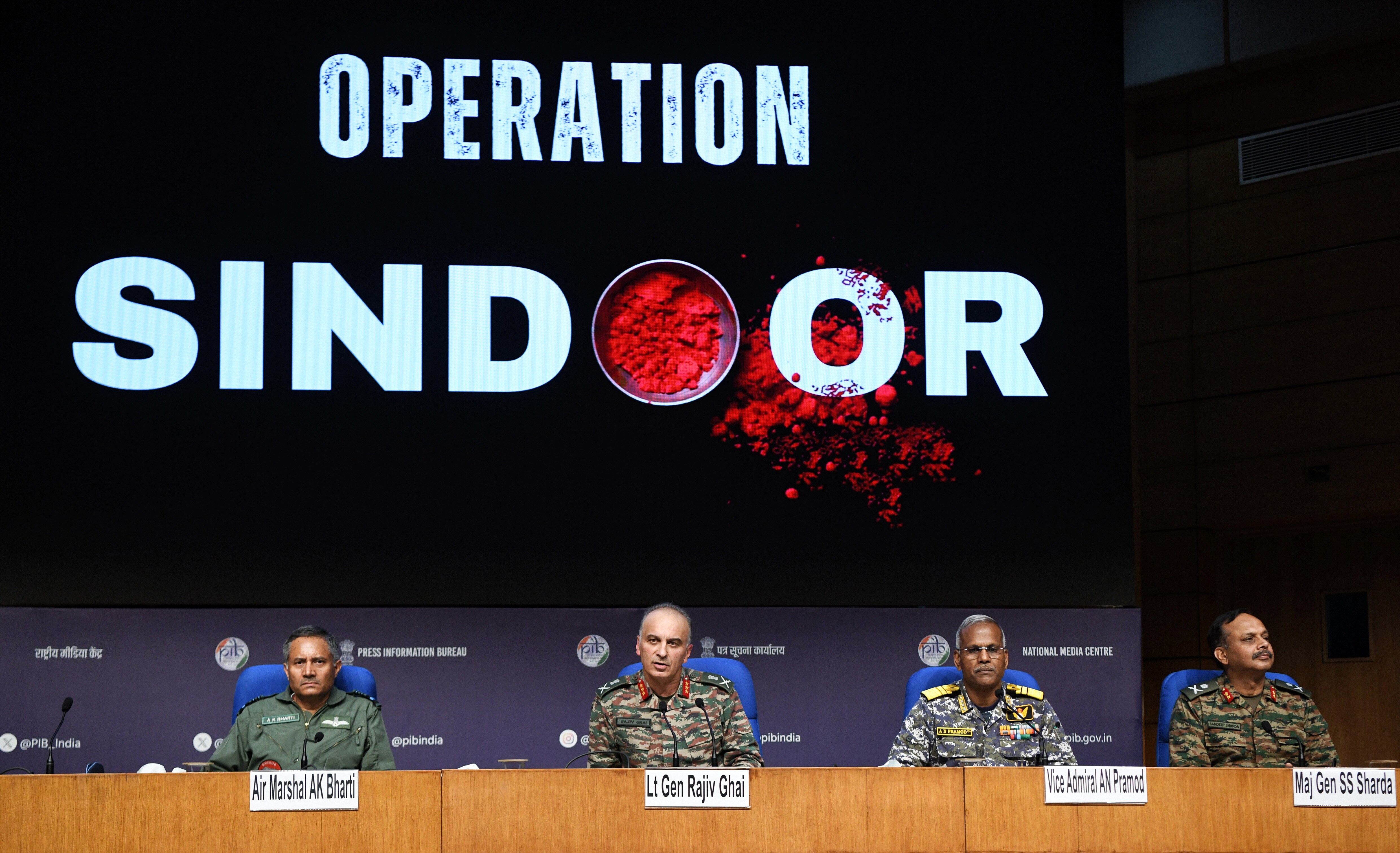
The shift in India's approach became starkly evident with Operation Sindoor, a calibrated and high-precision punitive action carried out in response to a major cross-border terror attack. Unlike past retaliatory moves, which were covert or limited in scope, Operation Sindoor was publicly acknowledged and operationally demonstrative, marking a clear departure from the shadows of ambiguity to the light of deterrence.
This operation was not just a military manoeuvre but a strategic signal:
- That India's tolerance for proxy wars has ended.
- That state-sponsored terrorism will no longer go unanswered, and India reserves the right to act beyond symbolic protest.
- That New Delhi will shape the strategic environment, not merely react to it.
Operation Sindoor was accompanied by a reassessment of diplomatic and treaty obligations, the most notable being the suspension of the Indus Waters Treaty (IWT) obligations. The IWT, brokered by the World Bank in 1960, had long been considered sacrosanct, even during times of war. India's decision to put the treaty in abeyance is therefore not just an environmental or hydrological decision. It is a geo-strategic recalibration.
Pakistan's Breach of Bilateral Norms: The Core Trigger
The roots of this strategic shift lie in Pakistan's consistent and deliberate violation of bilateral obligations. Despite solemn commitments under the Shimla Agreement and the Lahore Declaration, Islamabad has repeatedly pursued a dual-track policy: engaging in dialogue while nurturing anti-India terror networks.
Be it Hafiz Saeed roaming free under state patronage, the Pulwama bombing orchestrated with impunity, or the use of drones to drop weapons across the border, Pakistan's security doctrine has weaponised duplicity. In such a scenario, continued reliance on strategic patience becomes counterproductive, even dangerous.
India's response, therefore, is not driven by adventurism but by the imperative to restore deterrence and safeguard national interests. As long as dialogue is used as a smokescreen for terror, it is neither productive nor credible. This asymmetry of intent has compelled India to recalibrate.
Protective Assertiveness: A Justified Evolution
India's new strategic approach can best be described as "protective assertiveness," a doctrine that combines military precision, diplomatic clarity, and strategic foresight. It signals that:
- India will no longer play by the old playbook of reactive diplomacy.
- Red lines will be enforced, not merely declared.
- Bilateralism is conditional and cannot coexist with state-sponsored hostility.
Protective assertiveness does not mean jingoism. On the contrary, it elevates the seriousness of bilateralism, making it clear that dialogue must be predicated on good faith. If Pakistan wants a return to diplomatic normalcy, it must first dismantle its terror infrastructure and realign its strategic calculus.
The Way Forward: A Message for Pakistan
Pakistan must recognise that the era of India's passive restraint is over. The Shimla Agreement remains the preferred framework, but only when both sides honour its spirit. By continuing to violate bilateral norms, Pakistan has forfeited the moral high ground and now faces a more agile and assertive India.
If Islamabad truly seeks regional peace, it must:
- Abandon its reliance on proxy groups and recalibrate its military doctrine.
- End its diplomatic duplicity and commit genuinely to bilateralism.
- Recognise that India's actions today are rooted in strategic necessity, not political theatre.
From the Shimla Agreement to Operation Sindoor, India's journey marks a turning point in South Asian geopolitics. No longer will New Delhi absorb provocations in silence or defer action in the hope of reciprocity. Instead, India will act decisively, proportionately, and with strategic clarity. The message is unmistakable. Peace remains the preferred path, but not at the cost of perpetual provocation.
(Ashu Maan is an Associate Fellow at the Centre for Land Warfare Studies. He was awarded the Vice Chief of the Army Staff Commendation card on Army Day 2025. He is pursuing a PhD from Amity University, Noida, in Defence and Strategic Studies. His research focuses include the India-China territorial dispute, great power rivalry, and Chinese foreign policy.)
Disclaimer: The opinions expressed are solely those of the author and do not reflect the views or stance of the organization. The organization assumes no responsibility for the content shared.
Stay updated with the Breaking News Today and Latest News from across India and around the world. Get real-time updates, in-depth analysis, and comprehensive coverage of India News, World News, Indian Defence News, Kerala News, and Karnataka News. From politics to current affairs, follow every major story as it unfolds. IMD cities weather forecastsRain Cyclone Asianet News Official App