NIA Uncovers Bangladesh Connection in Delhi Blast; Focus Shifts to Border Districts
Synopsis
NIA has reportedly confirmed a Bangladesh link in Delhi terror plot with the arrest of Ikhtiar, a Bangladeshi ABT member accused of supplying explosives for Red Fort blast. Investigators are now focusing on India-Bangladesh border districts.
Indian agencies have reportedly established a direct Bangladesh connection in the Delhi terror plot after the National Investigation Agency (NIA) arrested a Bangladeshi national linked to the banned outfit Ansarullah Bangla Team (ABT). The arrest has shifted the focus of investigators towards the India-Bangladesh border region and the growing collaboration between radical groups across South Asia.
NIA arrests Bangladeshi national linked to explosives supply
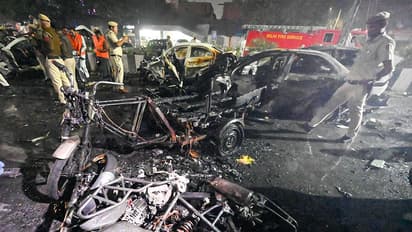
The breakthrough reportedly came with the arrest of Ikhtiar, a Bangladeshi ABT member accused of supplying the explosives used in the 10 November Red Fort blast in Delhi, which killed 13 people. Investigators say Ikhtiar was part of a wider network that helped plan and execute the explosion.
With this arrest, agencies now believe that the terror plot had active cross-border involvement, despite repeated denials from the Bangladesh interim government led by Muhammad Yunus.
Dhaka’s denial contrasts with growing evidence
According to a Deccan Chronicle report, Bangladesh’s interim leadership has insisted that its territory was not used for the Delhi attack. However, Indian officials say evidence increasingly shows involvement from elements based in Bangladesh. Investigators are particularly focused on:
- Border districts in India and Bangladesh
- Radical activity in Malda and Murshidabad
- Online video-conference meetings between Bangladeshi operatives and Lashkar-e-Taiba (LeT)
- Recent meeting between LeT top commander Saifullah Saif and Bangladeshi government figures
Sources say Saifullah’s meeting took place only days before the blast, raising serious concerns about cross-border radical networks.
Role of Pakistan-based LeT also under scrutiny
The terror trail indicates a joint Pakistan-Bangladesh footprint, with LeT suspected of guiding the plot. Indian agencies believe the Delhi blast was not an isolated act but part of a coordinated plan involving handlers in Pakistan and operatives in Bangladesh.
The NIA is analysing encrypted chats, cross-border financial links and movements near the border.
Two doctors from Al Falah University detained
On Saturday, Delhi Police detained three people, including two doctors from Haryana’s Al Falah University, as part of the widening investigation. Police confirmed that:
- Two separate FIRs have been filed against the university
- The cases relate to UGC and NAAC irregularities
- Some individuals linked to the university are under scrutiny for suspected contact with people involved in the blast
The detentions have increased curiosity around the university's role and whether any campus-level radicalisation networks were active.
What experts warn about India's new hybrid terror threat
Security expert Major General Sudhakar Jee (Retd) warns that India is now facing a far more complex and modern terror threat, driven by the ISI and its proxies across Pakistan and Bangladesh. He says these groups are developing homegrown, white-collar terror networks that blend digital skills, civilian cover, and foreign guidance. According to him, this marks a major shift from older forms of terrorism.
He highlights West Bengal as a key area of concern because of its porous border with Bangladesh, where ISI and Lashkar-e-Taiba networks have already expanded. He cautions that terrorists may target sensitive monuments and institutions in the state. Major General Jee says future attacks may use hybrid, unconventional methods designed to cause maximum damage without early detection. He believes the aim is to disrupt India’s growth by attacking the economy, infrastructure, technology, and transport networks, while also raising the overall cost of national security.
His recommendations include building a formal information-warfare structure, improving intelligence, and using strategic patience, waiting for clear indicators and then responding with precise, beyond-visual-range strikes, even outside India’s borders. He says recent blasts show India is confronting a fast-evolving, more sophisticated threat hidden within cities, campuses, and digital spaces.
Stay updated with the Breaking News Today and Latest News from across India and around the world. Get real-time updates, in-depth analysis, and comprehensive coverage of India News, World News, Indian Defence News, Kerala News, and Karnataka News. From politics to current affairs, follow every major story as it unfolds. IMD cities weather forecastsRain Cyclone Asianet News Official App