PM Modi Flags NCERT Lapse; Pradhan Vows Accountability After SC Rap
Synopsis
A Class 8 NCERT book row erupted over a reference to judicial corruption, drawing Supreme Court criticism. NCERT withdrew the book, apologised, and launched a probe, while the Centre termed it a serious lapse and sought accountability.
A major controversy has erupted over a Class 8 Social Science textbook published by the National Council of Educational Research and Training (NCERT), drawing sharp criticism from the Supreme Court and prompting strong reactions from the central government. Prime Minister Narendra Modi has expressed clear displeasure over the issue, calling it a serious lapse and stressing the need to fix accountability within the system.
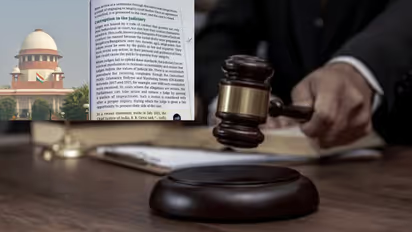
The row centres around a chapter in the textbook that referenced “corruption in the judiciary,” which the Supreme Court viewed as inappropriate and potentially damaging to the credibility of a key democratic institution. The court took suo motu cognisance of the matter and came down heavily on NCERT, describing the content as deeply concerning and even suggesting it could undermine public trust in the judiciary.
Following the court’s intervention, NCERT swiftly acted by halting the distribution of the textbook and withdrawing the contentious content. The council admitted that the inclusion of such material was an “error of judgement” and issued an apology. It also removed digital versions of the book and began efforts to retrieve physical copies already in circulation.
Prime Minister Modi, according to government sources, questioned how such content was approved for young students and raised concerns about the oversight mechanisms in place. He reportedly asked who was responsible for reviewing and clearing the material, highlighting gaps in the vetting process. His message was clear: accountability must be fixed, and such lapses should not recur.
Union Education Minister Dharmendra Pradhan echoed the Prime Minister’s concerns, expressing regret over the incident and assuring that strict action would be taken against those responsible. He emphasized that the government holds the judiciary in the highest regard and that there was no intention to disrespect it. The ministry has committed to fully complying with the Supreme Court’s directions and ensuring that corrective measures are implemented.
In response to the escalating controversy, NCERT has launched an internal probe to examine how the chapter was conceptualised, reviewed, and approved. The investigation aims to identify individuals involved in drafting and clearing the content, and to establish accountability within the organisation.
The incident has also sparked a broader debate about the content of school textbooks and the need for sensitivity when addressing critical institutions such as the judiciary. Experts note that while it is important to educate students about systemic challenges, the framing and context must be balanced and age-appropriate to avoid misinterpretation.
This episode highlights the increasing scrutiny over educational material in India and the high stakes involved in shaping young minds. With the judiciary, government, and academic bodies all involved, the NCERT textbook controversy underscores the need for rigorous review mechanisms and responsible content creation.
As the probe continues and corrective steps are implemented, the focus remains on ensuring that educational resources maintain accuracy, neutrality, and respect for constitutional institutions, while also fostering informed and critical thinking among students.
Stay updated with the Breaking News Today and Latest News from across India and around the world. Get real-time updates, in-depth analysis, and comprehensive coverage of India News, World News, Indian Defence News, Kerala News, and Karnataka News. From politics to current affairs, follow every major story as it unfolds. IMD cities weather forecastsRain Cyclone Asianet News Official App