Passive euthanasia: Top doctor on SC's landmark Harish Rana ruling
Synopsis
Following the Supreme Court's landmark passive euthanasia approval for Harish Rana, former AIIMS doctor Sushma Bhatnagar stressed providing a dignified end, the crucial role of palliative care, and following government withdrawal guidelines.
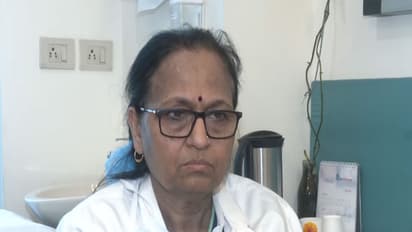
Former Head of the Department of Onco-Anaesthesia, Pain and Palliative Care at AIIMS Delhi, Doctor Sushma Bhatnagar, who earlier handled the case of Harish Rana, stressed the importance of providing a dignified end without causing direct harm or discomfort, following the Supreme Court's approval of passive euthanasia.
Supreme Court's Landmark Verdict on Passive Euthanasia
In a landmark first, the Supreme Court last week permitted passive euthanasia for a 31-year-old Harish Rana from Ghaziabad who has been in a persistent vegetative state for over a decade, observing that continuing life-sustaining treatment would no longer be in the patient's best interest.
Expert's Perspective on End-of-Life Care
Speaking about the landmark case, Dr Bhatnagar said, "Now, in this case, it's an advanced stage where it seems the end is inevitable, meaning the end will come. So, if a situation arises where the end is inevitable, like the one this child faces, we should support him until the end in a way that ensures he continues to receive support. Now, after providing support to him for 13 years, the Government of India has guidelines for withholding and withdrawal. These should be followed. Now we know that if we have to do withholding and withdrawal in this, then we will have to do it in a balanced manner. So that we should not feel that we have done something like deliberate killing."
Crucial Role of Palliative Care
She highlighted the crucial role of palliative care in such cases, noting that all hospitals should have dedicated departments to handle end-of-life situations. "If every hospital in India had a good palliative care department and center, such situations might be avoided. This situation arises when people don't know how to handle a patient whose end is inevitable. A good palliative care department would automatically handle it," she said.
Communicating with the Family
Dr Bhatnagar also underlined the importance of constant communication with families during these difficult times. "The moment is not easy for the family. Until the doctor maintains constant communication with them, they won't be at ease. If we take Harish's case, there are many such cases. The court hearing becomes crucial," she added.
Following Protocols for a Dignified End
On following protocols, she explained, "The Government of India's guidelines on withholding and withdrawing treatment should be followed in such cases. A specific protocol should be followed, involving a team of doctors and clear communication with the family. Counselling the family is essential to help them understand the situation and make informed decisions."
When asked about the time frame for such interventions, Dr Bhatnagar said, "It's indeed difficult to predict, and it's best left to the medical team to decide. The important thing is to follow the guidelines and provide comfort and support to the patient and their family."
She further added, "The Government of India's verdict should be honoured, and we should do our best to provide a dignified end without harming him directly or causing discomfort. We should try to give him a dignified end as soon as possible."
On March 11, in a landmark first, the Supreme Court of India permitted passive euthanasia for a 31-year-old man from Ghaziabad who has been in a persistent vegetative state for over a decade, observing that continuing life-sustaining treatment would no longer be in the patient's best interest.
A bench of Justices JB Pardiwala and KV Vishwanathan allowed the withdrawal of clinically assisted nutrition and hydration (CANH) for Harish Rana, who has remained in a vegetative state since suffering an accidental fall from a building in 2013. Passive euthanasia refers to the withdrawal or withholding of life-sustaining treatment to allow a patient with no reasonable prospect of recovery to die naturally. (ANI)
(Except for the headline, this story has not been edited by Asianet Newsable English staff and is published from a syndicated feed.)Stay updated with the Breaking News Today and Latest News from across India and around the world. Get real-time updates, in-depth analysis, and comprehensive coverage of India News, World News, Indian Defence News, Kerala News, and Karnataka News. From politics to current affairs, follow every major story as it unfolds. IMD cities weather forecastsRain Cyclone Asianet News Official App