Unprepared And Outgunned: Pakistan Navy's Operational Collapse During India's Operation Sindoor
Synopsis
While the Indian Navy displayed operational prowess, the Pakistan Navy's lacklustre readiness and systemic failures exposed its glaring vulnerabilities.
India's Operation Sindoor, a decisive preemptive strike targeting terror camps and Pakistan military infrastructure across the Line of Control and deeper within Pakistan, served as a watershed moment in South Asia's strategic narrative. While the Indian Navy displayed operational prowess, the Pakistan Navy's lacklustre readiness and systemic failures exposed its glaring vulnerabilities.
This case study analyses the Pakistan Navy's poor operational response, the technical failures of its frontline warships, and the inadequacies of its aerial maritime assets during Operation Sindoor, offering insights into how a regional power found itself grossly underprepared in the face of modern naval warfare.
Strategic Surprise and Pakistan Navy's Sluggish Reaction
The Indian Navy's maritime mobilisation under Operation Sindoor was swift, layered, and strategically synchronised with the Indian Air Force and the Indian Army's cross-domain operations. Indian surface combatants, including destroyers and frigates, were deployed across the Arabian Sea in an aggressive posture, capable of precision strikes with BrahMos cruise missiles. Sub-surface assets like the Scorpene-class silently prowled the waters, enforcing a maritime exclusion zone.
In stark contrast, the Pakistan Navy's initial reaction was sluggish. By the time orders for full mobilisation came from Naval Headquarters in Islamabad, the Indian Navy had already established sea dominance in key corridors. The Pakistan Navy was caught in a reactionary loop, unable to transition from peacetime protocols to active conflict footing in time. This delay reflected gaps in the Pakistan Navy's threat detection, readiness doctrines, and maritime domain awareness.
Technical Failures of Pakistan Navy's Warships
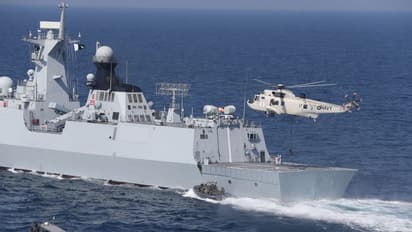
Several Pakistan Navy surface vessels, particularly those from the Chinese-origin F-22P Zulfiquar-class frigates, faced major setbacks.
Sensor Blindness and Integration Failure: The frigates' SR-60 radar and outdated command-and-control systems failed to detect the full scope of Indian naval activity. There was poor sensor fusion, with frequent communication dropouts between the fleet and Maritime Command. One such frigate experienced intermittent radar blackouts, severely compromising its situational awareness.
Malfunctioning CIWS and SAMs: Reports suggest that Close-In Weapon Systems (CIWS) and LY-60N Surface-to-Air Missile launchers aboard some ships malfunctioned during drills held amid the crisis. This left key vessels vulnerable to aerial threats and cruise missile strikes.
Fuel and Logistics Shortfalls: The sudden nature of the operation also highlighted logistical unpreparedness. Several warships had to return to port prematurely due to a lack of refuelling tankers and maintenance support, drastically reducing sea time.
These operational shortcomings meant that Pakistan's naval surface fleet was unable to establish a credible deterrence posture, let alone retaliate effectively.
Chopper Trouble: The Z-9EC's Disastrous Performance
The Pakistan Navy's reliance on the Chinese Z-9EC naval helicopters, primarily used for anti-submarine warfare (ASW), turned into a major liability during Operation Sindoor. Tasked with tracking Indian submarines and ships, the Z-9ECs revealed alarming levels of underperformance:
Sonar Pod Failures: At least three instances were reported where the low-frequency dipping sonar (KLC-1) failed to activate or relay data to the host ship's combat system, rendering them blind against Indian sub-surface threats.
Flight Readiness Issues: A significant number of Z-9ECs were grounded due to maintenance issues and parts unavailability, with only two out of six helicopters at Karachi's PNS Mehran deemed mission-ready during the operation's peak.
Poor Weather Adaptability: Their inability to operate in poor visibility and turbulent sea states meant that they were ineffective in pursuing Indian submarines that had moved deep into the Arabian Sea.
The failure of these helicopters, considered the backbone of Pakistan Navy's ASW capabilities, was a major strategic handicap during the operation.
Inadequate Maritime Surveillance and Intelligence Failures
Pakistan Navy's Maritime Patrol Aircraft (MPA) fleet, including P-3C Orion and ATR-72 MPAs, was also marred by technical and strategic limitations:
Reduced Fleet Strength: Due to attrition and accidents in previous years, only a fraction of the P-3C fleet remained operational, and those that flew suffered from outdated electronics and sensor packages.
Delayed Intelligence Dissemination: Surveillance data, even when gathered, was not relayed quickly enough to tactical units due to outdated data-link infrastructure and a lack of real-time communication between naval intelligence and fleet commanders.
Fear of Retaliatory Strike: The Pakistani high command remained overly cautious about engaging Indian warships, fearing that missteps could lead to an escalation they were ill-prepared for. This psychological hesitancy fed into the operational paralysis.
Command and Control Breakdown
Perhaps the most telling failure was at the top: Pakistan Navy's centralised command model proved ineffective in fluid, high-intensity maritime operations. Delayed decision-making, inter-service coordination lapses, and bureaucratic red tape left field commanders without clear rules of engagement or tactical freedom. As a result, the few operational assets largely adopted a defensive posture, confined to littoral zones instead of projecting power or disrupting Indian formations.
Pakistan Navy Exposed
Operation Sindoor not only marked a tactical victory for the Indian armed forces but also revealed deep cracks in Pakistan Navy's combat readiness, technological reliability, and strategic foresight. With critical assets malfunctioning, command paralysis, and an underwhelming aerial wing, the Pakistan Navy was unable to mount a credible deterrent or counter-strike.
(Ashu Maan is an Associate Fellow at the Centre for Land Warfare Studies. He was awarded the Vice Chief of the Army Staff Commendation card on Army Day 2025. He is pursuing a PhD from Amity University, Noida, in Defence and Strategic Studies. His research focuses include the India-China territorial dispute, great power rivalry, and Chinese foreign policy.)
Disclaimer: The opinions expressed are solely those of the author and do not reflect the views or stance of the organization. The organization assumes no responsibility for the content shared.
Stay updated with the Breaking News Today and Latest News from across India and around the world. Get real-time updates, in-depth analysis, and comprehensive coverage of India News, World News, Indian Defence News, Kerala News, and Karnataka News. From politics to current affairs, follow every major story as it unfolds. IMD cities weather forecastsRain Cyclone Asianet News Official App