New SMC Guidelines aim for transformative shift in India's classrooms
Synopsis
The Govt launched the SMC Guidelines 2026. Delhi Education Minister Ashish Sood called it a transformative shift for India's education system, crucial for achieving the goal of a developed nation by 2047 and implementing NEP 2020.
The School Education and Literacy Department, Government of India, organised a programme for the launch of the School Management Committee (SMC) Guidelines 2026 at Vigyan Bhawan on Wednesday. The event was attended by Union Education Minister Dharmendra Pradhan as the Chief Guest, along with Chhattisgarh Education Minister Gajendra Yadav.
A Transformative Shift for India's Education
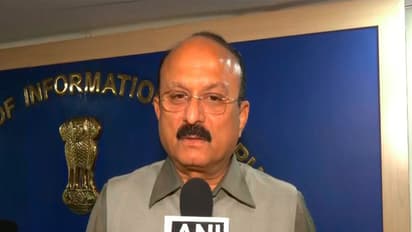
Addressing the gathering, Delhi's Education Minister Ashish Sood stated that this programme is not merely about releasing new guidelines, but represents a deep and transformative shift in India's education system. He emphasised that if India aims to achieve the goal of becoming a developed nation by 2047, the journey must begin in its classrooms. He remarked, "Nations are not built in parliaments alone; they are first shaped in classrooms."
He further noted that under the guidance of Hon'ble Prime Minister Narendra Modi and the leadership of Union Education Minister Shri Dharmendra Pradhan, the National Education Policy (NEP) 2020 has given a new direction to India's educational journey. Sood highlighted that for a long time, India's education system remained confined to syllabus, examinations, and marks. However, NEP 2020 has redefined education with a clear vision, not just to educate students, but to make them capable, confident, creative, and sensitive citizens. He described this as the greatest strength of the policy.
He added that NEP is transforming rote learning into critical thinking, memorisation into innovation, and a degree-centric approach into a learning-centric one. Education, he said, is no longer just a government function, but has evolved into a national mission.
Building the 'Amrit Peedhi'
Referring to the Hon'ble Prime Minister's vision of the "Amrit Peedhi," Sood stated that this generation will lead India in 2047. NEP 2020, he said, serves as a blueprint for this generation, one that is technologically empowered, globally competitive, and deeply rooted in India's values and civilizational ethos.
He affirmed that the Delhi Government will implement every aspect, vision, and reform of NEP 2020 with complete dedication. He added that the government will go beyond policy adoption and work tirelessly to translate NEP's vision into reality in Delhi's classrooms.
SMC Guidelines 2026: From Monitoring to Governance
Sood described the SMC Guidelines 2026 as a crucial step in this transformative journey. He noted that while the earlier SMC framework under the Right to Education Act focused primarily on grant monitoring, infrastructure supervision, and administrative processes, today's challenges and expectations have evolved significantly.
He emphasised that issues such as child safety, mental health, Foundational Literacy and Numeracy (FLN), digital transparency, learning outcomes, and community participation have now become critically important, and the new guidelines are designed keeping these priorities in mind.
The Education Minister stated that the guidelines elevate SMCs from mere monitoring committees to true "school community governing institutions." SMCs will now play an active role in holistic child development, academic quality, student welfare, safety, inclusivity, digital governance, and transparency. He further added that the guidelines promote cluster-level resource sharing and aim to make schools centres of community life. This, he said, reflects the true spirit of NEP 2020, as education cannot succeed in isolation; schools and society must move forward together.
Ensuring Institutional Continuity
Shri Sood also highlighted that the inclusion of a three-year vision plan, annual action plans, and clearly defined priorities will shift the education system from being individual-dependent to institution-driven and long-term in approach.
He stressed that even if a school's principal or teachers change, the direction and pace of development should remain consistent.
Building a Developed India Through Education
Expressing gratitude to Union Education Minister Dharmendra Pradhan and Prime Minister Narendra Modi, he said that under their leadership, historic steps are being taken toward building an inclusive, participatory, and holistic education system.
He noted that the guidelines will especially create new opportunities for children from disadvantaged sections. He expressed confidence that the SMC Guidelines 2026 will strengthen community participation, transparency, and quality in education, and play a significant role in building a developed India. (ANI)
(Except for the headline, this story has not been edited by Asianet Newsable English staff and is published from a syndicated feed.)Stay updated with the Breaking News Today and Latest News from across India and around the world. Get real-time updates, in-depth analysis, and comprehensive coverage of India News, World News, Indian Defence News, Kerala News, and Karnataka News. From politics to current affairs, follow every major story as it unfolds. IMD cities weather forecastsRain Cyclone Asianet News Official App