New MGNREGA bill harmful for poor, scheme will die: Priyanka Gandhi
Synopsis
Priyanka Gandhi Vadra slammed the new VB-G RAM G Bill, saying the funding shift from MGNREGA's 90% central pay will kill the scheme and harm the poor. The bill passed amid opposition protests, including a dharna by TMC members in Parliament.
Congress MP Priyanka Gandhi Vadra sharply criticised the Viksit Bharat Guarantee for Rozgar and Ajeevika Mission (Gramin) Bill, 2025, asserting that the original MGNREGA scheme, structured with the Centre paying the bulk of funds (often referred to as 90%), was the backbone of the rural economy and the greatest support for very poor people facing employment difficulties. She warned the funding shift would burden states and harm the rural poor.
'This Bill is going to be very harmful'
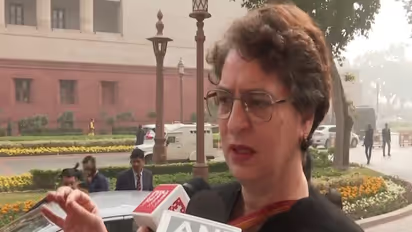
Speaking to reporters, Priyanka Gandhi Vadra said,"This Bill is going to be very harmful for the poorest of the poor because the original MGNREGA scheme, the way it was structured - where the Centre paid 90% of the funds for it, was the backbone of the rural economy and the greatest support for the people who are very poor and had difficulty getting employment. For 20 years, this has been one of the good schemes which has run and helped poor people, especially those who have nothing. Now, in this new form of the Bill, when you cut down so much of the allocation from the funds from the Centre, the States are not going to be able to afford it. It means that the scheme will die and that is going to be very harmful."
Bill Passed Amid Opposition Protests
The remarks came as Parliament passed the Viksit Bharat Guarantee for Rozgar and Ajeevika Mission (Gramin) (VB-G RAM G) Bill, with the Rajya Sabha approving the legislation following Lok Sabha's nod. Meanwhile, members of the Trinamool Congress (TMC) are staging a 12-hour dharna (sit-in protest) against the passing of the Viksit Bharat-Guarantee for Rozgar and Ajeevika Mission (Gramin) Bill, 2025, also known as the VB-G RAM G Bill. The dharna is taking place outside Samvidhan Sadan in the Parliament complex against the Bill.
This bill was passed in the Lok Sabha on December 18, 2025, and subsequently cleared by the Rajya Sabha early on December 19, amid significant opposition. With the passage of the VB-G RAM G Bill in both Houses and the Upper House adjourning until Friday afternoon, the passage was marked by protests from the Opposition benches, with members objecting to the manner in which the government pushed it through. The Lok Sabha passed the bill amid protests, with opposition MPs tearing copies and throwing them in the air. The government maintains the bill will strengthen rural employment and livelihoods. Union Agriculture Minister Shivraj Singh Chouhan said the bill will play an essential role in the welfare of the poor. He accused Congress of disrespecting Mahatma Gandhi's ideals.
Key Provisions of the New Bill
The Bill guarantees 125 days of wage employment per rural household, up from the existing 100 days, for adult members willing to undertake unskilled manual work. As per Section 22 of the Bill, the fund-sharing pattern between the Central Government and the State Governments will be 60:40, while for the North Eastern States, Himalayan States, and Union Territories (Uttarakhand, Himachal Pradesh, and Jammu and Kashmir), it will be 90:10.
Section 6 of the Bill allows the state governments to notify in advance, a period aggregating to sixty days in a financial year, covering the peak agricultural seasons of sowing and harvesting.
Opposing the Bill, Congress announced a series of nationwide protests on December 17, accusing the BJP and RSS of attempting to "dismantle rights-based welfare".
Stay updated with the Breaking News Today and Latest News from across India and around the world. Get real-time updates, in-depth analysis, and comprehensive coverage of India News, World News, Indian Defence News, Kerala News, and Karnataka News. From politics to current affairs, follow every major story as it unfolds. IMD cities weather forecastsRain Cyclone Asianet News Official App