Monsoon Car Insurance Explained: Claims You Can Make and Mistakes That Could Cost You
Synopsis
Vehicle damage from floods and falling trees is common during monsoons, but compensation depends entirely on your insurance. A comprehensive policy is essential for coverage, as basic third-party insurance offers no protection for your own car. Crucially, attempting to restart a flooded vehicle can be a costly mistake.
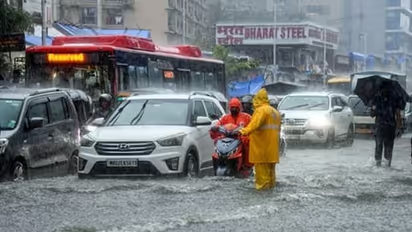
Heavy rain and flooded roads have become an annual nightmare for vehicle owners across India. Thousands of automobiles and two-wheelers are destroyed by falling trees, left stuck in flooded roadways, or buried in rising water each monsoon. The most important question that arises is straightforward: Who bears the cost of the damage? The answer depends less on the weather and more on the insurance policy sitting in your glove box.
Insurance experts believe reimbursement is available for monsoon-related damage, but only if the car is insured under a comprehensive motor insurance policy. Owners depending entirely on the necessary third-party insurance should not anticipate payment for damage to their own car.
As per NDTV report, Atrey Bhardwaj, Chief Growth Officer at Probus, a thorough strategy is essential for shielding a car from damages brought on by flooding, torrential rain, waterlogging, and other monsoon-related events. A basic third-party insurance, he points out, gives no protection for damage to the owner's own automobile.
Shashi Kant Dahuja, Executive Director and Chief Underwriting Officer of Shriram General Insurance, echoed the same stance. According to him, comprehensive automobile insurance often covers damages stemming from floods, waterlogging, landslides and even events when trees fall on parked vehicles.
Mistakes That Could Cost You Your Insurance Claim
Ironically, the most damage frequently occurred after the flooding. Experts uniformly caution against trying to restart a vehicle that has stalled in deep water.
Bhardwaj says if water has entered the engine and the owner attempts to restart it, the subsequent engine damage is often recognised as consequential loss under a basic comprehensive coverage. Unless the car has an Engine Protection add-on, the insurance may reject that part of the claim. Additionally, Dahuja cautions owners against starting submerged or extremely wet cars since it might exacerbate engine damage that might not be covered by the standard coverage.
What To Do If Your Vehicle Is Damaged?
The primary objective is safety. Experts instruct motorists to prioritise the safety of all passengers before thinking about the car. He also advocates avoiding flooded roadways if possible.
Once the car is stuck, experts recommend keeping it untouched. Instead of trying repairs or restarting the engine, owners should immediately tell their insurance, take pictures or record videos of the damage, and wait for the insurer's surveyor to check the car.
Experts also recommends owners to tow the car to an official workshop instead of driving it and to prevent any repairs until the insurance completes its examination.
You are also advised to prepare before the rains by servicing their vehicles, checking tyres, batteries and wipers, and keeping policy documents, insurer helpline numbers and roadside assistance details readily accessible.
Who Pays The Compensation?
If the claim is genuine, the insurer -- not any public body -- pays for the harm.
For car owners, the lesson is obvious. Monsoon damage can be expensive, but the correct insurance coverage, quick reporting and avoiding one costly error -- restarting a flooded car -- can make the difference between a completely compensated repair bill and a significant expense from your own pocket.
Stay updated with the Breaking News Today and Latest News from across India and around the world. Get real-time updates, in-depth analysis, and comprehensive coverage of India News, World News, Indian Defence News, Kerala News, and Karnataka News. From politics to current affairs, follow every major story as it unfolds. IMD cities weather forecastsRain Cyclone Asianet News Official App