Mission Aagaman: Skyroot's Vikram-1 set for historic launch on July 18
Synopsis
Skyroot Aerospace is set to launch India's first private orbital rocket, Vikram-1, on July 18 from Sriharikota. The mission, named "Aagaman," aims to place payloads up to 350 kg into Low Earth Orbit, a major milestone for India's private space sector.
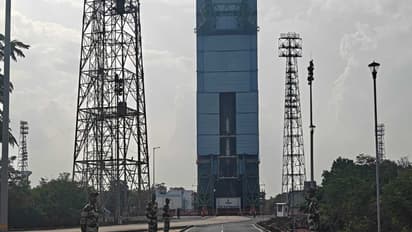
India's first privately developed orbital-class rocket, Vikram-1, built by Hyderabad-based Skyroot Aerospace, is scheduled for its maiden test flight, "Mission Aagaman," from the Satish Dhawan Space Centre in Sriharikota on July 18 at 11:30 AM. The 24-metre rocket marks the first time an Indian private company will attempt to place satellites into orbit using its own launch vehicle, independent of a government-developed rocket or launch vehicle programme.
Built entirely with a lightweight carbon-composite structure, Vikram-1 is powered by three solid-fuel stages and a liquid orbital adjustment module. The mission is designed to deploy payloads weighing up to 350 kg into a 450-km Low Earth Orbit (LEO) with a 60-degree inclination. Among its payloads is a lab-grown "Diamond Lotus" developed by Bengaluru-based Cosmos Diamonds.
Boost to India's Private Space Sector
Speaking to ANI, IN-SPACe Technical Director Rajesh Jothi said the mission reflects the rapid growth of India's private space sector following the space sector reforms announced in 2020. "We are seeing the growth of the private sector. We started with hardly five or six startup companies, and today we have more than 400 startups. This has happened because of the government space reforms in 2020, after which IN-SPACe was formed in 2022. The vision of our Prime Minister is now being implemented, and we are seeing the outcome of the space policy," he said.
He said Vikram-1's success could significantly boost India's commercial launch capabilities. "Skyroot is now going to launch its first maiden launch vehicle, which will be first of its kind. Not only in India, but outside India as well, only one or two countries have such a small satellite launch vehicle. If this succeeds, it is going to give a boost to both the small satellite market and the small launch vehicle market," he added.
Skyroot's Vision and Rocket Technology
Skyroot Aerospace Co-founder and Chief Operating Officer Naga Bharath Daka said the company was founded eight years ago with the objective of building affordable and reliable launch services from India for global satellite operators. "We started Skyroot around eight years ago with an aim to build affordable, reliable rockets from India to the world and provide affordable, reliable and on-demand launch access solutions for satellite operators around the world. All our effort and the team's effort is culminating today in this historic milestone," he said.
Describing Vikram-1, Daka said it is a three-stage orbital-class rocket equipped with an orbital adjustment module capable of deploying multiple satellites into orbit. "It is a three-stage rocket with a small orbital adjustment module on the top. It has three stages of solid propulsion and one orbital adjustment module that can put multiple satellites in orbit around the Earth. It is one of the first all-carbon fibre rockets in India and is extremely efficient and light," he said.
He added that the vehicle incorporates several technologies being used for the first time in India. "We've used multiple effective technologies like 3D-printed rocket engines. All the liquid engines on the stage are metallic 3D-printed engines. A lot of process innovation and design innovation has gone into this vehicle. Thanks to the heritage and wisdom of ISRO scientists and the manufacturing ecosystem they built, we have been able to realise this rocket," Daka said.
Skyroot Aerospace Founder and CEO Pawan Kumar Chandana said Vikram-1 builds on the company's first private rocket demonstration conducted in 2022. "Skyroot launched India's first private rocket in 2022, and that was a test rocket to prove the technology. This is the first time in India that a private company has developed an orbital rocket, taken it to the launch site, and it is going to take off soon," he said.
Highlighting the vehicle's design, Chandana said Vikram-1 is the country's first orbital rocket built entirely using carbon-composite material. "It is the first rocket to go to orbit that has been completely built with carbon composite. Carbon fibre is five times lighter than the strongest steel, making the rocket lighter and more efficient," he said.
He also pointed to the use of advanced manufacturing technologies. "We have multiple engines in the rocket that are fully 3D printed. This technology reduces hundreds of engine components into a single printed engine and enables manufacturing in just a few days. We have also developed a proprietary pneumatic stage separation system, which is modular and testable," Chandana said.
(Except for the headline, this story has not been edited by Asianet Newsable English staff and is published from a syndicated feed.)Stay updated with the Breaking News Today and Latest News from across India and around the world. Get real-time updates, in-depth analysis, and comprehensive coverage of India News, World News, Indian Defence News, Kerala News, and Karnataka News. From politics to current affairs, follow every major story as it unfolds. IMD cities weather forecastsRain Cyclone Asianet News Official App