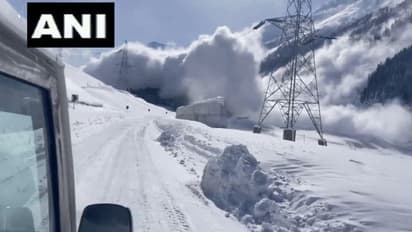
Massive avalanche hits Sonmarg's Sarbal area in J-K, no casualties reported
Synopsis
A massive avalanche struck the Sarbal area of Sonmarg, Jammu and Kashmir, with no casualties reported. The Western Himalayas are prone to avalanches due to natural and human factors. Scientists monitor hazard levels, but precise predictions remain difficult. Preventive measures include sturdy structures and regulation.
Ganderbal (Jammu and Kashmir) [India], March 5 (ANI): A massive avalanche struck the Sarbal area of Sonmarg in Jammu and Kashmir's Ganderbal district on Wednesday. There was no loss of life or injuries reported. A video of the avalanche was also caught on the camera.
Snow avalanches are most likely to occur after a fresh snowfall adds a new layer to a snowpack. Avalanches can be triggered by natural forces, such as the pull of gravity on a steep slope, earthquakes, warming temperatures (weakening the bonds between the layers), wind, terrain, vegetation and general snowpack conditions.
They can also be caused by human activity, such as the load of a skier, construction/development activities or by use of explosives (to set off hazardous slopes) as part of avalanche control. The Himalayas are well known for the occurrence of snow Avalanches, particularly the Western Himalayas - the snowy regions of Jammu and Kashmir, Himachal Pradesh and Western Uttar Pradesh.
There are three types of snow avalanche zones - Red Zone--The most dangerous zone that has an impact pressure of more than 3 tonnes per square metre.
Blue Zone: Where the avalanche force is less than 3 tonnes per square metre and where living and other activities may be permitted.
Yellow Zone: Where snow avalanche occurs only occasionally.
Currently, scientists are not able to predict with certainty when and where avalanches will happen.
However, they can estimate hazard levels and designate vulnerable zones by checking on the snowpack, temperature and wind conditions.
By building large, sturdy structures to anchor snowpacks and banning unsustainable developmental and tourism activities in Avalanche hazardous zones. (ANI)
Stay updated with the Breaking News Today and Latest News from across India and around the world. Get real-time updates, in-depth analysis, and comprehensive coverage of India News, World News, Indian Defence News, Kerala News, and Karnataka News. From politics to current affairs, follow every major story as it unfolds. IMD cities weather forecastsRain Cyclone Asianet News Official App