Lok Sabha celebrates linguistic diversity with all 22 languages used
Synopsis
The Lok Sabha's winter session saw MPs use all 22 scheduled languages via simultaneous interpretation. Spearheaded by Speaker Om Birla and praised by PM Modi, the move celebrates India's linguistic diversity and promotes inclusivity in Parliament.
In an important move to honour India's cultural diversity and linguistic heritage, the sixth session (winter session) of the 18th Lok Sabha witnessed the glory of India's regional languages when members extensively used the simultaneous interpretation service available in all 22 languages of Schedule Eight of the Indian Constitution.
PM Modi Commends Move, Praises Speaker Om Birla
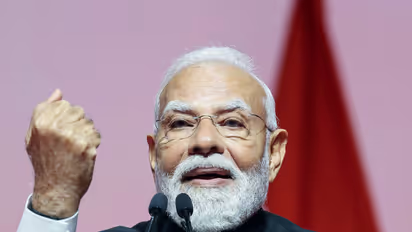
According to a press release, the initiative was spearheaded by Lok Sabha Speaker Om Birla, who announced this service in the House on 19th August 2025. The development has been widely appreciated across political and social spheres. Expressing his appreciation for this initiative, Prime Minister Narendra Modi shared the news on his official Twitter handle, Namo App, and Facebook page, describing it as a significant step towards celebrating India's multilingual heritage. The Prime Minister commended Birla for his visionary leadership in promoting regional languages and fostering inclusivity within parliamentary discourse.
"This is gladdening to see. India's cultural and linguistic diversity is our pride. Compliments to Speaker Om Birla Ji and MPs across Party lines for highlighting this vibrancy on the floor of the Parliament," the Prime Minister said.
A Milestone for Inclusive Parliamentary Discourse
As the simultaneous interpretation service is now available in all the scheduled eight languages, Members of Parliament have the option to deliver their speeches in their native regional languages, ensuring broader representation and facilitating communication that resonates with constituents across the country.
Birla, who has championed the cause of linguistic inclusivity, repeatedly highlighted that the decision aligns with the Constitution of India, which recognises the importance of preserving and promoting regional languages. As per the release, he feels that this initiative is a step toward making parliamentary debates more representative of our rich linguistic heritage. Every language in India carries with it a history, culture, and identity that deserve to be acknowledged on the national platform.
The initiative has received widespread appreciation from political leaders across party lines. Many Members of Parliament lauded the move as a milestone in making parliamentary discussions more inclusive and reflective of India's diverse society. By enabling MPs to communicate in the language they are most comfortable with, the Lok Sabha hopes to enhance clarity, effectiveness, and engagement in debates, thereby strengthening the democratic process, said the release.
Strengthening Democracy and Setting a Precedent
This development comes at a time when there is a growing recognition of the importance of mother tongues and regional languages in education, media, and governance. By embracing multilingual communication at the highest levels of government, India is setting an example for other nations on how diversity can be harnessed as a strength rather than a challenge.
According to the release, with this pioneering effort, the Lok Sabha sets a precedent for inclusive governance and demonstrates India's commitment to fostering a democratic environment where every language, and by extension every community, finds its voice. This initiative marks a significant stride in the journey toward an inclusive and culturally vibrant parliamentary system. (ANI)
Stay updated with the Breaking News Today and Latest News from across India and around the world. Get real-time updates, in-depth analysis, and comprehensive coverage of India News, World News, Indian Defence News, Kerala News, and Karnataka News. From politics to current affairs, follow every major story as it unfolds. IMD cities weather forecastsRain Cyclone Asianet News Official App