Karnataka Dy CM writes to PM Modi against Mines and Minerals Bill
Synopsis
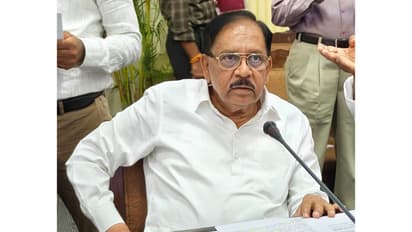
Karnataka Deputy Chief Minister G Parameshwara has written to PM Modi, strongly opposing the Mines and Minerals Amendment Bill. He urged for its withdrawal, citing serious concerns over the violation of state fiscal autonomy and federal principles.
Karnataka Deputy Chief Minister G Parameshwara on Tuesday wrote to Prime Minister Narendra Modi and Union Minister for Coal and Mines G Kishan Reddy, urging a reconsideration of provisions in the Mines and Minerals (Development and Regulation) Amendment Bill passed by Parliament. Expressing strong opposition to the legislative changes affecting state fiscal autonomy, the Deputy Chief Minister formally urged the withdrawal of the controversial legislation.
Karnataka Deputy Chief Minister, in a letter to PM Modi and G Kishan Reddy, expressed strong opposition to the recent legislative changes affecting state fiscal autonomy, urging the withdrawal of the controversial legislation. The letter read, "Request for withdrawal and reconsideration of the Mines and Minerals (Development and Regulation) Amendment Bill, 2026 and initiation of comprehensive consultations with State Governments."
Karnataka Objects to Bill, Cites Fiscal Federalism
Highlighting deep concerns over fiscal federalism and state powers, "I write to you on behalf of the Government of Karnataka to convey our serious concern and strong objection to the Mines and Minerals (Development and Regulation) Amendment Bill, 2026, recently passed by Parliament, particularly the provisions seeking to restrict the power of State Governments to levy taxes, cesses and other imposts on mineral rights and mineral-bearing lands."
Karnataka Deputy Chief Minister furhter outlined the core arguments regarding the division of powers under the Seventh Schedule. "Our objection goes far beyond the question of revenue. At stake is a fundamental principle on which our Republic rests that India is a Union of States, and the strength of the Union ultimately derives from the strength, dignity and fiscal capacity of its constituent States. The Constitution carefully distributes legislative and fiscal powers between the Union and the States through the Seventh Schedule," Parameshwara noted.
Constitutional Arguments Raised
Elaborating on the legislative competencies and fiscal powers of state governments under the Constitution, the letter pointed out, "Entry 49 of List II confers legislative competence upon States in respect of taxes on lands and buildings, while Entry 50 specifically places taxes on mineral rights within the State List, subject to limitations imposed by Parliament by law relating to mineral development. Entry 18 also recognises land as falling within the legislative domain of the States."
"This constitutional arrangement cannot be viewed merely as an administrative division of subjects. It represents the carefully negotiated federal compact underlying our Constitution," the letter read.
Centre Defends Amendment for National Interest
Meanwhile, the Mines and Minerals (Development and Regulation) Amendment Bill, 2026, passed by both Houses of Parliament on August 13, aims to bring greater certainty and stability to India's major minerals sector by creating a more predictable fiscal regime and encouraging investment in domestic mining, the Ministry of Mines said in a press release.
The Ministry said the amendment does not take away any rights of states over land and minerals or their power to levy taxes on minerals, the ministry said. Around 90 per cent of the taxes and statutory payments from mining currently accrue to states, and this arrangement will continue under the amended framework. The amendment will also not affect states' powers to regulate and tax minor minerals.
The government said the changes are intended to provide certainty and predictability in the fiscal regime, which could give a boost to investment in mining and support the objectives of Aatmanirbhar Bharat and the vision of Viksit Bharat 2047.
Given that mineral resources are finite and geographically concentrated in a limited number of states, the ministry said their management requires a cohesive national approach. It argued that uneven state-level taxation can raise domestic costs, weaken the competitiveness of locally available minerals and encourage imports despite the availability of domestic resources. (ANI)
(Except for the headline, this story has not been edited by Asianetnews Editorial staff and is published from a syndicated feed.)Stay updated with the Breaking News Today and Latest News from across India and around the world. Get real-time updates, in-depth analysis, and comprehensive coverage of India News, World News, Indian Defence News, Kerala News, and Karnataka News. From politics to current affairs, follow every major story as it unfolds. IMD cities weather forecastsRain Cyclone Asianet News Official App