India Untold: Inside Operation Trident, 1971 - The Night Indian Navy Shook Pakistan
Synopsis
The audacious mission commemorated by India’s Navy Day, Operation Trident also proved to be a crucial turning point in the Indo-Pak War of 1971.
India’s rich history of naval warfare dates back centuries from Rajendra Chola’s thunderous 10th-century expedition across Southeast Asia to Maratha Admiral Kanhoji Angre’s relentless 18th-century battles that rattled mighty European fleets. This legacy surged forward even after Independence, with the Indian Navy spearheading several pivotal military operations that cemented its reputation as a formidable maritime force.
One operation towers above all - the audacious, game-changing Operation Trident, the very mission India honours each year on Navy Day.
The story began in 1968 when geopolitical tensions crackled across the subcontinent. Anticipating imminent conflict, the Indian Navy acquired the Soviet-made Osa-I missile boats — small yet lethal “wasps” armed with devastating Styx missiles capable of annihilating massive warships. Their only limitation was their short operational range. Still, India inducted eight Osa boats, created its Missile Boats Squadron, and dispatched crews to Russia for months of gruelling training in the harsh Siberian winter.
By early 1971, the boats arrived in India. Lacking heavy cranage in Mumbai, they were offloaded in Kolkata and towed across the coastline. If they could be towed from Kolkata to Mumbai, could they not be towed from Mumbai to Karachi — right into the enemy’s doorstep?
This daring strategy would soon rewrite naval warfare.
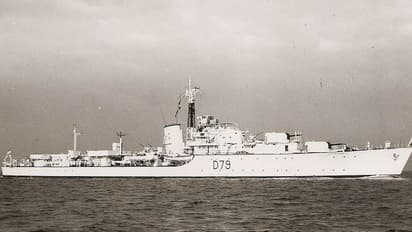
On December 3, 1971, as Pakistan struck six Indian airfields and the Indo-Pak War erupted on all fronts, India’s fearsome “Killer Squadron” — INS Nipat, INS Nirghat and INS Veer — sailed out of Mumbai under Lt. Cdrs. BN Kavina, IJ Sharma and OP Mehta, led by Cdr. BB Yadav. By December 4, two Petya-class frigates, INS Katchall and INS Kiltan, joined them, forming the now-legendary Trident strike group.
Stealthily navigating westward and then north, the Osa boats were towed deep into hostile waters under the cover of night. Guided by precise radar signals from INS Kiltan — and communicating in Russian to confound eavesdroppers — the “wasps” zeroed in on Karachi, the nerve centre of the Pakistani Navy.
At 22:43 hours, INS Nirghat’s radar locked onto a massive target: PNS Khaiber, a frontline destroyer. Moments later, two more enemy vessels — PNS Shah Jehan and the ammunition-laden MV Venus Challenger — appeared on scopes.
The Indian squadron unleashed its Styx missiles with surgical ferocity. The Pakistani Navy, completely blindsided, mistook the attacks for Indian Air Force strikes and fired anti-aircraft guns helplessly into the void. PNS Khyber, moments before splitting in two, sent out a doomed signal claiming it had been hit by “enemy aircraft”.
With enemy ships burning, the Indian boats then turned their missiles toward Karachi’s fuel depots, igniting the harbour in an inferno that lit up the night sky.
As the Indian squadron sped back toward Bombay, chaos reigned in enemy ranks — so much so that the Pakistan Air Force mistakenly bombed its own frigate, PNS Zulfiqar, believing it to be an Indian vessel.
By dawn on December 7, the Killer Squadron returned to a roaring welcome. In a breathtaking 90-minute assault, India had fired six Styx missiles, sunk three major Pakistani naval vessels, destroyed Karachi’s vital oil storage, inflicted crippling damage and achieved all this without a single Indian casualty.
On December 8, Operation Python dealt another devastating blow, sinking more ships and torching Karachi’s fuel stores a second time.
These twin strikes didn’t just cripple Pakistan’s naval capability — they choked its vital supply lines, imposed an undeclared blockade, and decisively shifted momentum in India’s favour. The cascading effect contributed significantly to the liberation of Bangladesh.
Operation Trident’s success shook the world. It even featured prominently in US President Richard Nixon’s CIA morning briefing, signalling the dawn of a new era in India’s maritime power.
For their unmatched bravery, all three missile boat commanders received the Vir Chakra, while squadron leader Commander (later Commodore) BB Yadav was honoured with the Mahavir Chakra. And in tribute to this extraordinary naval victory, December 4 is forever immortalised as Navy Day.
Stay updated with the Breaking News Today and Latest News from across India and around the world. Get real-time updates, in-depth analysis, and comprehensive coverage of India News, World News, Indian Defence News, Kerala News, and Karnataka News. From politics to current affairs, follow every major story as it unfolds. IMD cities weather forecastsRain Cyclone Asianet News Official App