Bright Side Stories: How a 90% Disabled Woman Is Rewriting India’s Journalism Future From A Wheelchair
Synopsis
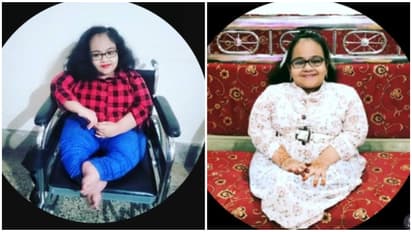
Born with brittle bone disease and denied basic education for most of her childhood, Ruchita Sahukari is today studying journalism from a wheelchair at IIMC.
Born with brittle bone disease and denied even the basic right to schooling for most of her childhood, 25-year-old Ruchita Sahukari now rolls through the corridors of the Indian Institute of Mass Communication (IIMC) Dhenkanal, armed with a wheelchair, a pen, and a roaring ambition. Backed by her parents’ resolve and an institution willing to evolve for her, Ruchita is already reporting stories, winning awards, and proving what true accessibility can enable.
Her dream is to become India’s first journalist with 90% disability.
Each morning, her classmates wheel her from her rented home in Dhenkanal to the IIMC campus. When India’s premier journalism school said “yes” to her application, they signed up for a revolution. Obstacles arose, but her peers refused to let any barrier stand in her way.
At 18, she had barely scraped through primary education. At 25, she boasts 3–4 bylines in national dailies and awards in disability advocacy. Students with disabilities constitute less than 1% of India’s higher education enrollment.
On this International Day of Persons with Disabilities, themed ‘Fostering disability inclusive societies for advancing social progress’, Ruchita’s journey is rooted in belief, adaptation, and the courage to say “yes” when society expects you to say “no”.
Ruchita's early life
Ruchita lives with Osteogenesis Imperfecta (OI), a rare genetic condition that leaves her bones as delicate as glass. “When my daughter Ruchita was born, we did not know that she had a condition in which her bones could break easily,” recalls her father, Tulsidas, according to The Better India. “Like people usually do with newborns, we were gently massaging her. Within moments, we heard the sound of a bone breaking.”
“People used to say, ‘Why are you raising this child? Leave her somewhere. Why are you suffering so much for her?’ Many even suggested that she should be allowed to die,” he shares.
School after school refused to admit her, insisting she was a “risk”. Some suggested special schools, failing to understand that her challenge was physical, not cognitive. Despite her parents’ ironclad determination, Ruchita remained excluded from basic education until the age of 18.
“I used to look down upon myself,” she says softly. “I felt like I really frustrated my parents. I wanted to die. But I’ve changed now, and I know that none of it is my fault.”
Then a Turning Point
Everything changed when she found Amrithavarshini, a Kerala-based NGO. Under the mentorship of founder Latha Nayar whom she calls her “another mother” and surrounded by fellow students with OI, she discovered courage, community, and her own worth.
Determined to build an academic foundation, she enrolled in IGNOU’s Bachelor Preparatory Programme, a bridge course for those without formal schooling. After clearing it in 2021, she completed her BA in Sociology and English Literature in 2023 — the moment she first fell in love with journalism.
Then came her boldest ambition yet — IIMC. “I had IIMC in my mind for the past couple of years,” she says. And she chased it relentlessly.
Getting accepted into IIMC’s Eastern Regional Campus was one triumph; navigating it was another. In a country where fewer than 2% of educational institutions are fully accessible, Ruchita’s presence forced the campus to introspect.
And IIMC rose to the moment.
They built ramps, initiated construction of a special hostel room, and permitted her mother to stay on campus during class hours — a compassionate exception that turned dreams into reality.
“Supporting Ruchita isn’t an exception. It’s an affirmation of our values… we nurture dignity, courage, and the right to dream,” says Prof (Dr) Anand K Pradhan.
Assistant professor Biranchi Narayan Seth adds, “Her health condition may slow her limbs, but it sharpens her insight… she already has a few byline stories to her credit.”
Those bylines — published in The Hans India — spotlight stories often ignored, from inaccessible Laxmi Puja pandals to community health initiatives. Her most intense assignment came during the 2025 Bihar elections, when her classroom morphed into a buzzing newsroom.
Her classmates became her lifeline. “They make me feel like nothing is impossible,” she says, acknowledging her closest friends — Ashwini, Priyanjal, Kushal, Abhinav, and Aniket.
“Each morning, when we push Ruchita’s wheelchair… we believe we are pushing a greater cause forward,” says Priyanjal Rai.
This year, Ruchita received the Rare Star Award from the Organisation for Rare Diseases India. She hopes to become an advocacy journalist, spotlighting policy gaps and the real crises of accessibility.
Her message to parents is clear: “Parents have the responsibility to educate themselves and empower their child… Change within the family, within the home, is the stepping stone towards bringing social change.”
For her father, who once borrowed money endlessly to keep her alive while others dismissed her worth, the transformation is poetic. “The people who once advised us to let her die cannot even look her in the eye today.”
(This article has been curated with the help of AI)
Stay updated with the Breaking News Today and Latest News from across India and around the world. Get real-time updates, in-depth analysis, and comprehensive coverage of India News, World News, Indian Defence News, Kerala News, and Karnataka News. From politics to current affairs, follow every major story as it unfolds. IMD cities weather forecastsRain Cyclone Asianet News Official App