India's 2026 Monsoon Deficit Looks Moderate, Yet 70.6% Of The Country Faces Drought Conditions
Synopsis
India’s monsoon shortfall may appear moderate on paper, but conditions unfolding across multiple states reveal a far more troubling story involving water stress, crop damage and growing concerns over rural resilience.
India’s 2026 southwest monsoon ended with a nationwide rainfall deficit of around 13 per cent, a figure that appears less alarming when compared with some of the country’s worst drought years. Yet across large parts of the country, conditions on the ground tell a very different story.
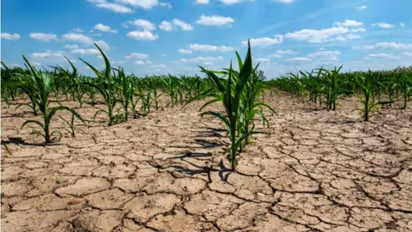
Several states are grappling with prolonged dry spells, shrinking soil moisture, crop losses and mounting agricultural distress. According to IIT Gandhinagar’s India Drought Monitor, as much as 70.6 per cent of India’s land area was experiencing dry or drought conditions this week.
The situation has already prompted formal drought declarations in multiple states, despite the overall rainfall deficit remaining below levels recorded during severe historical droughts such as 1987 and 2002.
For many farmers, the consequences have been immediate. Crops have failed in rain-dependent regions, water availability has declined and fodder shortages have increased pressure on livestock owners. In some areas, farmers have reportedly been forced to sell cattle due to scarcity conditions.
The developments highlight a critical reality of India's monsoon system: total national rainfall does not always reflect how rainfall is distributed across regions or when it arrives.
This year's drought conditions have emerged because rainfall deficits were concentrated in several agricultural belts and accompanied by long dry periods during crucial stages of crop growth.

States Move To Declare Drought Conditions
Karnataka became the first state to formally declare drought this season.
The state initially notified 101 drought-affected taluks in August before expanding coverage in stages. By October 2, drought conditions had been declared in 217 out of Karnataka’s 240 taluks.
Maharashtra followed on September 25, declaring drought in 265 of its 358 talukas after one of the state's driest monsoon seasons in recent years. Authorities began field-level crop damage assessments immediately after the announcement.
Andhra Pradesh became the third state to issue a formal declaration. On October 2, the government classified 388 mandals across 21 districts as drought-affected, including both severely and moderately impacted areas.
Other states are also conducting assessments.
Telangana has initiated field surveys to identify drought-hit mandals, while Rajasthan continues evaluating crop damage and scarcity conditions through local inspections.
These declarations reflect regional realities that are not fully captured by national rainfall averages.
In Andhra Pradesh, for example, authorities cited a rainfall deficit exceeding 53 per cent between June and August while opting for an early drought declaration linked to prevailing El Niño conditions.
Why A Smaller Deficit Is Still Producing Major Impacts
India has experienced larger national rainfall deficits during previous drought years.
The monsoon shortfall reached 19 per cent in both 1987 and 2002, while 2015 ended with a deficit of 14 per cent.
Yet the pattern of rainfall during 2026 differed significantly.
The season began with a sharp 40 per cent rainfall deficit in June. Although July brought temporary improvement, rainfall weakened again in August and remained below normal through the remainder of the season.
The uneven distribution left several agricultural regions exposed to moisture stress despite modest improvement in national averages.
The persistence of drought conditions has also raised broader questions about India's long-term drought resilience.
Over the years, governments have invested heavily in water conservation and groundwater recharge projects. Millions of water-related structures have been created through programmes including MGNREGA, watershed development initiatives and groundwater recharge schemes.
Official records show millions of water-conservation assets have been completed, while substantial public expenditure has been directed toward drought-proofing efforts.
Yet severe water stress continues to emerge when monsoon conditions deteriorate.
Experts point to issues such as maintenance, location, storage capacity and local effectiveness of water structures. However, they also argue that the deeper challenge remains unresolved.
The 2026 season has once again revealed how closely India's agricultural economy remains tied to the timing and distribution of monsoon rainfall.
Despite decades of investment and large-scale infrastructure creation, many farming regions continue to face significant vulnerability when rainfall fails during critical periods, turning even a moderate national deficit into a severe local crisis.
Stay updated with the Breaking News Today and Latest News from across India and around the world. Get real-time updates, in-depth analysis, and comprehensive coverage of India News, World News, Indian Defence News, Kerala News, and Karnataka News. From politics to current affairs, follow every major story as it unfolds. IMD cities weather forecastsRain Cyclone Asianet News Official App