Hammered and shaken: How India's firepower broke Pakistan's will to fight
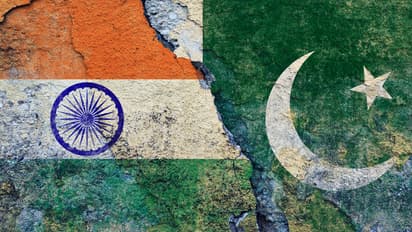
Synopsis
India forces Pakistan to seek a halt in military action after decisive retaliation targeting terror hubs, but New Delhi remains wary ahead of May 12 DGMO talks.
In a significant step toward de-escalation, India and Pakistan on Saturday agreed to halt all firing and military operations by land, air, and sea, following four days of intense cross-border hostilities. The military understanding came into effect at 5:00 PM IST, just over an hour after Pakistan’s Director General of Military Operations (DGMO) initiated contact with his Indian counterpart.
Pakistan Requested Pause in Military Action
India’s Foreign Secretary Vikram Misri confirmed that the understanding was reached during a DGMO-level phone call initiated by Pakistan. "Pakistan's Director General of Military Operations (DGMO) called Indian DGMO at 15:35 hours earlier this afternoon. It was agreed between them that both sides would stop all firing and military action on land and in the air and sea with effect from 1700 hours Indian Standard Time," Misri said.
“Today, instructions have been given on both sides to give effect to this understanding. The Directors General of Military Operations will talk again on the 12th of May at 1200 hours,” he added.
How India's Military Might Silenced Pakistan
Operation Sindoor: India's Pahalgam attack retaliation
Saturday's military understanding followed India’s formidable response under Operation Sindoor, launched on May 7 in retaliation for the April 22 terror attack in Pahalgam that claimed 26 civilian lives. The Indian military struck nine terror targets deep inside Pakistan and Pakistan-occupied-Kashmir (PoK), killing at least 100 terrorists and exposing Islamabad's rampant terror nexus.
List of terror camps dismantled by India:
- Markaz Subhan Allah, Bahawalpur - JeM
- Markaz Taiba, Muridke - LeT
- Sarjal, Tehra Kalan - JeM
- Mehmoona Joya, Sialkot - HM
- Markaz Ahle Hadith, Barnala - LeT
- Markaz Abbas, Kotli - JeM
- Maskar Raheel Shahid, Kotli - HM
- Shawai Nalla Camp, Muzaffarabad - LeT
- Syedna Bilal Camp, Muzaffarabad - JeM
Detail list of terrorists killed in the Indian strikes on May 7 in Pakistan
- Mudassar Khadian Khas @ Mudassar @ Abu Jundal. Affiliated with Lashkar-e-Taiba. His funeral prayer was held in a government school, led by Hafiz Abdul Rauf of JuD (a designated global terrorist). A serving Lt. General of the Pak Army and the IG of Punjab Police attended the prayer ceremony.
- Hafiz Muhammed Jameel. Affiliated with Jaish-e-Mohammed. He is the eldest brother-in-law of Maulana Masood Azhar.
- Mohammad Yusuf Azhar @ Ustad Ji @ Mohd Salim @ Ghosi Sahab. Affiliated with Jaish-e-Mohammed. He is brother-in-law of Maulana Masood Azhar. He was wanted in the IC-814 hijacking case.
- Khalid @ Abu Akasha. Affiliated with Lashkar-e-Taiba. He was involved in multiple terrorist attacks in Jammu & Kashmir and was engaged in weapons smuggling from Afghanistan. His funeral was held in Faisalabad and attended by senior Pakistani Army officials and the Deputy Commissioner of Faisalabad.
- Mohammad Hassan Khan. Affiliated with Jaish-e-Mohammed. He was the son of Mufti Asghar Khan Kashmiri, operational commander of JeM in Pakistan-occupied Kashmir (PoK). He played a key role in coordinating terrorist attacks in Jammu & Kashmir.
Pakistan escalates tensions, India responds
Day 1: Following India's successful precision strikes, Pakistan attempted to target military installations in 15 cities in the northern and western parts of the country using missiles and drones. However, India's robust S-400 missile defence systems, surface-to-air missiles and the integrated counter unmanned aircraft system successfully thwarted Pakistan's nefarious attempt. In its response, on May 8, India launched kamikaze drones and destroyed a Pakistani air defence system in Lahore. Pakistan had also increased the intensity of its unprovoked firing across the Line of Control using mortars and heavy calibre artillery in areas in Kupwara, Baramulla, Uri, Poonch, Mendhar and Rajouri sectors in Jammu and Kashmir.
Day 2: Pakistan escalated tensions by launching between 300 and 400 Turkish Asisguard Songar drones across 36 locations from Leh to Sir Creek in its failed attempt to target Indian military installations on Thursday night. India also exposed Pakistan of using its civilian planes as a “shield” for its aerial attacks endangering the flights. In response to the Pakistani attack, Indian military launched armed drones launched at four air defence sites in Pakistan. "One of the drones was able to destroy an air defence radar," Singh said. The BSF, meanwhile, confirmed that it foiled an infiltration bid from across the Indo-Pak International Border in Jammu, killing at least seven terrorists and destroying a Rangers post.
Day 3: On Friday night, Pakistan launched a fresh wave of drone attacks on 26 locations spanning from Jammu and Kashmir to Gujarat. The Defence Ministry stated that all attempts to target vital installations, including airports and air bases, were successfully thwarted. The locations included Baramulla, Srinagar, Awantipora, Nagrota, Jammu, Ferozpur, Pathankot, Fazilka, Lalgarh Jatta, Jaisalmer, Barmer, Bhuj, Kuarbet and Lakhi Nala
Day 4: In a strong response to Pakistan’s recent aggression along the western border and Line of Control (LoC), the Indian Armed Forces on Saturday conducted precision strikes on key Pakistani military installations, including technical facilities, command and control centres, radar sites, and ammunition depots. India confirmed that air-launched weapons from Indian fighter jets targeted military positions in Rafiqui, Murid, Chaklala, Rahim Yar Khan, Sukkur, and Chunian. Radar installations at the Pasrur and Sialkot aviation bases were also hit. Radar sites at Pasrur and Sialkot aviation bases were also targeted using precision weapons. While carrying out these attacks, India ensured minimal collateral damage.
India debunks Pakistan misinformation, warns of misadventure
Following Indian government's official announcement informing halt in military action from 5 PM IST, Indian Army Colonel Sofiya Qureshi also debunked Pakistan's misinformation campaign stating, “Pakistan claimed that it damaged our S400 and Brahmos missile base with its JF 17, which is completely wrong. Secondly, it also ran a misinformation campaign that our airfields in Sirsa, Jammu, Pathankot, Bhatinda, Nalia and Bhuj were damaged, and its misinformation is also completely wrong.”
“Thirdly, according to Pakistan's misinformation campaign, our ammunition depot in Chandigarh and Vyas was damaged, which is also completely wrong. Pakistan made false allegations that the Indian Army damaged mosques. I want to make it very clear that India is a secular nation and our army is a very beautiful reflection of the constitutional value of India," Colonel Qureshi added.
Meanwhile, Wing Commander Vyomika Singh stated, “In the highest regard, our operations have been aimed exclusively at terrorist camps and facilities being used for anti-India activities. No religious sites have been targeted by the Indian Armed Forces.”
The Indian military also warned that every misadventure and future escalation by Pakistan would be met with strength and decisive action. "While we will be adhering to the understanding reached today, we remain fully prepared to defend India's sovereignty," said Commodore Raghu Nair at a media briefing.
"We remain fully operationally ready to launch whatever operations may be required in defence of the nation," he added.
"Every misadventure by Pakistan will be met with strength and every future escalation will invite a decisive response," Nair reiterated.
Jaishankar: Terrorism Will Be Met Firmly
Despite the understanding between the two nations to pause military action, External Affairs Minister S Jaishankar underscored India's unwavering stance against terrorism. “India and Pakistan have today worked out an understanding on stoppage of firing and military action. India has consistently maintained a firm and uncompromising stance against terrorism in all its forms and manifestations. It will continue to do so,” he wrote on a post in X.
May 12 DGMO Talks Crucial
As India and Pakistan prepare for the next round of DGMO-level talks on May 12, New Delhi remains clear-eyed and cautious. While the military understanding may offer temporary relief from open hostilities, India has little reason to place long-term trust in Pakistan’s commitments. History bears witness to repeated violations and duplicitous behaviour from Islamabad, which often uses peace overtures as a smokescreen while continuing to sponsor terrorism and foment unrest. The Indian establishment, having responded with decisive and calibrated force, has made it clear that provocations will be met with swift and overwhelming retaliation. May 12 is not a moment for misplaced optimism but a test of Pakistan’s intent—and India will watch closely, prepared for every eventuality.
Stay updated with the Breaking News Today and Latest News from across India and around the world. Get real-time updates, in-depth analysis, and comprehensive coverage of India News, World News, Indian Defence News, Kerala News, and Karnataka News. From politics to current affairs, follow every major story as it unfolds. IMD cities weather forecastsRain Cyclone Asianet News Official App