Gyanvapi case: Supreme Court declines to stay ASI survey on mosque premises; check details
Synopsis
With the break of dawn on Friday, a team from the ASI arrived at the mosque premises and promptly initiated the survey of the complex. Senior advocate Huzefa Ahmadi represented the mosque committee during the proceedings.
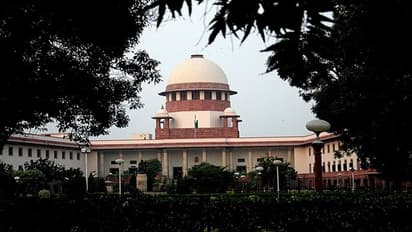
The Supreme Court on Friday (August 4) rejected the plea presented by the Anjuman Intezamia Masjid Committee, challenging the Allahabad High Court's decision that permitted the Archaeological Survey of India (ASI) to conduct a scientific examination of the Gyanvapi complex, with the exception of Wazukhana.
The petition was filed subsequent to the High Court's recent ruling that paved the way for a comprehensive survey of the Gyanvapi masjid. This followed a Varanasi court's ruling on July 21st in favor of the survey.
With the break of dawn on Friday, a team from the ASI arrived at the mosque premises and promptly initiated the survey of the complex. Senior advocate Huzefa Ahmadi represented the mosque committee during the proceedings.
Modi surname remark case: Supreme Court stays Rahul Gandhi's conviction; revives MP status
In response to the mosque committee's appeal, the Supreme Court voiced, "It's an interlocutory order. Why should we interfere at this stage? We'll keep all other objections you have to the commissioner's report open. We're not saying that it's admissible or should be relied upon...that can be argued."
The court further clarified, "This survey will be in the form of a report. Tomorrow, if you succeed in maintainability, it'll just be a piece of paper. Are we at a stage where irreparable damage will be caused?"
Subsequently, the court granted approval for the survey, prompted by the arguments presented by the additional solicitor general, Madhavi Divan. Divan asserted, "Certain signs and symbols have clearly been seen there. It's logical to make it reach the conclusion via scientific study. We would ensure all transparency. If the court wants to see the live stream of the survey, it can."
After the Supreme Court halted the survey on July 24 and permitted the Muslim side to approach the Allahabad High Court, the Anjuman Intezamia Masjid Committee initiated action by filing an appeal at the High Court. In response, stringent security measures have been implemented around the masjid complex, including a substantial police presence within a 300-meter radius.
Delhi excise policy case: No bail for Manish Sisodia today as SC defers hearing plea to September 4
Simultaneously, a hearing is scheduled in the Varanasi court on Friday regarding a petition aimed at safeguarding Hindu symbols within the Gyanvapi campus. In a novel turn of events, Buddhist Guru Sumit Ratan Bhante has recently asserted that the trishul and swastika symbols discovered at Gyanvapi actually belong to Buddhism.
It's noteworthy that the ongoing survey employs Ground Penetrating Radar (GPR) technology, eliminating the need for excavation. This advanced technology can capture information about metal and other structures up to 10 meters deep into the ground without any intrusive digging.
Stay updated with the Breaking News Today and Latest News from across India and around the world. Get real-time updates, in-depth analysis, and comprehensive coverage of India News, World News, Indian Defence News, Kerala News, and Karnataka News. From politics to current affairs, follow every major story as it unfolds. IMD cities weather forecastsRain Cyclone Asianet News Official App