Gujarat pushes for battery storage leadership after Modhera's success
Synopsis
Gujarat launched India's first BESS with a solar plant at Modhera. The state is now expanding with projects totaling 870 MW and 13 more registered, positioning itself as a national leader in the energy storage sector under CM Bhupendra Patel.
India's first Solar Village at Modhera, Gujarat, launched the country's first Battery Energy Storage System (BESS) integrated with a solar power plant. Under the leadership of Chief Minister Bhupendra Patel, the state has continued to advance in this direction and has strengthened its position among the leading states driving battery storage systems in India.
Gujarat Spearheads BESS Expansion
After Modhera, Gujarat has initiated battery storage systems at five locations with a total capacity of 870 MW. The state has also registered 13 projects across Ahmedabad, Gandhinagar, Banaskantha, Patan and Kutch to set up additional battery storage systems. With these forward-looking initiatives and strong policy support, Gujarat is well-positioned to emerge as a national leader in the energy storage sector in future, according to a release.
These efforts will also contribute to India's target of achieving 500 GW of non-fossil fuel capacity by 2030, aligned with the vision of Prime Minister Narendra Modi.
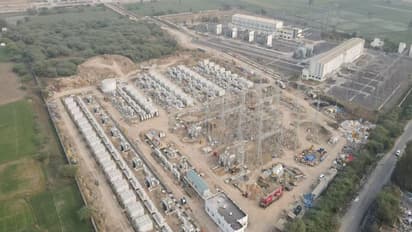
Recently, a battery storage system has been commissioned at Charal in the Sanand taluka of Ahmedabad. Additionally, four systems are operational at Modhera in Mehsana and Lakhpat in Kutch.
Policy Framework for Energy Storage
The state government has also included advanced energy storage systems as a key component in the Gujarat Integrated Renewable Energy Policy, 2025. Accordingly, standalone battery storage projects, projects linked with new renewable energy installations, and those integrated with existing renewable energy systems are being approved.
Eventually, once the Standard Operating Procedure is approved, registrations for battery storage will open for commercial and industrial users. This will allow them to set up battery storage alongside their solar or wind projects, the release stated.
The Role of Battery Energy Storage
Battery Energy Storage Systems are essential for storing electricity. Power generation from solar and other renewable sources varies during the day. Solar generation is high during daylight hours but drops in the evening. By storing excess power generated during the day, it can be supplied later when demand peaks. Currently, a sudden rise in evening demand places an additional load on the grid. Battery storage systems help manage this load and maintain grid stability.
Strategic Implementation and Grid Stability
The state government is steadily advancing in this direction. The state government is taking a structured approach to developing battery storage systems across Gujarat, with companies being invited in through a competitive bidding process. These systems are being installed near renewable energy projects for quick storage of excess power while minimising transmission losses and wastage, the release stated.
GETCO and power distribution companies strategically identify locations for battery storage systems based on grid capacity and operational requirements. Along with storing electricity, these battery storage systems will help maintain grid stability by supporting voltage and frequency regulation, while also serving as an emergency power backup. (ANI)
(Except for the headline, this story has not been edited by Asianet Newsable English staff and is published from a syndicated feed.)Stay updated with the Breaking News Today and Latest News from across India and around the world. Get real-time updates, in-depth analysis, and comprehensive coverage of India News, World News, Indian Defence News, Kerala News, and Karnataka News. From politics to current affairs, follow every major story as it unfolds. IMD cities weather forecastsRain Cyclone Asianet News Official App