From Sacred Cows To Chai: Irish Travel Vlogger Reveals What Surprised Her Most About India In Viral Post
Synopsis
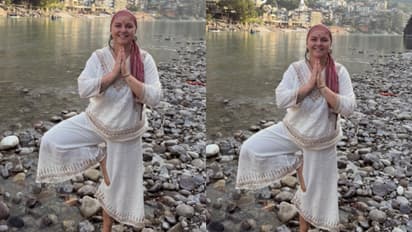
Irish travel vlogger Ellen McLoughlin shared the cultural experiences that surprised her most after travelling across India. From temple rituals and sacred cows to chai, devotion and diversity, her viral post won praise from social media users.
After travelling extensively across India, Irish travel vlogger Ellen McLoughlin shared a detailed account of the cultural experiences, traditions and everyday observations that left a lasting impression on her. In a social media post captioned, “Some beautiful and interesting takeaways from my trip to India. Are you surprised by any of these things?”, she highlighted everything from temple rituals and sacred cows to chai stalls, family values and India's remarkable diversity.
Her observations quickly resonated with social media users, many of whom praised her for presenting a thoughtful and nuanced perspective on Indian culture.
Temple Rituals Left A Lasting Impression
One of the aspects that fascinated Ellen the most was the way Hindu temples treat their deities.
She noted that deities are treated like royal guests, with elaborate rituals in which they are ceremonially awakened, bathed, dressed and later put to sleep according to a fixed schedule. She observed that many temples close temporarily during the day or draw the curtains so that the deity can be fed and allowed to rest.
She also explained that devotees offer food to the deity, believing that once it is blessed and returned, it transforms into something sacred.
Sacred Cows And Their Place In Society
Ellen was struck by the reverence shown towards cows, particularly female cows, which she said symbolise life-giving abundance through milk, fertiliser from dung, calves and their historical role in agriculture.
She pointed out that many Indian states restrict or ban cow slaughter, which has contributed to the large number of cows living on the streets. According to her, locals and even restaurants often feed them.
At the same time, she acknowledged a difficult reality, writing that while cows enjoy sacred status and protection from slaughter, it does not always guarantee proper care, with many often seen eating rubbish on the streets.
She also said she was amazed to see entire families of cows resting in the middle of busy highways while trucks, buses and cars calmly drove around them.
According to her, despite the unusual sight, the animals appeared to cause very little disruption because people are accustomed to sharing the roads with them.
Regional Food Habits Vary Across India
The travel vlogger observed that food habits vary significantly across India because of religion, geography and local food systems.
She noted that vegetarian food is more common in many parts of North India, while eating meat is more common in South India due to the presence of large Christian and Muslim communities, as well as the abundance of seafood in coastal regions.
Understanding The Role Of A 'Baba'
Ellen also spoke about the meaning of the term "Baba", describing it as a holy man, spiritual teacher or someone who renounces wealth, family life, career, status and other worldly pursuits to dedicate themselves to spirituality.
She explained that Hindu ascetics, including sadhus, are often recognised by their saffron robes, orange clothing and prayer beads.
According to her, society supports them with food and donations because they are believed to be pursuing spiritual truth on behalf of everyone. However, she also noted that while many are genuine ascetics living in poverty, others imitate holy men as a means of survival.
India's Honking Culture Surprised Her
Another experience that stood out for Ellen was India's constant honking. She admitted that India can seem extremely noisy to visitors, but soon realised that honking is primarily used as a form of communication rather than an expression of anger.
According to her, drivers honk to signal that they are overtaking or approaching another vehicle, making the roads feel surprisingly safe despite appearing chaotic.
Flexible Road Rules Were A Surprise
She also remarked on India's flexible approach to road rules.
Recalling one incident, she said she saw a large bus driving on the wrong side of the highway, yet other motorists simply adjusted and continued driving without panic.
She further observed that four rows of traffic often fit onto two-way roads and that vehicles frequently overtake on bends. In Delhi, she even noticed scooters and motorcycles creating their own lanes on footpaths.
Although she described the traffic as not being for the faint-hearted, she admitted it eventually became amusing to watch.
Devotion To Faith Inspired Her
One of Ellen's strongest impressions was the deep devotion many Indians display towards their faith.
She described witnessing hundreds of rituals along the banks of the River Ganga, daily fire pujas, regular temple visits and home shrines.
She also appreciated that religious festivals often bring communities together, with many people taking time off work to celebrate.
What impressed her most was seeing young people in their teens, twenties and thirties actively participating in religious practices through singing, dancing and temple celebrations.
Women-Only Universities
Ellen also highlighted India's women-only universities.
She explained that many such institutions were established to encourage more women to pursue higher education, especially in communities where interaction between men and women remains socially sensitive.
Based on conversations with several Indian women, she said some students found the environment challenging because limited interaction with men sometimes affected their confidence in communicating comfortably with them later in life.
Chai Everywhere, At Any Time
The Irish traveller was equally fascinated by India's love for chai. She explained that chai is black tea brewed with milk, sugar and spices, while the word "chai" simply means tea in Hindi.
She joked that Indians could drink more than 20 cups a day, comparing their tea-drinking habits to those of the Irish.
She also found it amusing that chai stalls could be found almost everywhere, from roadsides and railway stations to remote mountain regions, with some remaining open round the clock.
India's Incredible Diversity
Another aspect that impressed Ellen was India's extraordinary cultural and linguistic diversity. She observed that travelling just 30 kilometres could bring noticeable changes in language, food, clothing and traditions.
She also remarked that many Indians speak four or five languages, effortlessly switching between them in daily conversations, something she described as remarkable.
Unexpected Christian Communities
Before visiting India, Ellen expected to encounter Hinduism, Buddhism and Islam. However, she said she was surprised by the size of Christian communities, particularly in South India.
She recalled visiting villages that had limited public facilities but featured two large churches opposite each other.
Compared with Ireland, she felt Christianity in India was expressed much more visibly through singing, dancing, religious processions, feast day celebrations and public displays of faith.
India's Wealth Beyond Stereotypes
Ellen also challenged common stereotypes about India's economy. While acknowledging that poverty exists, she cautioned against assuming that people have limited financial resources simply because they live in India.
She said she came across many successful individuals who had built wealth through hard work, inheritance or innovative ideas.
Connection With Nature And Traditional Knowledge
She also admired India's connection with yoga and traditional knowledge systems.
According to Ellen, many Indians grow up with a deeper understanding of yoga that extends beyond physical exercise to include spirituality, self-awareness, plants and traditional medicine.
She said she found it inspiring that many people continue to value these practices alongside modern healthcare.
'Indian Time' Was Real
Another cultural observation she shared was what many jokingly refer to as "Indian time".
She said punctuality appeared to be more relaxed in many situations and joked that "nothing ever happens on time".
Humorously warning people with Type A personalities, she suggested they prepare themselves for a more laid-back approach to timekeeping.
How Did Social Media React?
The post attracted widespread appreciation online.
One user commented, "Beautiful capture! Experiences like this are why people fall in love with traveling."
A second user wrote, "India doesn't just show you places. It changes the way you see the world. Glad it got to you too."
Stay updated with the Breaking News Today and Latest News from across India and around the world. Get real-time updates, in-depth analysis, and comprehensive coverage of India News, World News, Indian Defence News, Kerala News, and Karnataka News. From politics to current affairs, follow every major story as it unfolds. IMD cities weather forecastsRain Cyclone Asianet News Official App