Explained: India-EU FTA Announced at Summit – Why Is Signing Delayed
Synopsis
India and the European Union announced the conclusion of their Free Trade Agreement negotiations on January 27, 2026. This significant deal, covering 2 billion people, aims to reduce tariffs and boost trade in sectors like textiles and machinery.
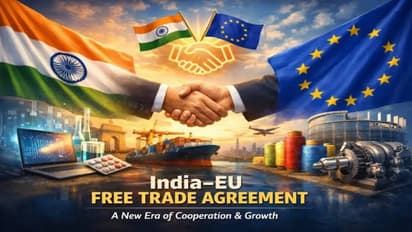
India and the European Union (EU) made headlines on January 27, 2026, by formally announcing the conclusion of negotiations on their long-awaited Free Trade Agreement (FTA) at a high-profile summit in New Delhi.
The announcement -- dubbed the “mother of all trade deals” by leaders on both sides -- capped nearly two decades of talks and was widely seen as a major diplomatic and economic milestone.
Despite the excitement and global media coverage surrounding the deal, the FTA was not formally signed on Tuesday. That distinction between concluding negotiations and signing the agreement is crucial to understanding the current status and timeline of this historic pact.
What Was Announced
During the India-EU Summit attended by Prime Minister Narendra Modi, European Commission President Ursula von der Leyen, and European Council President António Costa -- both sides confirmed they had successfully wrapped up negotiations on the wide-ranging FTA after years of intermittent talks. India and the EU together account for a market of roughly 2 billion people, nearly 25% of global GDP, and roughly a quarter of world trade — making this agreement geopolitically significant.
The FTA aims to reduce or eliminate tariffs on a broad range of goods and services, opening up access for Indian exports in sectors like textiles, marine products, leather, gems and jewellery, and enhancing market prospects for European vehicles, machinery and other manufactured goods. Strategic cooperation in areas such as clean energy, digital technology and supply chain resilience also feature prominently in the deal’s framework.
Why the Deal Was Not Signed On Announcement Day
While political leaders gathered to announce the conclusion of negotiations, the legal and procedural journey is only halfway complete. According to government officials and business news reports, the FTA cannot be signed on the same day for several reasons:
1. Legal Vetting (“Legal Scrubbing”)
Once negotiators agree on the economic and policy terms, the full text must be sent to legal teams on both sides for a process known as legal scrubbing. This involves carefully reviewing the entire agreement -- chapter by chapter -- to ensure legal consistency, clarity and adherence to domestic law, in both India and the EU’s legal frameworks. This process typically takes several months to complete.
2. Translation Into Official Languages
Because the EU is a multilingual bloc, the finalized, legally vetted text must be translated into several official EU languages to meet legal requirements for trade agreements. This is a mandatory step before any trade treaty can be signed and ratified.
3. Ratification by Relevant Bodies
After legal scrubbing and multilingual translations, the treaty needs formal approval (ratification) by multiple authorities beyond negotiators:
• The European Parliament must approve the FTA.
• The EU Council (representing member states) must endorse it.
• India’s Cabinet and Government bodies must also ratify it internally.
These ratification processes can span months and, in some cases, up to a year. Only after these approvals can the agreement be signed and enter into force.
Expected Timeline
Officials and analysts quoted in business media say the FTA is expected to undergo legal scrubbing for roughly 4-6 months, after which formal signing could take place later in 2026. With all ratification steps completed, India and the EU anticipate implementation by late 2026 or early 2027.
Why This Matters
Although the signing will occur later, the announcement itself represents a major diplomatic victory and a strategic gesture of economic cooperation amid a world grappling with rising protectionism, trade tensions and geopolitical realignments. For India, the FTA promises broader market access to European consumers and diversification of export destinations. For the EU, it enhances trade resilience and cooperation with a rapidly growing economy that complements its strategic interests.
In effect, Tuesday’s announcement symbolises the end of negotiations -- not the final legal seal. The coming months will focus on polishing legal text, translating it into multiple languages, and securing legislative endorsements before the landmark agreement can be formally signed and implemented.
Stay updated with the Breaking News Today and Latest News from across India and around the world. Get real-time updates, in-depth analysis, and comprehensive coverage of India News, World News, Indian Defence News, Kerala News, and Karnataka News. From politics to current affairs, follow every major story as it unfolds. IMD cities weather forecastsRain Cyclone Asianet News Official App